
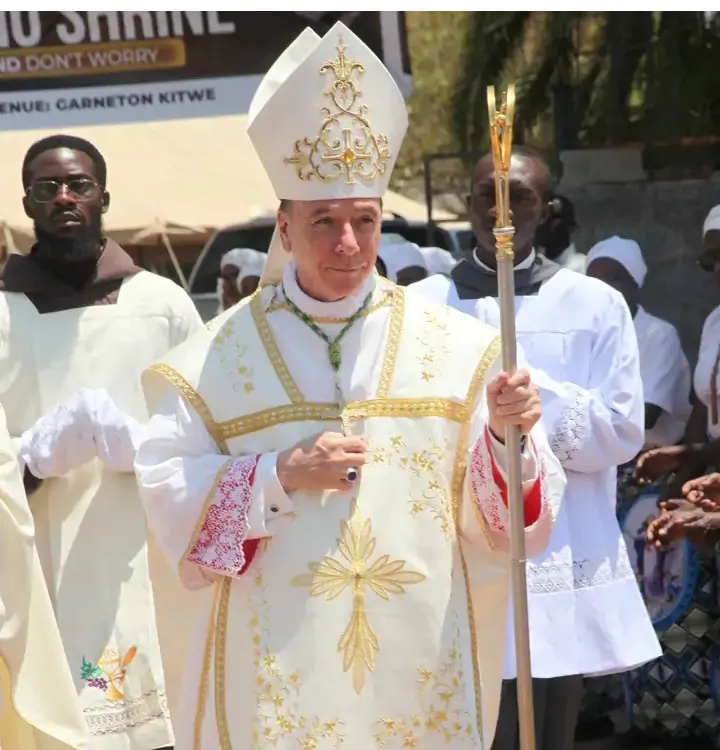
THE SILENT WORK OF THE NUNCIO’S OFFICE – THE BRIDGE BUILDER IN TIMES OF TENSION: WHO IS THE APOSTOLIC NUNCIO? WHAT HE CAN AND CANNOT DO

Breaking News Zambia
NewsTHE SILENT WORK OF THE NUNCIO’S OFFICE – THE BRIDGE BUILDER IN TIMES OF TENSION WHO IS THE APOSTOLIC NUNCIO? WHAT HE CAN AND CANNOT DO By Fr. Ignatius Muyunda Following questions about the tension between Archbishop Dr. Alick Banda (Member of the ZCCB) and the Government, many Catholics are asking: who is the Apostolic […]
THE SILENT WORK OF THE NUNCIO’S OFFICE – THE BRIDGE BUILDER IN TIMES OF TENSION
WHO IS THE APOSTOLIC NUNCIO? WHAT HE CAN AND CANNOT DO
By Fr. Ignatius Muyunda
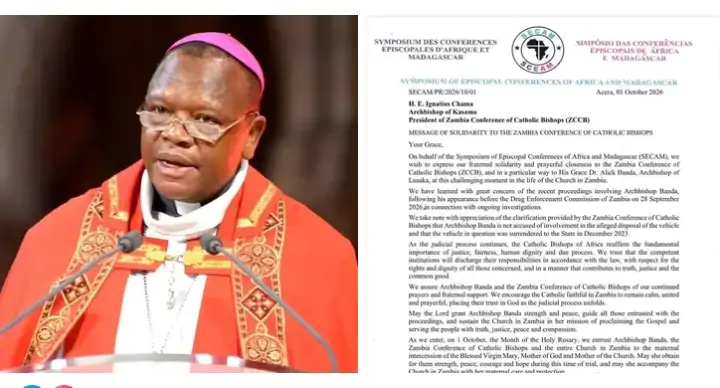
Following questions about the tension between Archbishop Dr. Alick Banda (Member of the ZCCB) and the Government, many Catholics are asking: who is the Apostolic Nuncio and what can he do to help? Is he really silent and why is he not been heard? Is there no action from him?
Who is the Nuncio?
The Apostolic Nuncio is the personal representative of Pope Leo to Zambia. He holds two roles at once.
As Ambassador of the Holy See (Vatican), he is accredited to the President of Zambia like any other ambassador. He is often the Dean of the Diplomatic Corps in Lusaka.
As Papal Liaison to the Church, he is the link between the Pope and the Zambia Conference of Catholic Bishops (ZCCB), priests, religious, and the faithful.
He is always an Archbishop, appointed by the Pope, and lives in Lusaka. The Nuncio to Zambia is also Nuncio to Malawi.
What He CAN Do
1. Facilitate Quiet Dialogue: He can meet privately with State House, the Ministry of Foreign Affairs, and with Archbishop Banda and the ZCCB to reduce tension and promote understanding.
2. Report to Rome: He sends a confidential and balanced report to the Vatican Secretariat of State, which then gives guidance.
3. Promote Church-State Collaboration: He reminds both Church and State of the principles of religious freedom, mutual respect, and service to the common good.
4. Advise on Episcopal Matters: He continues his normal work of preparing the appointment of bishops, which keeps the Church stable.
His method is always discreet. No public statements. The Vatican believes that difficult issues are better solved in the boardroom than on the microphone. This is why you are not seeing or hearing anything from his office. His work is “discreet”
What He CANNOT Do
To avoid misunderstanding, it is important to know his limits:
1. He Cannot Take Public Political Sides: He will not hold a press conference to condemn the Government or to reprimand an Archbishop. His role is to be a neutral bridge.
2. He Cannot Order a Government: Zambia is a sovereign state. The Nuncio can appeal, advise, and dialogue, but he cannot issue instructions to the President or Government. Or interfere with the Law
3. He Cannot Command a Bishop: An Archbishop like Dr. Alick Banda is directly under the Pope, not under the Nuncio. The Nuncio cannot suspend, transfer, or silence him.
4. He Cannot Solve the Issue Alone: Lasting peace requires goodwill from both the Government and the Church leadership. The Nuncio can open the door, but both parties must agree to walk through it.
5. He Cannot Speak Without Rome: On sensitive matters, the Nuncio acts only after consulting the Vatican. He does not act on personal opinion.
Conclusion
The Nunciature is not a court of law, but a bridge of dialogue. In Zambia’s history, this bridge has helped during many tense moments. Past tensions were always silently solved in that manner.
At this time, the best contribution of all faithful is to pray for wisdom for both Church and State leaders, so that dialogue prevails over confrontation for the good of our nation.
“National drama” does not create a good working environment between the State and Church. In this Month of the Rosary we pray for good working relationship between Church leadership and the State to serve the poor and uplift the needy.
Fr. Ignatius ‘s Healing, Preaching and Deliverance Ministry
Community Feedback