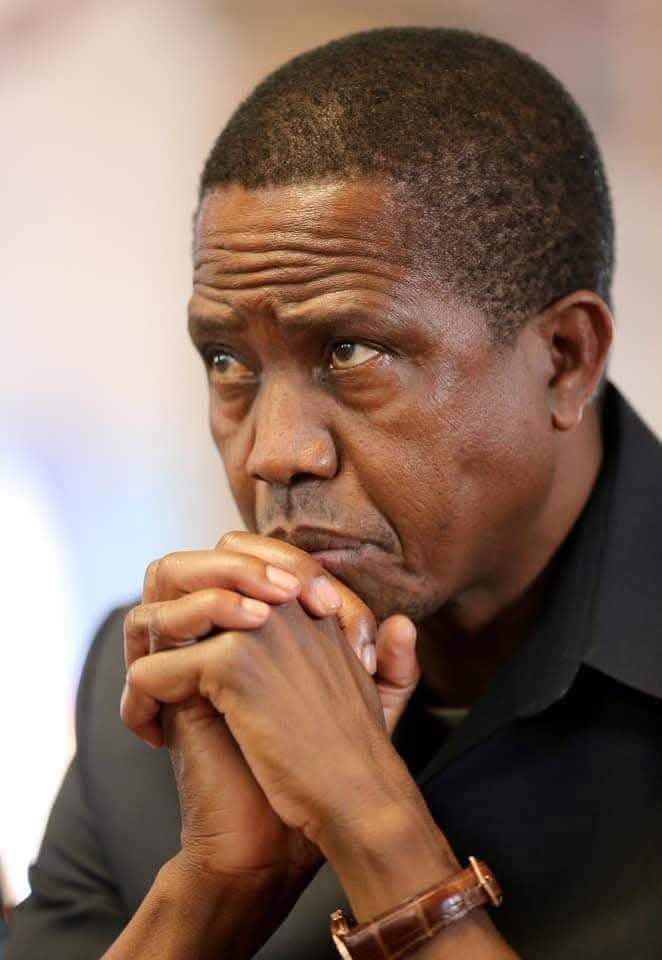
Zambia changed the law on former presidents’ funerals after the Lungu burial dispute — here is what it means

Breaking News Zambia
NewsA new Zambian law has significantly changed the legal framework governing the funerals and burial of former Presidents, giving the Government statutory authority to designate where a former President or former Vice-President will be buried within the country. The change is contained in the Benefits of Former Presidents and Former Vice-Presidents Act, 2026, which received […]
A new Zambian law has significantly changed the legal framework governing the funerals and burial of former Presidents, giving the Government statutory authority to designate where a former President or former Vice-President will be buried within the country.
The change is contained in the Benefits of Former Presidents and Former Vice-Presidents Act, 2026, which received Presidential assent on 4 June and commenced on 12 June 2026.
The legislation has attracted renewed attention because it comes against the background of the prolonged dispute over the burial of former President Edgar Lungu, whose remains became the subject of a legal battle between his family and the Zambian Government following his death in South Africa in June 2025.
The provision at the centre of the discussion is Section 8.
It states that a former President or former Vice-President who dies while in office or after leaving office “shall be buried at a burial site designated by the Government within the Republic.”
The same section provides that the funeral shall be conducted in accordance with State protocols and that funeral benefits shall be provided as prescribed.
What has changed?
President Hakainde Hichilema
The new provision represents a significant departure from the wording of the previous Benefits of Former Presidents Act of 1993.
The repealed law provided for funeral expenses as one of the benefits available to a former President, but it did not contain the current requirement that the Government designate the burial site.
The 2026 law therefore moves beyond simply providing financial support for a former President’s funeral.
It establishes a statutory framework covering the location of burial and the conduct of the funeral.
In practical terms, the law means that the Government is now expressly empowered to designate the burial site for a former President or former Vice-President within Zambia.
The Act, however, does not expressly spell out the role of surviving family members or whether a family could legally challenge a Government decision concerning the burial.
That distinction could become important if the provision is ever tested before a court.
Why the Edgar Lungu dispute matters
The timing gives the new provision particular significance.
Former President Edgar Lungu died in South Africa on 5 June 2025 while receiving medical treatment. His family and the Zambian Government subsequently disagreed over where and how he should be buried.
The Government sought to repatriate his remains for a State funeral and burial at Embassy Park in Lusaka, while the family opposed the Government’s position.
The dispute eventually reached the South African courts.
In August 2025, the Gauteng High Court ruled in favour of the Zambian Government and authorised the repatriation of Lungu’s remains for a State funeral and burial in Zambia.
The family appealed.
On 23 June 2026, the South African Supreme Court of Appeal overturned that decision.
The majority found that the Zambian Government had failed to establish a legal right to override the family’s decision regarding Lungu’s burial. It also held that the legislation relied upon by the Government did not give it the right to determine the burial arrangements against the wishes of the family.
The Government subsequently indicated that it would not pursue a further appeal.
Parliament had already identified the problem
The new law did not appear out of nowhere.
On 26 November 2025, Parliament debated the need for legislation regulating funerals for sitting and former Heads of Government.
During the debate, MPs specifically referred to the Lungu burial dispute as evidence of weaknesses in the existing framework.
The Government told Parliament that Cabinet had approved the introduction of legislation to regulate funerals of Heads and former Heads of State.
The then Minister responding to the debate also said the proposed legislation was intended for future cases and would not retrospectively determine the burial of the former President who had already died.
The Benefits of Former Presidents and Former Vice-Presidents Bill was subsequently introduced in the National Assembly on 8 April 2026.
The 11-day coincidence
There is an unusual constitutional and legal coincidence in the timeline.
The new Act commenced on 12 June 2026.
Eleven days later, on 23 June, the South African Supreme Court of Appeal delivered its judgment in the Lungu case.
The court said the legislation relied upon by Zambia at the time of the dispute did not confer a legal right to override the family’s burial decision.
The new Zambian Act now contains wording that was not present in the old legislation: a former President or former Vice-President “shall be buried” at a burial site designated by the Government within Zambia.
It would be premature to conclude from the timing alone that the new provision was enacted specifically to defeat the Lungu family’s position. Parliamentary records show that reform of the 1993 law and regulation of former Presidents’ funerals had already been under discussion.
What is clear, however, is that Zambia’s legal framework is now materially different from the one that was at the centre of the Lungu burial litigation.
What does the new law mean for families?
Tasila Lungu with her Mother Esther Lungu
This is where the law leaves an important question.
Section 8 clearly identifies the Government’s role: the burial site must be designated by Government and the funeral must follow State protocols.
But the provision does not expressly state what rights a surviving spouse, children or other family members retain in determining the funeral arrangements.
It also does not expressly say that a family’s wishes are irrelevant.
That could leave room for future legal questions about how Section 8 interacts with other rights, including family autonomy, customary practices and any constitutional protections that may become relevant in a particular case.
In other words, the law has answered one question clearly — who designates the burial site?
The more difficult question may be how far that authority extends into the wider funeral arrangements and the rights of the deceased’s family.
Why this matters beyond Edgar Lungu
The significance of Section 8 extends beyond the current dispute.
The law applies to all former Presidents and to former Vice-Presidents covered by the Act.
That means the question of where a former national leader is buried is no longer left primarily to a combination of administrative practice, State protocol and precedent.
Parliament has now placed a specific provision in an Act of Parliament.
The Lungu dispute exposed a legal gap.
The 2026 Act attempts to close that gap.
Whether the new provision will prevent future disputes or simply move the argument to a different legal question — particularly over the rights of families — is something Zambia may only discover when the law is eventually tested.


Community Feedback