“What happened after Zambia’s election shocked me”: Inside the European Parliament debate on Zambia

Breaking News Zambia
NewsZambia became the focus of a heated debate in the European Parliament this week as Members of the European Parliament examined the country’s post-election developments, the death of former Minister Mutotwe Kafwaya and the criminal cases involving opposition figures. The debate took place in Strasbourg ahead of a vote on a resolution titled “Post-electoral repression […]
Michael McNamara
Zambia became the focus of a heated debate in the European Parliament this week as Members of the European Parliament examined the country’s post-election developments, the death of former Minister Mutotwe Kafwaya and the criminal cases involving opposition figures.
The debate took place in Strasbourg ahead of a vote on a resolution titled “Post-electoral repression in Zambia and the killing of Mutotwe Kafwaya.” The resolution was subsequently adopted by 562 votes in favour, one against and 33 abstentions.
But the vote tells only part of the story.
The more revealing part was the discussion that preceded it.
The debate brought together the EU’s chief election observer, European parliamentarians and representatives of different political groupings, with the discussion ranging from Zambia’s electoral process to the killing of Kafwaya, treason charges, access to lawyers, the rule of law and the country’s democratic institutions.
For Zambians following the debate through a video now circulating on social media, one contribution in particular has drawn attention.
“A profound shock”
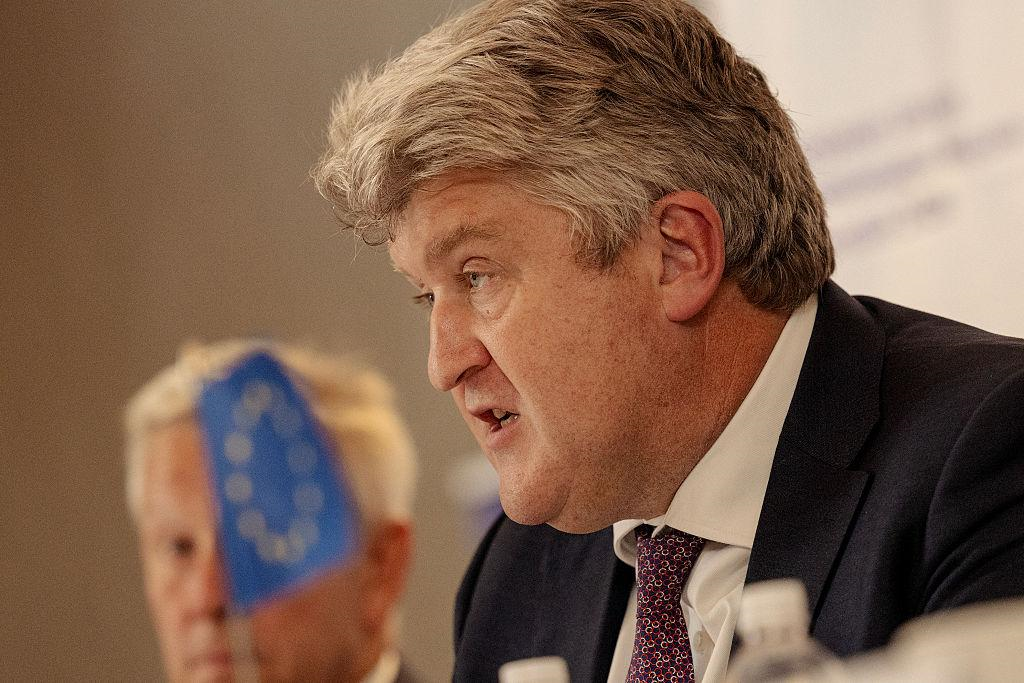
Michael McNamara, the Irish MEP who headed the European Union Election Observation Mission to Zambia’s 2026 elections, told Parliament that what happened after the election had come as a “profound shock”.
McNamara said his time in Zambia had given him an appreciation of the country’s democratic tradition, rule of law and judicial independence.
He then contrasted that experience with the developments that followed the 13 August election.
He called for the circumstances surrounding Kafwaya’s death to be investigated “very speedily” and “very transparently”, including scrutiny of accountability and command responsibility.
McNamara also called for speedy and transparent proceedings in the treason cases and said those charged should have unimpeded access to their lawyers.
His intervention carries particular weight in the debate because he was not commenting as a remote observer.
He had led the EU mission that spent weeks in Zambia observing the election.
The mission deployed observers around the country and produced its own assessment of the electoral process.
What did the EU actually observe?
The EU’s preliminary election assessment did not describe the entire election as fraudulent or reject the result.
It said election day was generally calm and that voters had a competitive choice.
But the mission also identified problems with the broader electoral environment, including restrictions on fundamental freedoms, late legal changes and unequal campaign conditions.
The more serious concerns emerged during the counting and tabulation of results.
The EU reported that the Electoral Commission of Zambia suspended counting and the announcement of results on 14 August following reports of violence targeting polling staff and allegations of ballot-box theft.
After the process resumed, EU observers reported a deterioration in the transparency of tabulation, including extended breaks and failures in some centres to immediately record results on tally sheets.
The mission also reported a heavier military presence at totalling centres, which it said was perceived as intimidating by many people it spoke to.
These observations became part of the background to the European Parliament debate.
Kafwaya’s death takes centre stage
The death of Mutotwe Kafwaya became one of the central issues discussed.
Kafwaya was fatally shot on 14 August during a security operation at a property linked to opposition leader Brian Mundubile.
The circumstances remain contested.
The authorities have maintained that security personnel encountered armed resistance during the operation, while opposition figures have disputed aspects of the official account.
The European Parliament’s adopted resolution does not itself determine what happened.
Instead, it calls for an independent and transparent investigation into the operation that resulted in Kafwaya’s death and says security operations should be proportionate and consistent with the rule of law.
That distinction is important.
The European Parliament is calling for an investigation; it is not presenting its resolution as a judicial finding establishing who was responsible for Kafwaya’s death.
The treason cases
The debate also focused heavily on opposition figures facing treason charges.
The adopted resolution refers specifically to Brian Mundubile and Makebi Zulu, noting that they were detained and charged with treason on 29 August.
It calls on the Zambian authorities to swiftly produce clear evidence supporting the charges and stresses that the accused must receive a fair trial with adequate legal protection.
McNamara went further during the debate, calling for the proceedings to be speedy and transparent and for the accused to have unimpeded access to legal representation.
Again, the European Parliament did not decide whether the accused are guilty or innocent.
Its position is that the allegations should be tested through a fair and transparent judicial process.
What Parliament voted on
The final resolution covers several areas.
It expresses concern about Kafwaya’s killing.
It calls for an independent and impartial investigation into the death and allegations of illegal use of force.
It calls for clear evidence to be produced in the treason cases and for fair trials with adequate legal protection.
It raises concerns about the shrinking of civil space and urges stakeholders to address grievances peacefully and through established legal procedures.
It also calls on the Zambian Government to investigate serious incidents and irregularities during the counting and tabulation of election results and to implement recommendations from the EU Election Observation Mission.
And then came the vote.
562 MEPs voted in favour, one voted against and 33 abstained.
What does the vote mean?
The resolution is not a court judgment and does not change Zambia’s domestic law.
It does, however, place the European Parliament’s concerns formally on record.
The resolution also instructs the President of the European Parliament to forward it to the EU Council, European Commission, the EU High Representative, EU member states, and the Zambian Government and Parliament.
That means the debate does not end with Thursday’s vote.
The resolution becomes part of the political and diplomatic conversation between Zambia and the European Union.
The Parliament also reaffirmed the EU’s longstanding partnership with Zambia and its stated support for a democratic, peaceful, stable and prosperous future for the country.
Why this matters in Zambia
The significance of the Strasbourg debate is therefore not simply that European politicians discussed Zambia.
It is that the people discussing the issue included the head of the EU election mission that observed Zambia’s election directly.
McNamara’s intervention connected what happened during the election to what happened afterwards.
The European Parliament then considered those developments and voted overwhelmingly to adopt a resolution addressing them.
For Zambia, the questions now return home:
What will happen to the investigation into Kafwaya’s death?
When will the treason cases proceed to trial?
Will those accused have full access to their lawyers?
And will the concerns raised by the EU election observers about the counting and tabulation process be addressed?
Those questions will not be answered in Strasbourg.
They will ultimately be answered by what happens in Zambia.
The video
The European Parliament itself has published the 8-minute-37-second recording of the plenary voting session, including the Zambia resolution.
European Parliament — Zambia resolution video

Community Feedback