Dialogue or trial? Zambia’s post-election debate reaches a critical point

Breaking News Zambia
NewsCalls for national dialogue and reconciliation are gaining momentum in Zambia, but a fundamental disagreement is emerging over what should happen to opposition figures facing criminal charges before any political engagement takes place. Zambian Eye examines the positions of Government, civil society, the Catholic Church and the ruling UPND, and the bigger question of whether […]
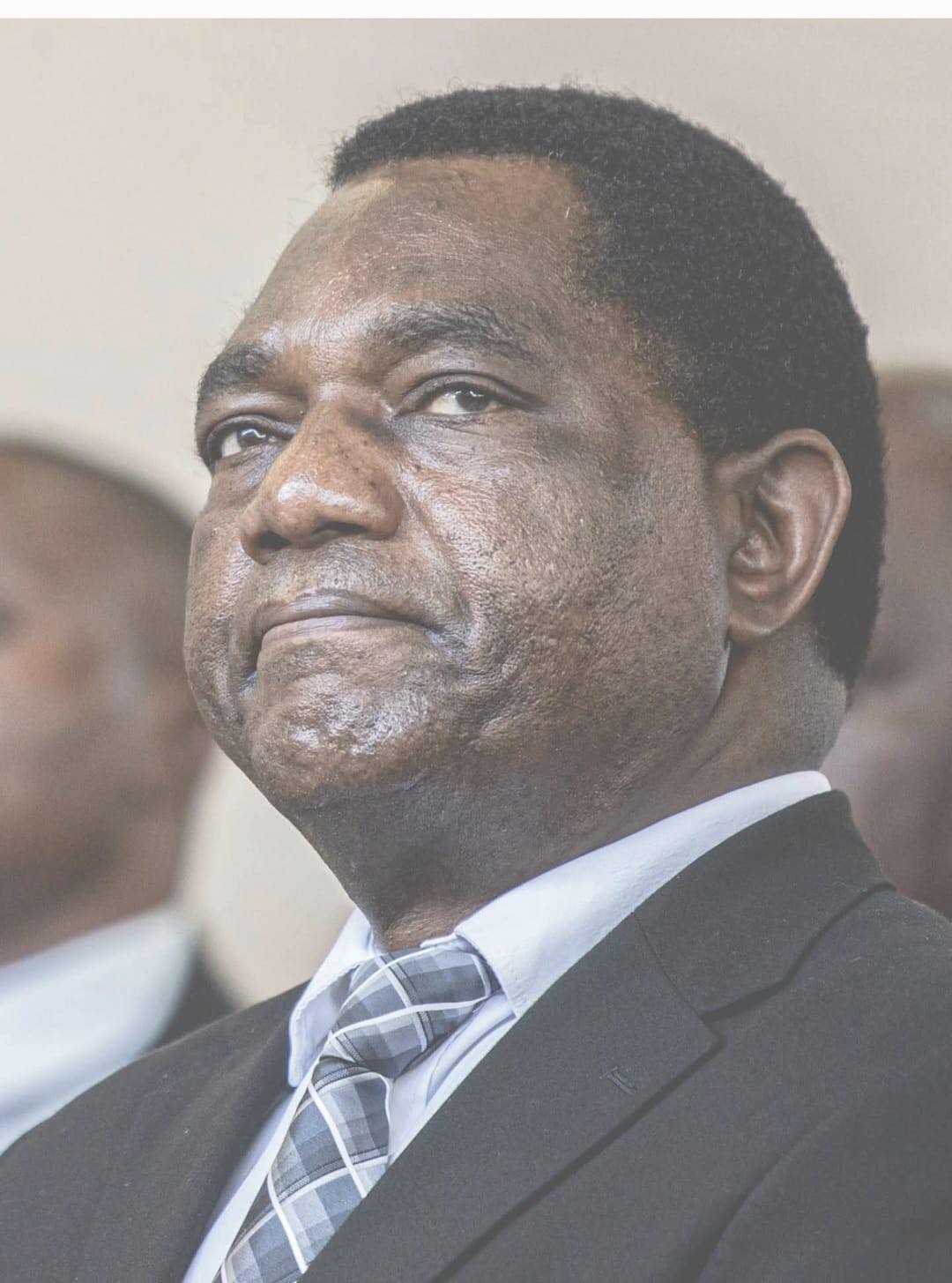
President Hichilema
Calls for national dialogue and reconciliation are gaining momentum in Zambia, but a fundamental disagreement is emerging over what should happen to opposition figures facing criminal charges before any political engagement takes place. Zambian Eye examines the positions of Government, civil society, the Catholic Church and the ruling UPND, and the bigger question of whether dialogue and the judicial process can proceed side by side.
Civil society organisations have called for dialogue, while also demanding that people who have been detained in connection with the post-election events be brought before court without further delay or released if there is no credible case against them.
Government, however, says it is open to dialogue but insists that political engagement cannot be used to stop criminal investigations, interfere with the courts or provide immunity from the law.
The Catholic Church has now added its voice to the debate, with Chipata Diocese Bishop George Cosmas Zumaire Lungu calling for dialogue, justice and reconciliation.
At the same time, UPND Media Director Mark Simuuwe has taken a different position, arguing that people facing serious criminal allegations should first face the law rather than use dialogue as a means of avoiding accountability.
The competing positions raise a question that is becoming increasingly difficult to avoid:
Can Zambia pursue national dialogue and reconciliation while criminal cases arising from the post-election period are still unresolved?
What civil society is asking for
The debate intensified after a coalition of civil society organisations issued a statement on 14 September expressing concern about what it described as a deterioration in the rule of law following the 13 August general election.
Among their demands was that opposition figures facing criminal charges be taken before court without further delay.
The organisations specifically referred to NRPUP presidential candidate Brian Mundubile, his running mate Makebi Zulu and other detainees who have been held in connection with the post-election investigations.
The CSOs cited constitutional protections relating to arrest, detention, legal representation and a fair hearing, and called on Government to either bring accused persons before court or release them if a credible case had not been established.
The call for speedier court proceedings has also gained significance because Mundubile, Zulu and other detainees have challenged their continued detention before the High Court.
The petition argues that their continued detention is unlawful and unconstitutional. Those allegations remain before the courts and have not been finally determined.
The issue therefore has two separate dimensions: dialogue and due process.
The CSOs are not simply asking political leaders to sit around a table. They are also demanding that the ordinary legal process operate within constitutional timeframes.
Government: dialogue cannot stop the law
The Government’s response came through Attorney General Mulilo Kabesha.
Mr Kabesha rejected the civil society characterisation that Zambia has descended into lawlessness, describing the allegations as sweeping, inflammatory and unsupported by established facts and evidence.
He said Zambia remains a constitutional democracy governed by the Constitution and laws enacted under it.
On the question of dialogue, however, Government did not reject engagement altogether.
Instead, the Attorney General said Government welcomed calls for peace, restraint and dialogue and remained open to constructive engagement with political parties, civil society organisations, faith-based organisations and other stakeholders.
But he drew a clear line around what such dialogue could achieve.
According to the Attorney General, dialogue must be conducted in good faith and cannot override the mandate of the courts, terminate legitimate criminal investigations or confer immunity from the law.
That position effectively separates political dialogue from criminal proceedings.
Government’s argument is that the two can exist simultaneously, but one cannot be used to terminate the other.
What does that mean in practice?
If the Government’s position is followed, political leaders and civil society organisations can sit down and discuss national issues, reconciliation, political tolerance and the country’s future.
But where an individual is facing a criminal investigation or prosecution, that person remains subject to the ordinary legal process.
A political agreement could therefore not simply result in criminal investigations being abandoned or charges being erased.
This distinction is important because the word “dialogue” is being used to describe several different things.
It could mean dialogue between political parties about national reconciliation.
It could mean discussions between Government and civil society about governance.
It could mean efforts by religious leaders to reduce political tension.
Or, more controversially, it could be interpreted as an attempt to resolve matters involving individuals who are already facing criminal charges.
The Government is clearly saying that the last category cannot replace the courts.
Bishop Lungu: dialogue is about more than the accused
The intervention by Bishop George Cosmas Zumaire Lungu adds another dimension.
In a pastoral statement issued on 15 September, the Bishop called for prayer, dialogue, justice and reconciliation amid concerns about the country’s political situation.
He proposed a respectful and private meeting with President Hakainde Hichilema and representatives of Government to discuss concerns surrounding justice, the rule of law, political tolerance and the treatment of opposition figures.
Importantly, Bishop Lungu did not present dialogue as a substitute for the law.
His statement also stressed that no government is above the Constitution and that no opposition party should place itself above the law.
He said the Church should not remain silent when human dignity, justice, peace and the rule of law are under strain.
The Bishop’s proposal therefore appears to be broader than negotiating the cases of particular opposition figures.
It is about creating a space in which Government, political actors and other stakeholders can address the tensions that have developed since the election.
UPND: criminal cases must be dealt with first
But the ruling UPND’s position has been considerably more cautious.
UPND Media Director Mark Simuuwe has previously rejected the idea that criminal allegations should be converted into a political dialogue.
In remarks responding to calls for dialogue, Simuuwe argued that serious allegations of criminal conduct should be dealt with through the law rather than being dressed up as political dialogue.
His position is that a person accused of serious wrongdoing should first face the law and account for their actions, and that dialogue should not become a mechanism for avoiding accountability.
The UPND has also previously stated that it does not regard Zambia as being in a political deadlock requiring a government of national unity, while saying its doors remain open to dialogue on matters that do not compromise the rule of law.
This is an important distinction.
The ruling party is not necessarily rejecting dialogue as a principle.
Its position is that dialogue should not interfere with criminal proceedings.
The question of speedy trials
This is where the debate could move from politics into the justice system.
Civil society organisations are demanding that people who have been detained be brought before court promptly.
The Attorney General says Government cannot discuss the merits of cases that are before the courts because of the sub judice principle.
The accused, meanwhile, have challenged their continued detention.
That leaves a straightforward question for the justice system:
When will the cases actually come before court?
A speedy trial does not mean a conviction.
It does not mean an acquittal.
It means that allegations are tested through the judicial process within a reasonable time, with the accused enjoying the constitutional protections applicable to criminal proceedings.
That distinction is particularly important in politically sensitive cases.
If the State has evidence, a public trial provides the forum in which that evidence can be tested.
If the prosecution cannot establish its case, the accused have the opportunity to be cleared.
And if the evidence establishes guilt beyond the required legal standard, the courts can determine the appropriate consequences.
Why the dialogue question matters now
The debate is developing at a particularly sensitive moment.
The August election has been followed by disputes over the electoral process, the death of former minister Mutotwe Kafwaya, arrests, treason and sedition charges, passport cancellations and growing international scrutiny.
The European Parliament has now adopted a resolution addressing Zambia’s post-election situation and the killing of Kafwaya.
Against that background, calls for dialogue are no longer simply about relations between political parties.
They are becoming part of a much bigger conversation about how Zambia manages political disagreement after an election.
Can the country pursue reconciliation without compromising accountability?
Can criminal cases proceed without dialogue becoming impossible?
Can dialogue take place while allowing courts to independently determine the guilt or innocence of accused persons?
And can Government engage critics and opposition actors without creating the impression that engagement amounts to negotiating away criminal responsibility?
Zambia’s choice is not necessarily dialogue versus justice
There may be an important distinction missing from much of the current debate.
Dialogue and justice do not necessarily have to be mutually exclusive.
Political dialogue can address questions such as national healing, political tolerance, institutional reforms, electoral processes and the country’s future.
Courts can simultaneously determine criminal allegations against individuals.
The Attorney General’s position is that dialogue cannot terminate legitimate investigations or confer immunity.
The Bishop’s intervention is that the country needs conversation, justice and reconciliation.
Civil society is asking for dialogue while also demanding speedy access to justice.
And the UPND is insisting that criminal allegations must be dealt with through the courts.
The unresolved issue is therefore not simply whether Zambia should have dialogue.
It is what the dialogue is supposed to achieve, who should participate, and how it can coexist with the independent administration of justice.
For now, the legal cases remain before the relevant institutions, while the political and religious calls for engagement continue.
The next test may therefore not be whether Zambia talks.
It may be whether the country can talk while allowing the courts to do their work.

Community Feedback