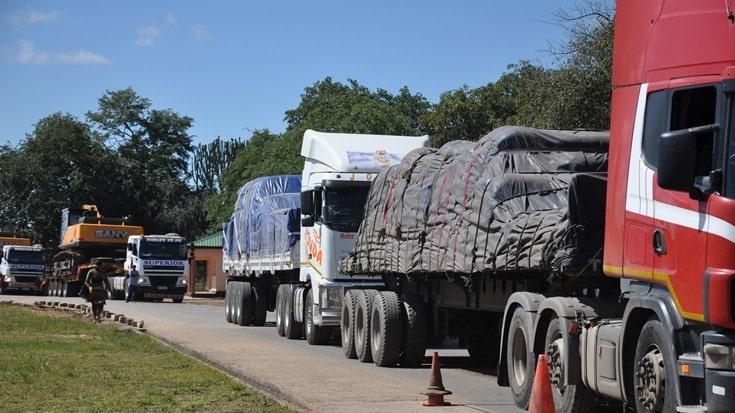
Trade surplus drops to K4.2 billion

Breaking News Zambia
NewsAccording to official government data, Zambia’s trade […]
According to official government data, Zambia’s trade surplus fell from K7.0 billion in May 2026 to K4.2 billion in June 2026, representing a decline of K2.8 billion in just one month. The latest trade statistics seen by the Zambian Business Times (ZBT) further show that exports declined by 1.6% from K30.1 billion in May to K29.6 billion in June, mainly due to lower earnings from raw materials which fell by 10.4%, capital goods by 17.3% and intermediate goods by 0.3%.
The report also revealed that imports increased by 10.2% from K23.1 billion in May to K25.4 billion in June, largely driven by a 57.1% rise in consumer goods, a 19.5% increase in raw materials and a 1.4% rise in intermediate goods.
“The surplus has shrunk by K2.8 billion, which is about 40% in one month, and while it is not yet a crisis, the direction is important because imports are now growing much faster than exports,” said economic expert Enoch Hachibi.
Speaking in an interview with Zambian Business Times (ZBT), Hachibi said, “Although Zambia still recorded a positive trade surplus, the sharp decline should not be ignored.” He added that the 57.1% increase in consumer goods imports suggests stronger domestic demand, adding that election-related spending, restocking by businesses, and exchange rate movements could all be contributing factors.
“A rise of this magnitude tells us demand is hot but local industry is not meeting that demand because retailers are importing more finished goods instead of buying locally produced products,” said Hachibi. Meanwhile, he said the 10.4% decline in raw material exports and 17.3% drop in capital goods exports expose Zambia’s continued dependence on a narrow export base dominated by commodities.
“Despite years of talking about diversification, more than 70% of our exports still depend on raw materials, so when copper sneezes, the country’s trade balance catches a cold,” said Hachibi.
He urged the government and the Bank of Zambia to strengthen policies that support local manufacturing, promote exports, and reduce dependence on imported consumer goods, warning that K4.2 billion remains a healthy surplus, but the current trend requires close monitoring before it develops into a bigger economic challenge.
By Philip Sinkala

Community Feedback