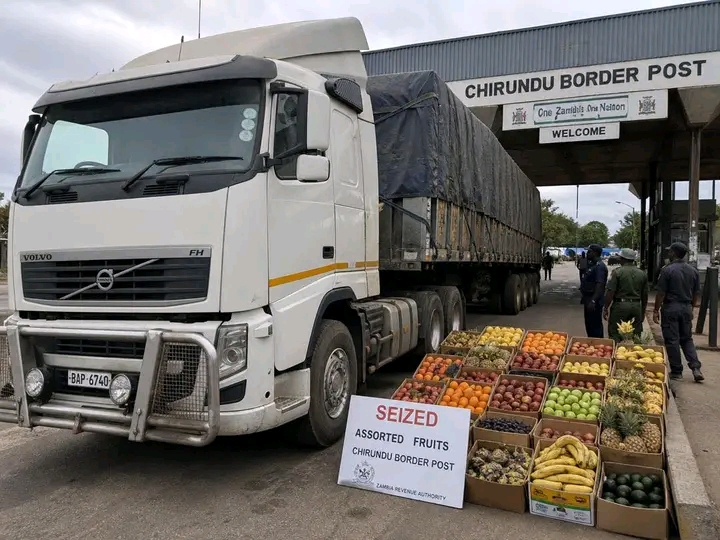
Trade picks up at Chirundu as Zambia’s election ends amid full throttle 24-hour border activity

Breaking News Zambia
News41 Views Trade and transport activity at Chirundu Border Post is gradually increasing following Zambia’s re-election of President-elect Hakainde Hichilema. Zimbabwe and Zambia have agreed to operate Chirundu as a 24-hour border from 31 December 2025 to cut congestion and boost regional trade. Both countries also scrapped transit duties on petroleum products. Though, the border […]
41 ViewsTrade and transport activity at Chirundu Border Post is gradually increasing following Zambia’s re-election of President-elect Hakainde Hichilema.
Zimbabwe and Zambia have agreed to operate Chirundu as a 24-hour border from 31 December 2025 to cut congestion and boost regional trade. Both countries also scrapped transit duties on petroleum products.
Though, the border had largely remained open, few days in the run up to the polls, the border recorded reduced activities as traders and transporters took a cautious approach.
Normal immigration and customs services have resumed as usual, though long queues are still an order for the day, as some traders noted.
“After the election we were worried about delays, but trucks are still moving,” said cross-border trader Memory Chikanga.
Chikanga, however, highlighted that queues are slightly longer and called on the immigration authorities to expedite the clearing process.
Another vendor noted: “We were expecting disruptions, but the border is open and customers from Zambia are coming through.”
On another note, the Zimbabwean government says it has secured funding for a US$900 million project to rehabilitate the Harare to Chirundu Highway and modernize the Chirundu Border Post.
The construction is expected to start within weeks and take 18 months to complete, is expected to boost cargo movement between the two countries.
The project will run as a public-private partnership, with the full financing structure to be finalized in the next eight weeks. Emergency repairs on the worst-hit sections will begin immediately while full works are prepared.
The timing is strategic. Economic activity is surging north of Zimbabwe as Zambia enters a second term under President Hakainde Hichilema. His administration has focused on debt restructuring and attracting mining investment. Zambia is now targeting 3 million tonnes of copper output per year by 2031, backed by major expansions at Lumwana, Mopani, Konkola and Mingomba. That growth will create heavy demand for moving equipment into mines and copper out to ports.
The Democratic Republic of Congo adds to that freight base. Its copper and cobalt mines near the Zambian Copperbelt rely on regional roads and rail to reach global markets, with options via Angola, Tanzania, and south through Zambia and Zimbabwe.
Across the region, governments and investors are upgrading corridors. The Lobito Corridor is being pushed toward the Copperbelt, TAZARA is undergoing a $1.4 billion overhaul to Dar es Salaam, and private rail firms are adding capacity. Zimbabwe is also modernizing its rail network.
For Zimbabwe, the Harare-Chirundu road is key to staying competitive. The southern section to Beitbridge was already rehabilitated. Fixing the northern link addresses a major bottleneck. Poor conditions between Karoi and Chirundu have slowed trucks and raised costs, as seen during Zimbabwe’s maize imports from Zambia.
Beyond the road, the efficiency of Chirundu Border will matter. Faster clearance, 24-hour operations, and better coordination among customs, immigration and clearing agents will determine how many trucks can move daily.
More traffic also means more business inside Zimbabwe — in fuel, maintenance, warehousing, logistics and distribution. Improved connectivity should also boost trade between Harare and Lusaka in food, fuel, and manufactured goods.
With $900m now committed, Zimbabwe’s return will depend on one thing: whether the corridor can attract and move freight faster and cheaper than rival routes.






Community Feedback