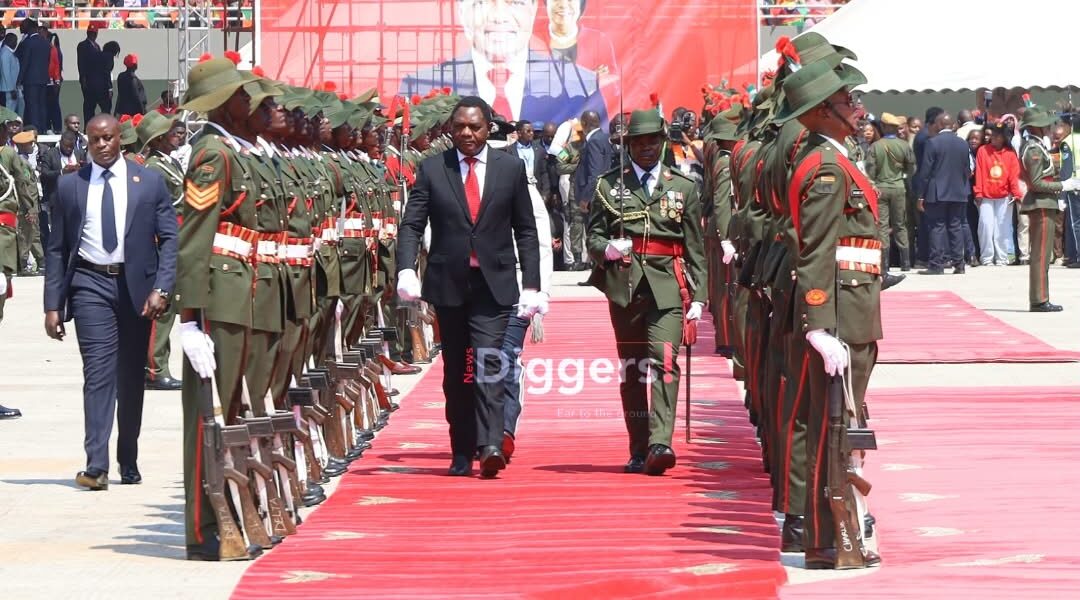
The mammoth task of healing Zambia, reclaiming its reputation

Breaking News Zambia
NewsWE DID not expect that three weeks after elections, we would still be talking about healing and reviewing post-election events. But as the Northerners say, “where an elephant has died, the whisper around the village becomes that of the dying elephant”. Our hope is that we can amicably close this chapter as a country and […]
WE DID not expect that three weeks after elections, we would still be talking about healing and reviewing post-election events. But as the Northerners say, “where an elephant has died, the whisper around the village becomes that of the dying elephant”. Our hope is that we can amicably close this chapter as a country and focus on the economy and delivery of public services.
But for one final installment, here is our call for our leaders to help the country pick the pieces and soldier on. Of course doing this is not going to be easy because, as we have repeatedly stated in our previous opinions, there’s no denying that some of the happenings after the August 13 elections have left Zambia politically unsettled and, in many respects, still divided.
But beyond the domestic consequences, there is another question which deserves serious reflection: what has happened to Zambia’s international image? For more than 60 years, Zambia has proudly projected itself as one of Africa’s most peaceful democracies, a country where elections may be fiercely contested but where power changes hands through the ballot rather than through guns. We have known political tension, heated campaigns and bitter disagreements, but we have not known war. That reputation has been one of Zambia’s greatest diplomatic assets.
The difficult question now is whether that image remains intact after the events of August. When foreign governments, investors, diplomats, election observers and international institutions look at Zambia today, do they still see the same country they saw before August 13? Have the post-election developments created doubts around the democratic credentials of an administration that came to power carrying enormous international goodwill? These are questions that matter for diplomacy, investment, access to international capital and Zambia’s credibility as a country that routinely lectures others about peaceful democratic transitions.
The UPND came into power with a powerful international story. It had spent decades in opposition . Its victory in 2021 was celebrated across Africa and beyond as proof that democratic change remained possible on the continent. International partners saw the new regime as a party that spoke the language of constitutionalism, economic discipline, institutional reform and the rule of law. That image helped Zambia considerably. It strengthened investor confidence, improved relations with Western governments and multilateral institutions, and gave the country political goodwill as it sought debt restructuring and economic recovery.
That is why the events following this year’s election carry greater reputational risk for the government. This does not mean that every allegation against government is true or that President Hichilema must be blamed personally for every questionable event. Governments have security responsibilities. Police operations can involve sensitive intelligence. Opposition politicians can also exaggerate and misinform as we saw in some situations. But international reputation is not built only on whether government has an explanation. It is built on whether that explanation is credible, transparent and consistent with democratic standards. Where there are doubts, silence and secrecy do not protect a government; they often deepen suspicion.
Our President and his government therefore have a mammoth task ahead. The President needs to rebuild confidence not only among Zambians, but also among those outside the country who have serious interests in Zambia. Investors want to know that contracts and their assets will be protected by a strong and independent Judiciary. Development partners want confidence that the rule of law is respected. Diplomats want assurance that political disagreements will not threaten national stability. International lenders and businesses want predictability. Political risk is not an abstract concept. It affects the cost of borrowing, investment decisions, currency stability and the willingness of companies to commit long-term capital.
This government needs to also understand that economic rebuilding and reputational rebuilding are now interconnected. Investors do not separate politics from economics. A country may have good mineral resources, improving macroeconomic indicators and attractive investment opportunities, but if there is uncertainty about institutional independence, access to justice or political stability, capital becomes more cautious. For this reason, rebuilding Zambia’s international image is not something that can wait until after economic recovery. It is part of economic recovery itself.
President Hichilema has won another mandate. His challenge now is to define what legacy that mandate will produce. Will his second term be remembered as the period when Zambia consolidated its democratic maturity and economic recovery, or as the period when questions around political power began to overshadow earlier gains? Will institutions emerge stronger? Will political tolerance improve? Will foreign partners continue to view Zambia as one of Africa’s safest democratic bets?

Community Feedback