
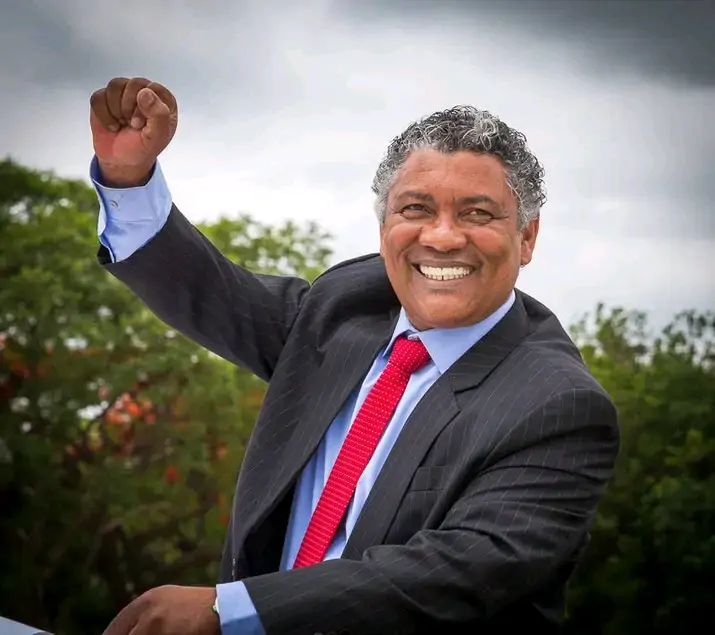
POST-ELECTION NATIONAL DIALOGUE:DEMOCRACY, RULE OF LAW, NATIONAL SECURITY AND THE ZAMBIA WE ALL WANT- HON. GIVEN LUBINDA

Breaking News Zambia
NewsFOR IMMEDIATE RELEASE PRESS STATEMENT BY HON. GIVEN LUBINDA POST-ELECTION NATIONAL DIALOGUE: DEMOCRACY, RULE OF LAW, NATIONAL SECURITY AND THE ZAMBIA WE ALL WANT Lusaka, Zambia | 30 September 2026 1. OPENING: A CALL FOR CALM, TRUTH AND NATIONAL RESPONSIBILITY I have had the privilege of serving the Republic of Zambia in various senior public […]
FOR IMMEDIATE RELEASE
PRESS STATEMENT
BY HON. GIVEN LUBINDA
POST-ELECTION NATIONAL DIALOGUE:
DEMOCRACY, RULE OF LAW, NATIONAL SECURITY AND THE ZAMBIA WE ALL WANT
Lusaka, Zambia | 30 September 2026
1. OPENING: A CALL FOR CALM, TRUTH AND NATIONAL RESPONSIBILITY
I have had the privilege of serving the Republic of Zambia in various senior public offices for more than three decades. It is in that spirit of public service, and pursuant to Article 20 of the Constitution, that I issue this statement to contribute to the national debate on matters affecting our country.
I address this statement to my fellow Zambian citizens, State institutions, political actors, civil society, the faith community and all others following the events that have unfolded since the 13 August 2026 General and Presidential Elections.
I have been out of the public domain since April this year, and many explanations and speculations have been offered as to why. I will address that matter at an appropriate time. For now, I want the national conversation to be about Zambia—not about me.
There are matters affecting our country that are too important to be left to speculation, political rhetoric or silence. Some of these matters concern the very institutions upon which our democracy depends.
I have always held, and will continue to hold, the firm and unequivocal belief that Zambia must emerge from every General Election stronger, more united and more confident in its institutions.
Elections are not merely contests for political power. They are one of the principal ways in which a nation exercises democratic choice. They are part of the process through which one generation entrusts the responsibility of leadership to another while preserving the unity and continuity of the Republic.
Elections should strengthen our democracy, not fracture our nation.
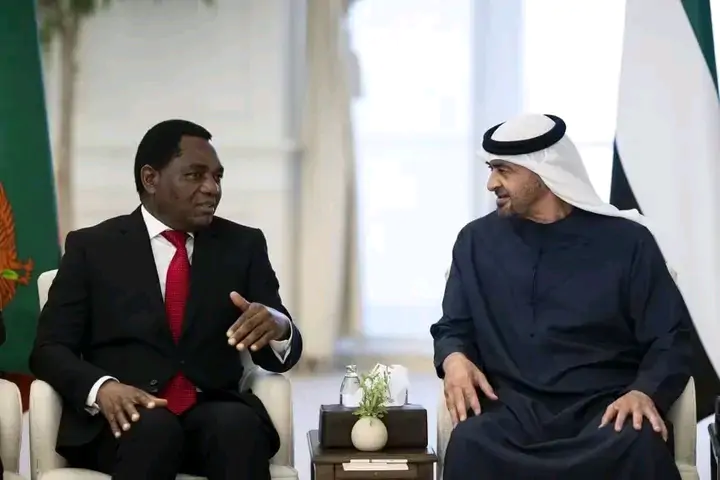
The 2026 General Election has been held. The Electoral Commission of Zambia announced the Presidential election result, President Hakainde Hichilema was declared President-elect on 18 August, and he was sworn in on 1 September 2026.
Against that background, my central message is simple:
ZAMBIA BELONGS TO ALL OF US.
Government belongs to the people. So do opposition political parties, civil society organisations, faith-based organisations and every other lawful organisation operating within our constitutional order.
No individual, no political party and no institution has a greater claim to Zambia than any other citizen.
An election may determine who exercises governmental authority. It does not determine who belongs to the nation. Those declared winners and those declared losers must therefore recognise a fundamental principle of constitutional democracy: elections give citizens the opportunity to choose those by whom they wish to be governed; they do not create permanent political masters and permanent political subjects.
There must be no culture of permanent victors and permanent vanquished. There must be no politics in which winning an election is treated as ownership of the Republic, or losing an election is treated as the loss of one’s citizenship, dignity or constitutional rights.
The Government is the government of all Zambians; The opposition is part of the constitutional order.
Citizens who disagree with those in power remain equally entitled to the protection of the law.
Our common interest must therefore be a peaceful, democratic and united Zambia.
2. ELECTORAL GRIEVANCES MUST FOLLOW THE LAW
Where a candidate, political party or citizen believes that an electoral irregularity has occurred, the response must be evidence, law and lawful process. The proper course is to gather the evidence, invoke the mechanisms established by the Constitution and electoral law, and allow the competent institutions to determine the matter.
Disputes over elections must not be settled by intimidation, political declarations or the court of public opinion. They must be settled by law.
There have been a number of parliamentary and local-government election petitions following the 2026 elections. These proceedings demonstrate that electoral grievances can and should be addressed through lawful institutions. The same constitutional principle must apply where a presidential election is challenged.
Where a presidential election challenge is contemplated, the constitutional procedure must be respected and, critically, access to the process itself must be protected.
Article 103 of the Constitution provides that a person may, within seven days of the declaration of a President-elect, petition the Constitutional Court to nullify the election on specified constitutional or electoral-law grounds. The Constitutional Court is required to hear and determine such a petition within fourteen days of its filing.
That is not an ordinary administrative period. It is a constitutionally prescribed window of exceptional importance. It follows that every institution and every stakeholder must appreciate the importance of ensuring that the constitutional right to invoke that process is capable of being exercised within the prescribed period.
A constitutional right is meaningful only if the institutions necessary to exercise that right remain accessible.
The integrity of the electoral process does not end when votes are counted. It also depends upon the availability, accessibility and independence of the lawful mechanisms through which electoral disputes may be determined.
3. THE CLOSURE OF THE COURTS REQUIRES A CLEAR PUBLIC EXPLANATION
I recognise and respect the responsibility of the State to protect public institutions where there is a credible security threat. National security is a legitimate responsibility of Government. But national security cannot become a reason to suspend public accountability. The public is entitled to appropriate information concerning measures that materially affect access to justice, particularly where those measures occur during a constitutionally significant period.
It has been publicly reported that the courts were closed on 24 August 2026 during the period in which a presidential election challenge could be filed, and that a Judiciary memorandum referred to security concerns. It has also been publicly reported that opposition figures intended to challenge the Presidential election result.
I do not allege that any security threat was fabricated. I do not allege that the reasons for the closure were unlawful. However these are matters that must be established by evidence. But neither should legitimate questions arising from such an extraordinary circumstance be dismissed.
When a constitutional institution is closed at a moment of exceptional national importance, the public has a right to ask why.
The questions are straightforward:
What was the nature of the security threat? How was that threat assessed? What evidence supported the assessment? What safeguards were put in place to protect access to justice? What was the legal basis for the closure? What was its precise scope? Why was the duration considered necessary? And what arrangements were made to ensure that constitutional rights could still be exercised within the prescribed period?
These are not questions intended to undermine national security. They are questions demanded by constitutional accountability. Where sensitive intelligence cannot lawfully be disclosed, Government should nevertheless provide as much lawful information as possible to explain the necessity, proportionality and duration of extraordinary security measures.
Security institutions must be able to protect the Republic, but extraordinary powers must remain subject to constitutional discipline.
Article 103 establishes a specific constitutional mechanism for challenging the election of a President-elect. Any measure that materially affects access to that constitutional procedure therefore raises serious legal and constitutional questions.
Those questions should be addressed through lawful processes and, where necessary, judicial determination. In these circumstances, one would have expected appropriate arrangements to ensure that persons entitled to invoke the constitutional election-petition process were able to do so within the prescribed period. Whatever the circumstances surrounding the closure, the public deserves a clear account of what happened and what safeguards were applied to protect the constitutional process.
Silence cannot provide lasting confidence. Transparency can.
4. NATIONAL SECURITY AND THE RIGHTS OF CITIZENS MUST STAND TOGETHER
I reject the false choice between national security and civil liberties. Zambia needs both. Every Zambian needs both. The responsibility of the State is not to choose between protecting the nation and protecting constitutional rights. Its responsibility is to do both.
The State has the authority and the duty to protect citizens, public institutions and constitutional government. If there was a suspected plan to destabilise the Republic, unlawfully overthrow the Government or organise an armed insurrection, such conduct must be investigated.
Where admissible evidence establishes criminal conduct, those responsible must be prosecuted according to law. But the existence of a serious allegation does not eliminate the requirement for evidence.
An allegation is not a conviction. An accusation is not proof. Political rhetoric is not a substitute for evidence tested in court.
The proper sequence is clear:
Investigation;
Charge where the evidence and law justify it;
Fair trial;
Evidence; and
Judgment.
Citizens should not be publicly labelled insurgents, traitors or criminals merely because allegations have been made against them. The State must investigate. Prosecutors must prosecute where the evidence and law justify prosecution. Accused persons must have the opportunity to defend themselves and adduce evidence in accordance with the law. And courts must determine guilt or innocence.
That is not weakness. That is the strength of constitutional government.
I therefore appeal for restraint and deep introspection. Let security agencies conduct their work lawfully. Let prosecutors bring charges where the evidence and law justify them. Let accused persons defend themselves according to law. Let the courts determine guilt or innocence.
Let us not turn the court of public opinion into a substitute for the courts of law.
Criminal responsibility must be determined by evidence and lawful adjudication—not political declarations.
5. ARRESTS, DETENTION AND THE RULE OF LAW
There have been publicly reported arrests in connection with allegations involving treason and other national-security-related activities. These are extremely serious matters. They must therefore be handled with maximum seriousness, diligence, restraint and fidelity to the law. The seriousness of an allegation is precisely why the legal process must be followed carefully. The law must apply most carefully where the consequences for an accused person are most severe.
Under the Penal Code, treason includes specified conduct involving, among other things, preparing or endeavouring to overthrow by unlawful means the Government as by law established, and the law provides for life imprisonment in relation to the offence. Treason-felony is subject to a maximum sentence of twenty years.
The gravity of these offences makes due process more—not less—important. An allegation of treason is an allegation of extremely serious criminal conduct. It can have profound consequences for an accused person, that person’s family and the wider public. That is why I call upon the State to deal with such cases expeditiously, transparently and strictly in accordance with the Constitution and the law.
The seriousness of an allegation does not, by itself, remove the constitutional rights of an accused person. Where a person has been arrested, the public should have confidence that:
• the person is being treated in accordance with the Constitution and law;
• applicable rights relating to legal representation are respected;
• detention is subject to lawful judicial oversight;
• proceedings are commenced and conducted without unnecessary delay; and
• the ultimate determination of guilt or innocence is made by a competent court.
Where the law permits alternatives to detention, such as reporting conditions, restrictions on movement or other lawful measures, those possibilities should be considered on their merits, subject to statutory restrictions applicable to the offences alleged.
The publicly reported position that investigations into the treason allegations are complex and that investigators require time to complete the docket before prosecution can commence raises an important constitutional question: HOW LONG CAN A PERSON LAWFULLY REMAIN IN CUSTODY WHILE AN INVESTIGATION IS CONTINUING?
The answer cannot simply be that detention should continue for as long as an investigation takes. Not at all. This is tantamount to abortion of justice.
Liberty cannot be made indefinitely subordinate to administrative delay.
The Constitution protects personal liberty and provides important safeguards concerning arrest and detention. It also provides that a person charged with a criminal offence should receive a fair hearing within a reasonable time before an independent and impartial court established by law. These protections do not disappear because an allegation is serious.
Indeed, the more serious the allegation, the more important it is that the integrity of the legal process be beyond question.
These constitutional safeguards should guide all criminal investigations and prosecutions, including the most serious allegations facing the Republic.
6. THE DEATH OF MUTOTWE KAFWAYA: ZAMBIA DESERVES THE FACTS
The reported death of former Minister Mutotwe Kafwaya in circumstances surrounding a security operation at a private residence has generated serious public questions and differing accounts. I do not ask the public to accept one version of events over another before the facts have been properly established.
I ask for something more fundamental: Let the truth be established.
Let there be an independent, credible and lawful process capable of determining, on the evidence:
• what happened;
• who was present;
• what operation was being undertaken;
• what circumstances led to the use of force;
• how the death occurred;
• how the body was taken to Maina Soko Hospital; and
• why it took such a long time to establish the death.
These are not questions that should be answered through speculation. They should be answered through evidence.
The Inquests Act provides for an inquest where there is reasonable cause to suspect that a person has died a violent or unnatural death, or in circumstances in which the coroner considers an inquest necessary or desirable.
Accordingly, I support an appropriate lawful process—whether an inquest or another independent inquiry permitted by law—capable of establishing the facts and providing appropriate accountability.
The objective must not be political advantage.
It must be:
Truth, Accountability, Justice, and ultimately Public confidence.
The Kafwaya family deserves answers. They deserve justice.
The Zambian public deserves confidence that the circumstances surrounding the death have been examined impartially and according to law.
Every citizen also deserves the assurance that the State will treat life with the seriousness it deserves and that deaths occurring in circumstances involving State security operations will be subject to appropriate scrutiny.
A nation cannot build public trust around unanswered questions.
Where the State exercises coercive power, the public must be able to trust that such power is exercised lawfully and that, where questions arise, there is an independent mechanism capable of establishing the truth.
7. HIS GRACE DR ALICK BANDA’S STAY IN PRISON PENDING BAIL CONDITIONS
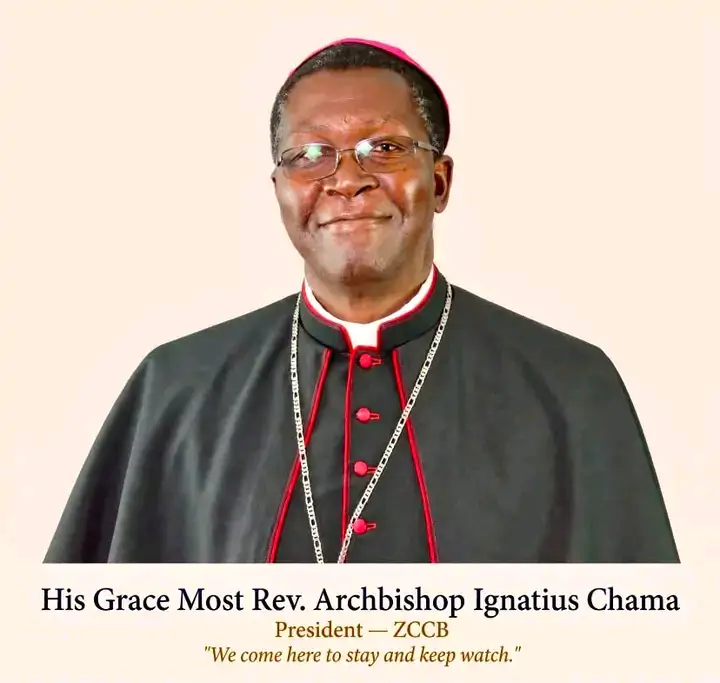
As I stated in my earlier statement concerning the matter of the DEC summoning Dr. Alick Banda for questioning, no one is above the law. Not even His Grace Dr. Alick Banda. However, it was a first for Zambia to keep the Archibishop of Lusaka, in a prison overnight and for most of the following day simply because he had to fulfil bail conditions. This is a man of fixed abode, of international acclaim, a spiritual leader of more than a million citizens and by no means a flight risk. Most would have expected that the authorities would have worked round the clock to ensure that he met his bail conditions to avoid him being kept in a prison.
8. WHAT I AM ASKING OF GOVERNMENT
I respectfully, but firmly, call upon Government to take the following steps:
1. PROVIDE A CLEAR PUBLIC ACCOUNT
Provide a clear public account, consistent with legitimate national-security requirements, of the circumstances that led to the closure of the courts and any extraordinary security deployment.
Where information cannot lawfully be disclosed, explain the legal basis for withholding it.
2. PROVIDE LAWFUL AND TIMELY INFORMATION
Provide lawful and timely information, to the extent that it can properly be disclosed, concerning allegations of plans to destabilise or unlawfully overthrow the Government.
Protect genuinely sensitive intelligence where disclosure would lawfully prejudice investigations or national security.
But national security should not become a blanket justification for withholding information that can properly be disclosed.
3. PROTECT DUE PROCESS
Ensure that all persons arrested in connection with alleged security offences receive due process, including access to legal representation and appropriate judicial oversight.
The seriousness of the allegations must not become a justification for weakening the rights of those accused and keeping them in incarceration for an inordinate length of time.
4. TEST ALLEGATIONS THROUGH EVIDENCE
Ensure that allegations against political actors are tested through evidence and lawful judicial processes rather than determined through political declarations.
Let the evidence speak. Let the courts decide.
5. ESTABLISH THE FACTS SURROUNDING THE DEATH OF HON MUTOTWE KAFWAYA
Initiate or facilitate an appropriate independent inquest or other lawful inquiry into the circumstances surrounding the death of Hon Mutotwe Kafwaya.
6. STRENGTHEN THE ELECTORAL SYSTEM
Use final election-observation reports and appropriate domestic reviews to identify weaknesses in the electoral system and strengthen electoral institutions before the next electoral cycle. The objective must be an electoral system in which citizens have confidence before, during and after elections.
7. REASSURE THE NATION
Reassure citizens that the State will protect them from violence and threats to national security while equally protecting their constitutional rights.
Security must protect the Republic without weakening the constitutional order it exists to defend.
These are not unreasonable demands. They are demands for transparency, due process, accountability and constitutional government.
____
8. APPEAL TO PRESIDENT HAKAINDE HICHILEMA AND GOVERNMENT
Mr President,
The election has given your administration another mandate. That mandate carries not only authority. It carries responsibility. The responsibility to govern all Zambians. The responsibility to protect the Constitution. The responsibility to protect national security. The responsibility to respect institutions. The responsibility to protect the rights of citizens—including citizens who disagree with the Government.
The country does not need triumphalism. It needs reassurance. It does not need political humiliation. It needs reconciliation. It does not need citizens to fear their Government. It needs citizens to trust that the law protects them.
Your administration has an opportunity to demonstrate that security and liberty can coexist. It has an opportunity to demonstrate that the majority can govern while respecting the rights of political minorities. It has an opportunity to demonstrate that national unity does not require political uniformity. And it has an opportunity to demonstrate that the strength of Government is not measured merely by its capacity to exercise power, but by its willingness to exercise that power within the limits of the Constitution.
Mr President, where allegations are made, let the evidence be produced and tested. Where allegations are false, let evidence expose them. Where wrongdoing has occurred, let the law address it. Where citizens have legitimate questions, answer them. Where institutions have made mistakes, correct them. Where national-security measures have been necessary, explain them to the extent the law permits. Where citizens have been accused of serious offences, let them have their day in court. Where constitutional rights have been engaged, protect them. And where the nation is divided, lead it towards reconciliation rather than deeper division.
The Government has a mandate. But a constitutional mandate is not a licence to disregard constitutional limits.
The opposition has a role, Civil society has a role, The media has a role, Faith communities have a role and every citizen has a role. And all must also operate within the law.
Our common ground must therefore be the Constitution and the rule of law.
No Government is above the Constitution, No opposition is above the law, But also No citizen is beneath the protection of the law.
That is the principle that must guide Zambia beyond this election. The choice before us is not between Government and opposition. It is not between security and liberty. It is not between political victory and political defeat. The enduring choice is whether we will strengthen or weaken the institutions that must serve generations of Zambians long after today’s political actors have left the stage.
Let us therefore build a political culture in which disagreement does not become enmity. Let us build institutions in which accountability is not treated as hostility. Let us build a security framework in which protecting the State also means protecting the constitutional rights of the people. Let us build a justice system in which allegations are tested by evidence and guilt is determined by courts. Let us build an electoral system in which every citizen can have confidence in both the vote and the mechanisms available to challenge it.
Above all, let the Constitution and the rule of law remain the common ground upon which every Zambian—Government, opposition, civil society and ordinary citizen alike—can stand.
That is the Zambia we should protect.
That is the Zambia our institutions must serve.
That is the Zambia we must hand to the next generation.
ZAMBIA BELONGS TO ALL OF US.
GIVEN LUBINDA
Lusaka, Zambia | 30 September 2026

Community Feedback