Hichilema and Vulgarity

Breaking News Zambia
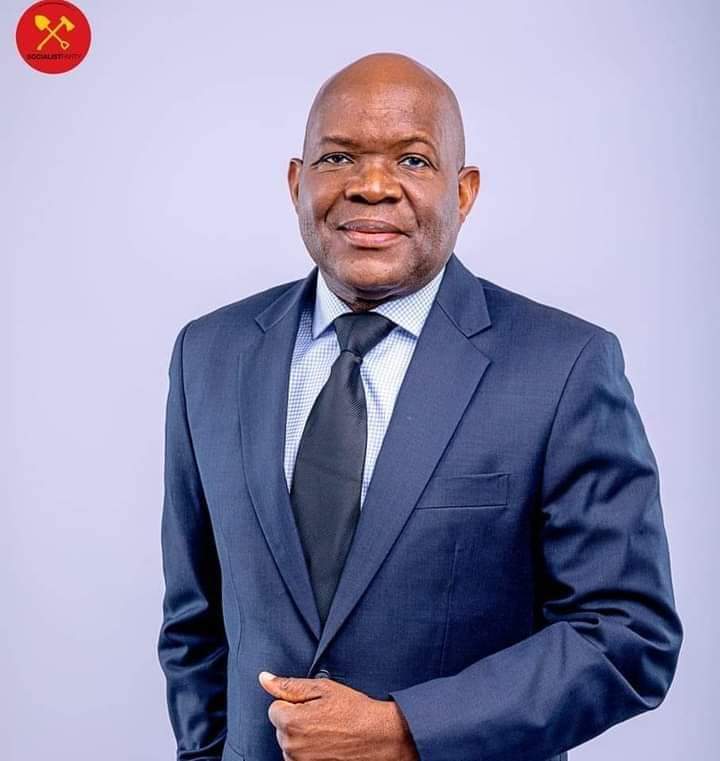
NewsBy Dr. Fred M’membe Mr Hakainde Hichilema’s observations on the dangers of increasing vulgarities in our politics and public discourse are very valid. But, as usual, they are one-sided. He is more concerned and talking about vulgarity against himself and his group. And not about opposition and other leaders who are daily being openly subjected […]
President Hakainde Hichilema
Fred M’membe
By Dr. Fred M’membe
Mr Hakainde Hichilema’s observations on the dangers of increasing vulgarities in our politics and public discourse are very valid. But, as usual, they are one-sided. He is more concerned and talking about vulgarity against himself and his group. And not about opposition and other leaders who are daily being openly subjected to the vulgarity of his league of cadres, social media gangs like Koswe, and other paid vulgar peddlers. Injury or death of political opponents don’t seem to trouble Mr Hichilema at all. He continually laments about UPND cadres or supporters who have been injured or killed but never say anything about opposition leaders, cadres, and supporters injured or killed by his members. There’s a lot Mr Hichilema can do to reduce vulgarity. But he has to start by removing the log in his own eye before trying to get the specks in other’s eyes. That said, the dominance of vulgarities in public discourse is something that should worry all of us because it significantly alters social, political, and psychological environments. When coarse language and profanity shift from private or counter-cultural use into mainstream debate, it creates several distinct societal consequences. Vulgar language acts as an emotional amplifier. It hardens divisions between groups, making compromise harder to achieve and framing political opponents as enemies rather than peers. Shock value often replaces substantive debate. Complex policy discussions are frequently sidelined in favour of sensational, profane soundbites that capture media attention. When public officials and leaders use vulgarities, it degrades the perceived dignity and authority of governing institutions, reducing public respect for the office. Continuous exposure to vulgarity reduces its shock value. Over time, behaviour that was once considered unacceptable becomes normalised, leading to progressively harsher language to achieve the same emotional impact. Coarse language lowers the barrier to aggressive behaviour. Studies in social psychology suggest that hostile communication environments can escalate verbal aggression into physical confrontation. A hostile, vulgar public square can alienate moderate voices. Individuals who prefer reasoned debate often opt out of public discussions to avoid vitriol, leaving the discourse to more extreme participants. The baseline rules of mutual respect in public spaces weaken. This breakdown impacts daily interactions in schools, workplaces, and community spaces. Media algorithms prioritise engagement, which is heavily driven by outrage and conflict. Vulgarity accelerates this cycle, shifting media incentives away from informative journalism toward sensationalism. We note a deliberate strategy behind the use of vulgarity: Anti-Establishment Appeal: For certain segments of the public, vulgarity is interpreted as a sign of authenticity. It is viewed as a rejection of “polished” or “elitist” political speech, signalling that a speaker is direct, unvetted, and close to the “real” grievances of the people. About the Author Dr. Fred M’membe is a Journalist and politician heading the Socialist Party of Zambia.

Community Feedback