
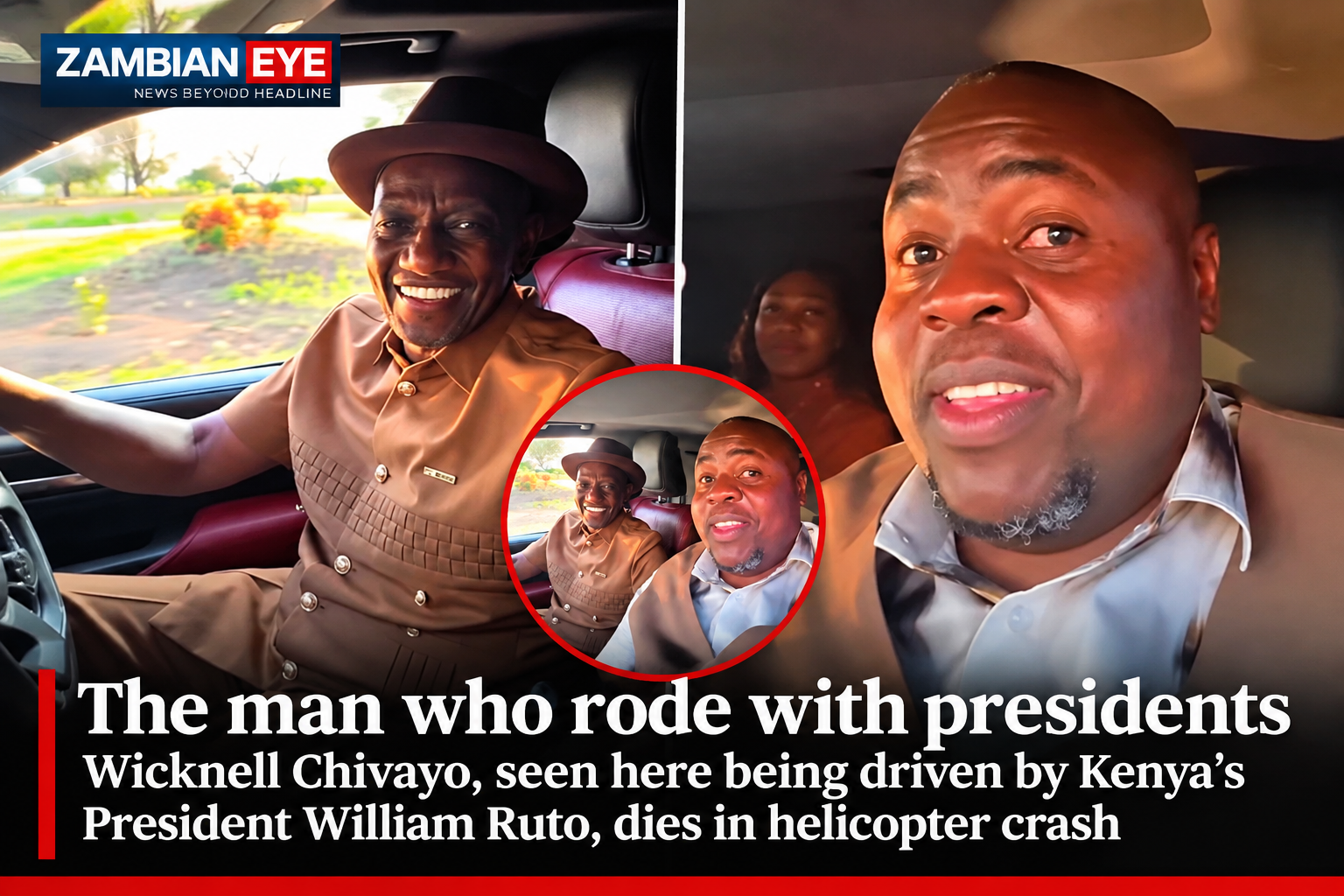
Wicknell Chivayo dies in helicopter crash: The businessman who became famous for standing beside presidents

Breaking News Zambia
NewsHARARE – Zimbabwean businessman Wicknell Chivayo, one of the country’s most recognisable and controversial social-media personalities, has died alongside his wife, Lucy “Lulu” Muteke, after a helicopter crashed in rural Marondera on Wednesday evening. The crash happened at about 17:00 hours in the Marondera Rural area, southeast of Harare. Zimbabwean police initially confirmed that an […]
HARARE – Zimbabwean businessman Wicknell Chivayo, one of the country’s most recognisable and controversial social-media personalities, has died alongside his wife, Lucy “Lulu” Muteke, after a helicopter crashed in rural Marondera on Wednesday evening.
The crash happened at about 17:00 hours in the Marondera Rural area, southeast of Harare.
Zimbabwean police initially confirmed that an aircraft carrying six people had crashed and that emergency teams were responding at the scene. Government spokesperson Nick Mangwana later said there were no survivors. The family subsequently confirmed that Chivayo and his wife were among those who died.
The identities of the other victims and the circumstances that led to the crash were still being established as reports emerged.
For a country that had become accustomed to seeing Chivayo’s face beside presidents, celebrities, church leaders and other prominent figures, the news marks the sudden end of one of Zimbabwe’s most unusual public personas.
But who exactly was Wicknell Chivayo?
The man behind the photographs
Chivayo became famous far beyond Zimbabwe largely because of what he showed the world through social media.
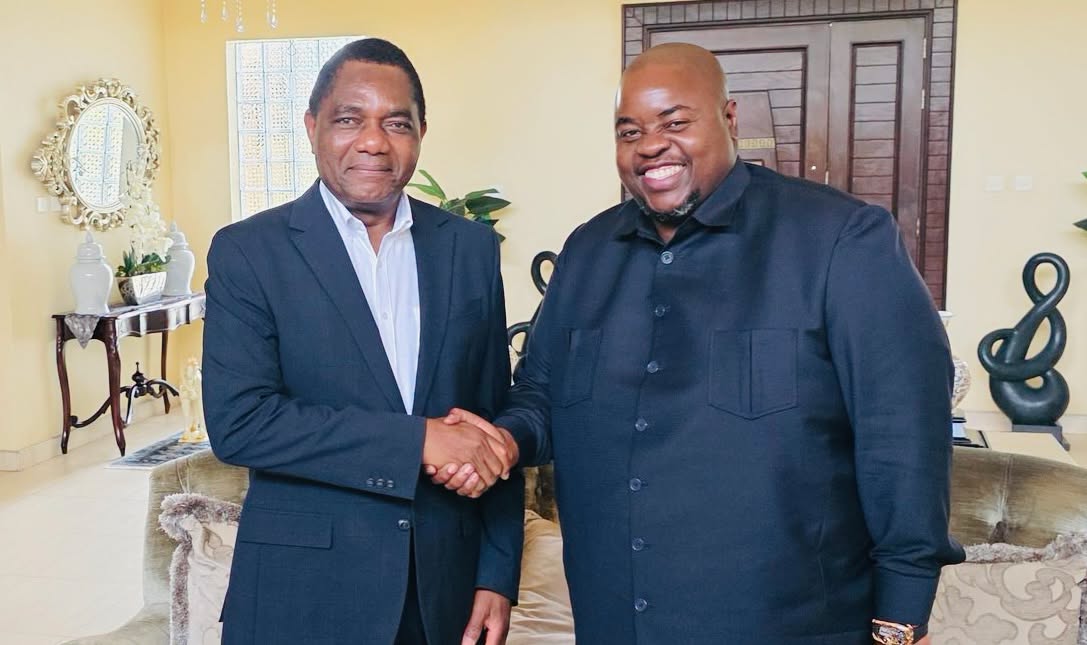
His photographs often placed him in the company of presidents and other powerful figures.
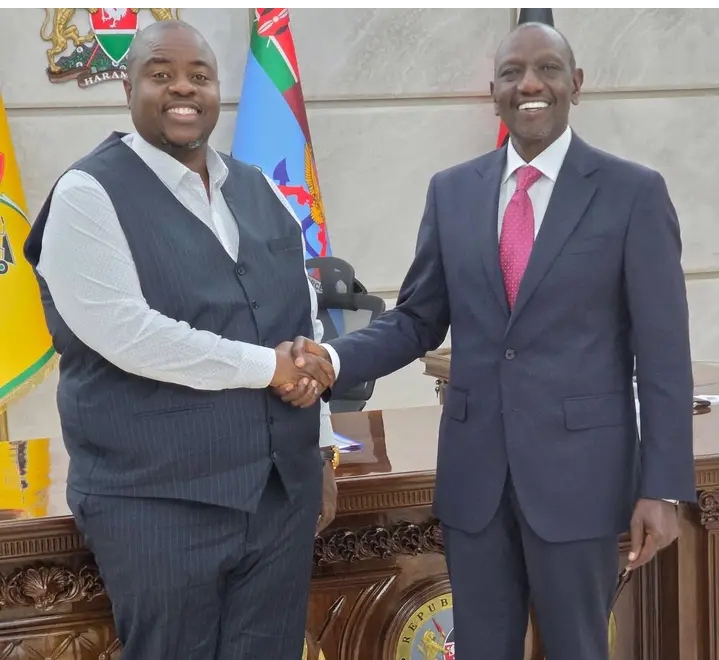
He was photographed with Zimbabwean President Emmerson Mnangagwa, Kenya’s William Ruto, Tanzania’s Samia Suluhu Hassan, Uganda’s Yoweri Museveni and Zambia’s former President Edgar Lungu.
He also had documented encounters with Zambia’s President Hakainde Hichilema, Nigeria’s Bola Ahmed Tinubu, Malawi’s Peter Mutharika and Lazarus Chakwera, and Mozambique’s Daniel Chapo.
These were not simply occasional photographs.
Chivayo regularly posted images and videos from his meetings, dinners and other encounters with political leaders, creating a public image of extraordinary access to the highest levels of power.
That access became part of his identity.
A 2025 profile by the Mail & Guardian described his story as one in which wealth, proximity to political power, philanthropy and controversy had become intertwined.
Why did presidents know him?
That question followed Chivayo throughout his rise.
The answer is not as simple as saying he was “a friend of presidents”.
Chivayo was a businessman whose interests included energy and infrastructure, and his company Intratrek Zimbabwe became involved in major projects.
His growing wealth and business interests gave him access to influential circles, while his personal relationships with political figures became increasingly visible.
At the same time, Chivayo himself frequently publicised those relationships.
In Kenya, for example, his association with President William Ruto became a major subject of discussion after Chivayo posted images and videos of encounters with the Kenyan leader, including a widely circulated moment in which Ruto was shown driving him to his helicopter. The Times reported that Chivayo described his relationship with Ruto as personal and based on faith, respect and mentorship, while denying that he used the relationship to obtain favours or tenders.
His meetings with African presidents consequently became part of his public brand.
From a bus company clerk to a major businessman
Chivayo’s story was not one of inherited political power.
Profiles of his life describe a much more modest beginning.
He was born in Zimbabwe in 1982 and reportedly left school at a relatively young age before working as a wages clerk for a bus company.
He later moved into foreign-exchange trading before building his business interests.
His early life also included a serious legal setback.
TRT Afrika reported that Chivayo was sentenced to three years in prison in 2004 after being convicted in a fraud case involving a South African national. He served time at Chikurubi Maximum Security Prison.
That episode did not end his business ambitions.
After his release, he went on to establish Intratrek Zimbabwe, an engineering, procurement and construction company that became particularly associated with energy projects.
The Gwanda solar project changed everything
One of the most important chapters in Chivayo’s business career was the Gwanda Solar Power Project.
In 2015, Intratrek was awarded a contract to construct a 100-megawatt solar power station in Gwanda, with the project valued at roughly US$173 million to US$183 million depending on the figure and stage being referenced.
The project subsequently became embroiled in disputes over payments, performance, cancellation and alleged wrongdoing.
Zimbabwe Power Company released about US$5.6 million for pre-commencement works, according to court and media records, while the project itself faced years of delays and legal battles.
Chivayo and Intratrek faced criminal allegations connected to the project, which they denied.
Importantly, Chivayo and Intratrek were later acquitted of the US$5.6 million fraud charges after the magistrate found there had been an unreasonable delay in prosecuting the matter.
The wider contractual dispute continued through the courts, and in September 2026 Intratrek was given another opportunity to proceed with the Gwanda project, with ZESA setting a 24-month delivery period and the renegotiated project cost reportedly reduced to below US$132 million.
That development came only weeks before Chivayo’s death.
The luxury lifestyle that made him a social-media celebrity
Business was only one part of the Chivayo phenomenon.
His lifestyle became almost as famous as his companies.
Luxury cars, private aircraft, expensive watches, designer clothing, holidays and large cash transactions regularly appeared on his social-media accounts.
But it was his gifts that arguably made him a household name.
Chivayo became known for giving away expensive vehicles and substantial amounts of money to musicians, church leaders, sports personalities and ordinary people.
His gifts could be extraordinarily large.
Recent reporting noted that he had given away luxury cars and cash on a scale running into millions of dollars, while the Mail & Guardian estimated that the value of vehicles he had donated had exceeded US$10 million.
The gifts were frequently filmed, photographed and posted online.
That created a cycle in which the generosity itself became news.
Someone would receive a vehicle.
Chivayo would announce it.
The photographs would circulate.
And his profile would grow further.
“Sir Wicknell” and the billionaire ambition
Chivayo was widely known by the name “Sir Wicknell”, a title he used publicly.
But the description of him as a billionaire requires caution.
There is no reliable public evidence establishing that he had a billion-dollar personal fortune.
TRT Afrika reported that Chivayo had said his ambition was to become a dollar billionaire. That is different from establishing that he had already reached billionaire status.
His wealth nevertheless became one of the defining features of his public identity.
His relationship with Mnangagwa
Perhaps no political relationship was more important to Chivayo’s public image than his association with President Emmerson Mnangagwa.
He was frequently photographed with the Zimbabwean leader and publicly supported him.
The Times reported that Chivayo had presented Mnangagwa with ten Toyota Land Cruisers and a fleet of ambulances for his 83rd birthday, while Chivayo described his political support as separate from buying influence.
Mnangagwa, for his part, publicly described Chivayo as a philanthropist, according to the same report.
That closeness also meant that questions about Chivayo were often questions about the intersection between wealth, business and political power in Zimbabwe.
The questions surrounding his wealth
Chivayo’s wealth did not go unquestioned.
His public displays of money and luxury prompted questions from journalists, politicians and anti-corruption authorities about the sources of his wealth and his business dealings.
The Mail & Guardian reported that Zimbabwe’s anti-corruption authorities had investigated his unexplained wealth after his conspicuous spending and gifting attracted attention. Chivayo maintained that he had committed no crime.
Other allegations concerning tenders, influence and business dealings have circulated over the years.
Those allegations should be distinguished from proven criminal wrongdoing.
Chivayo denied accusations of corruption and other wrongdoing, and some of the criminal proceedings associated with his business dealings ended without convictions against him.
That complicated history is part of what made him such a polarising public figure.
A businessman, philanthropist or political insider?
There was never one simple description of Wicknell Chivayo.
To his supporters, he was a businessman who used his wealth to help others.
His donations to churches, musicians, sports figures and ordinary Zimbabweans created a following that viewed him as generous and successful.
To his critics, his extraordinary access to political leaders and involvement in government-linked business raised questions about how wealth and political influence intersected in Zimbabwe.
Chivayo rejected the suggestion that his relationships with political leaders were evidence of wrongdoing.
The result was a public figure who could simultaneously be seen as a businessman, philanthropist, social-media celebrity and politically connected entrepreneur.
His connection to Zambia
Chivayo was not unknown in Zambia.
In November 2025, he met President Hakainde Hichilema at State House in Lusaka.
Reports of the meeting said discussions included renewable energy, infrastructure and regional investment. Chivayo subsequently posted about the encounter and praised Hichilema’s approach to energy-sector investment.
The meeting became another example of the expanding network of African presidents with whom Chivayo had established publicly documented contact.
For Zambians who encountered his photographs online, however, the most striking feature was often not the business discussion but the fact that another African businessman seemed able to move comfortably between State Houses, luxury settings and high-profile social circles.
The final hours
On Wednesday, Chivayo was still active on social media.
CITEZW reported that he had announced substantial gifts to two lawyers he described as long-standing friends and mentors. One was reportedly offered a Lexus GX 550 and US$250,000 in cash, while another was offered a Range Rover Sport Autobiography and US$500,000.
Hours later, the helicopter carrying him and other passengers crashed in rural Marondera.
The contrast has made the news even more striking.
A man whose social-media presence was built around wealth, movement, relationships and public displays of generosity suddenly disappeared from the public stage in a matter of minutes.
What is known about the crash
Zimbabwean authorities have confirmed that the aircraft crashed at about 17:00 in Marondera Rural.
Police initially said six people were aboard.
Government spokesperson Nick Mangwana subsequently said there were no survivors.
The aircraft caught fire, and police said the condition of the victims made identification difficult.
The cause of the crash has not yet been established.
Authorities have also not publicly provided a complete account of the aircraft’s departure point, destination or what happened immediately before the crash.
Those questions will now form part of the investigation.
A life that became a public spectacle
Perhaps the most unusual thing about Wicknell Chivayo’s life was the extent to which he turned his private world into public content.
Many wealthy businesspeople remain largely unknown outside boardrooms.
Chivayo did the opposite.
He showed the cars.
He showed the gifts.
He showed the cash.
He showed the private aircraft.
And, perhaps most significantly, he showed the presidents.
Those photographs became a kind of visual record of his rise and helped transform him from a Zimbabwean businessman into a figure recognised across Africa.
That is why the photographs matter now.
When social media users began sharing news of his death, many did not first remember Intratrek or the Gwanda solar project.
They remembered the man standing beside presidents.
The man giving away cars.
The man whose Instagram feed looked more like a continuous display of wealth and access than the conventional public profile of a businessman.
Wicknell Chivayo’s story was therefore much bigger than the helicopter crash that ended his life.
It was a story about ambition, wealth, business, philanthropy, controversy, social media and proximity to political power — all compressed into the life of one of Zimbabwe’s most visible businessmen.
And now, at 43, that extraordinary story has come to an abrupt end.
Zambian Eye will continue to follow developments from Zimbabwe, including the identities of the other victims and the investigation into what caused the helicopter to crash.
Community Feedback