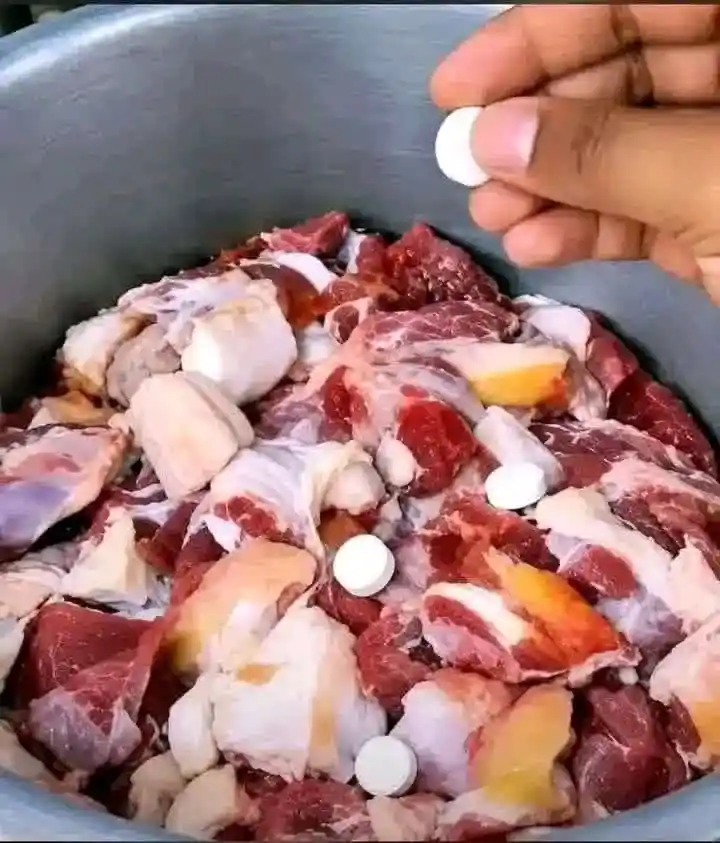
Why Are Some People Adding Paracetamol to Meat? The Truth Behind the Viral Cooking Trend

Breaking News Zambia
NewsA bizarre cooking practice involving paracetamol tablets and meat has continued to circulate on social media, leaving many people asking the same question: why would anyone put a painkiller into food? The practice has reportedly been promoted as a way of making tough meat softer or reducing cooking time. Similar claims have circulated on social […]
A bizarre cooking practice involving paracetamol tablets and meat has continued to circulate on social media, leaving many people asking the same question: why would anyone put a painkiller into food?
The practice has reportedly been promoted as a way of making tough meat softer or reducing cooking time. Similar claims have circulated on social media in different countries, including videos showing people adding paracetamol, also known as acetaminophen, to meat while cooking. Fact-checkers have found no scientific evidence that paracetamol is a safe or effective meat tenderiser.
The idea appears to be linked partly to the desire to make meat cook faster, particularly where fuel costs and long cooking times are concerns. A 2023 review published in Heliyon examined reports of households and food vendors using acetaminophen for meat tenderisation and highlighted concerns about the practice.
But paracetamol is a medicine, not a cooking ingredient.
The US Food and Drug Administration describes acetaminophen, commonly called paracetamol outside the United States, as a medicine used to temporarily relieve pain and reduce fever. It is considered safe when used according to its instructions, but excessive or inappropriate use can cause serious liver damage and, in severe cases, liver failure and death.
That distinction is important because something being safe when taken as a medicine at the recommended dose does not mean it is safe to put into a pot of food.
There have also been claims online that cooking paracetamol causes it to break down into toxic compounds. A published review discusses the possibility of acetaminophen undergoing hydrolysis during cooking and identifies 4-aminophenol as a potentially harmful product. However, the same scientific literature acknowledges that there is limited direct research specifically establishing the health effects of eating meat cooked with paracetamol.
Looking for the latest sports odds and markets? Check them out here.
That means social-media claims should not be exaggerated into saying that every person who eats meat prepared this way will immediately suffer organ failure.
The evidence does, however, provide no basis for recommending the practice, while established information about paracetamol toxicity makes deliberately adding the medicine to food an unnecessary and potentially hazardous misuse of a drug.
There is another important point: paracetamol is not needed to make meat tender.
There are established culinary techniques for improving tenderness, including choosing appropriate cuts, marinating, mechanical tenderising, slow cooking and using suitable food ingredients. Fact-checking sources have also pointed to conventional methods such as brining and other recognised tenderisation techniques instead of using medicines.
For food safety generally, the World Health Organization recommends that meat, poultry, eggs and seafood be cooked thoroughly, with food reaching an internal temperature of at least 70°C to reduce the risk from harmful microorganisms.
So, if you encounter a video telling people to drop paracetamol into meat to make it soft, the safest takeaway is simple: do not copy the trend.
Paracetamol belongs in the medicine cabinet, not in the cooking pot.
Anyone who believes they have accidentally consumed food containing a significant amount of paracetamol should seek medical advice promptly, particularly because excessive acetaminophen exposure can cause serious liver injury even before severe symptoms become obvious. The FDA specifically advises people who believe they have taken too much acetaminophen to seek medical help immediately.
The viral trend may look like another unusual internet cooking hack, but it is a good reminder that not every kitchen tip circulating on TikTok, Facebook or WhatsApp has been tested for safety.
Before trying a strange food hack, it is worth asking one simple question: Is this actually food—or am I putting medicine into something I am about to eat?
In the case of paracetamol and meat, there is no good reason to take the risk.
🚨 DON’T MISS OUT — REGISTER HERE! Join thousands of sports fans exploring today’s betting markets and give yourself a chance to be among the winners. 18+ | Terms and conditions apply | Gamble responsibly.





Community Feedback