How Do Mobile Money Agents Make Their Money in Zambia? Here is the truth

Breaking News Zambia
NewsMobile money has become one of the most important financial services in Zambia, allowing people to send and receive money, withdraw cash, pay bills and access other services without necessarily visiting a bank. But while customers focus on the money they are sending or withdrawing, another question is often overlooked: How do mobile money agents […]
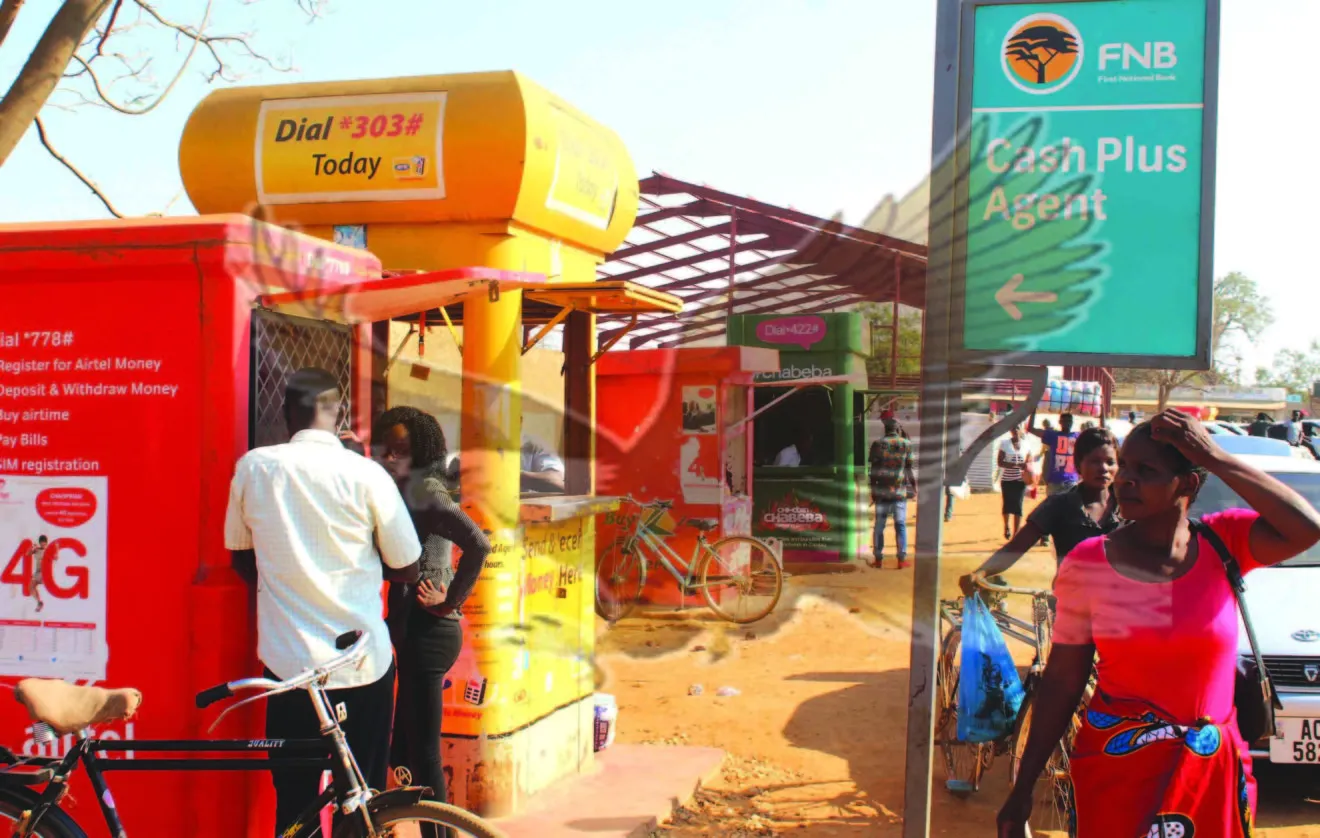
Mobile money has become one of the most important financial services in Zambia, allowing people to send and receive money, withdraw cash, pay bills and access other services without necessarily visiting a bank.
But while customers focus on the money they are sending or withdrawing, another question is often overlooked: How do mobile money agents actually make money?
The answer is largely linked to the volume of transactions they process, the commission structures offered by mobile money providers and the other services they provide around their agency businesses.
A mobile money agent acts as an access point between customers and the mobile money provider. In a typical cash-in transaction, a customer gives cash to the agent and receives an equivalent amount of electronic money in their mobile wallet. In a cash-out transaction, the customer transfers electronic money and the agent gives them physical cash. MTN Zambia’s terms explicitly describe these cash-in and cash-out functions as services carried out through agents.
The agent’s business therefore depends heavily on having enough cash and electronic money liquidity to serve customers in both directions.
One of the main ways agents can earn is through commissions on eligible transactions. The exact amount an agent earns depends on the mobile money provider, transaction type, applicable commission structure and the agent’s agreement with the provider.
This means that an agent who handles a large number of transactions can potentially generate more commission than an agent operating in a location with very little customer traffic.
Transaction volume is therefore extremely important.
An agent positioned near a busy market, bus station, shopping area, residential community or other high-traffic location may have more opportunities to serve customers throughout the day.
The agent may serve customers who want to deposit cash into their wallets, withdraw money, send funds or access other authorised mobile financial services.
Looking for the latest sports odds and markets? Check them out here.
Mobile money has expanded significantly in Zambia. According to the Bank of Zambia’s 2024 National Payment Systems Annual Report, the country had 583,459 registered mobile money agents, of whom 429,347 were active, representing 73.6 percent of registered agents.
That enormous agent network shows just how important agents have become to Zambia’s financial system.
The Bank of Zambia has also described mobile agents as a major part of the country’s financial access infrastructure. A 2025 Zambanker publication reported that mobile agents accounted for 93.3 percent of financial access points in Zambia, highlighting their role in bringing financial services closer to communities.
But commission is not necessarily the only reason someone operates a mobile money booth.
Many agents combine mobile money with other businesses.
An agent may sell airtime, data bundles or provide other authorised services alongside mobile money transactions. Some operate from shops where customers can also purchase groceries, stationery, accessories or other products.
This creates several potential revenue streams from the same physical location.
The location itself can therefore make a major difference.
An agent serving a busy community may process hundreds of transactions over time, while another agent in a quiet area may struggle to generate enough activity to cover operating costs.
There is also the cost of maintaining liquidity.
An agent needs physical cash to satisfy customers who want to withdraw money. At the same time, the agent needs sufficient electronic value to process customers who want to deposit cash.
If an agent runs out of cash, customers wanting withdrawals may be turned away. If the agent runs out of electronic value, customers wanting cash-in transactions may also be unable to complete them.
This makes liquidity management one of the most important parts of the business.
For example, an agent could have enough money in a bank account but still struggle to serve a customer who wants a cash withdrawal if the physical cash available at the outlet is insufficient.
Likewise, having a large amount of physical cash does not automatically help an agent process cash-in transactions if the agent’s electronic balance is too low.
Successful agents therefore need to constantly balance the two sides of the business.
Another important factor is operating costs.
An agent may have to pay rent, electricity, wages, security expenses, transport costs and other business expenses. There may also be costs associated with maintaining the outlet and moving cash or electronic value between different accounts or locations.
This means the amount of money passing through an agent’s account should not be confused with the agent’s actual profit.
An agent could process a very large amount of money in transactions while earning only commissions and other legitimate business income from that activity.
There are also strict rules around how agents operate.
The Bank of Zambia has stated that agents are subject to oversight and supervision, while its guidance says prohibited activities include charging customers fees outside those prescribed by the Bank, providing unauthorised services and issuing pre-registered SIM cards.
This is important because customers sometimes assume that an agent can charge whatever fee they want.
That is not necessarily the case.
Agents are expected to operate within the rules established by regulators and the mobile money providers they represent.
So, if you have ever wondered why someone would spend the whole day sitting behind a small mobile money booth, the answer is that the business model is based on transaction activity, commissions, customer traffic, liquidity management and additional legitimate services.
For some agents, mobile money is a standalone business. For others, it is one part of a larger shop or small enterprise.
The opportunity can be particularly important in areas where traditional bank branches are limited.
The Bank of Zambia’s data shows that mobile money agents have become a significant part of Zambia’s financial access network, giving people in both urban and less-served communities convenient access to basic financial services.
Ultimately, a mobile money agent does not simply make money because customers are moving large amounts of cash.
The real business is in serving a high volume of legitimate transactions efficiently while managing liquidity and keeping operating costs under control.
And for someone considering becoming an agent, the biggest question may not be how much money can pass through the booth, but rather how many customers can the business realistically serve every day and how much net income remains after all expenses?
🚨 DON’T MISS OUT — REGISTER HERE! Join thousands of sports fans exploring today’s betting markets and give yourself a chance to be among the winners. 18+ | Terms and conditions apply | Gamble responsibly.



Community Feedback