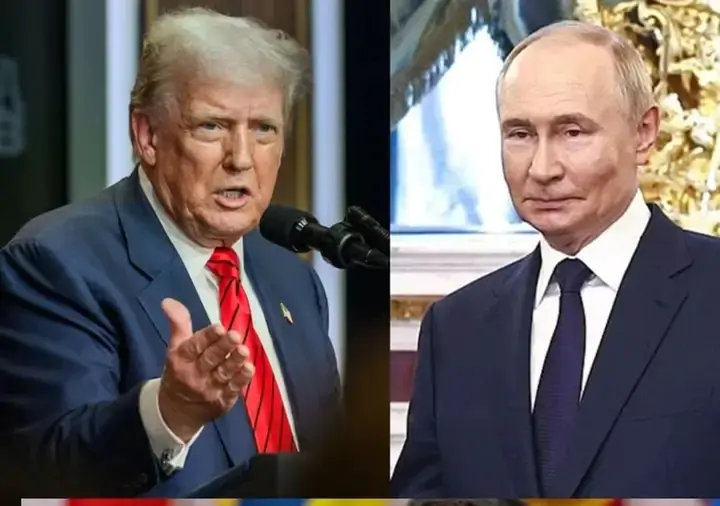
KALLAS CONFRONTS THE CONTRADICTION OF AMERICA INVITING PUTIN TO THE G20

Breaking News Zambia
NewsKALLAS CONFRONTS THE CONTRADICTION OF AMERICA INVITING PUTIN TO THE G20 European Union foreign-policy chief Kaja Kallas says the Trump administration’s decision to invite Vladimir Putin to the December G20 summit in Miami was “very hard to hear,” particularly after U.S. prosecutors exposed an alleged Russian intelligence operation to organize an assassination on American soil. […]
KALLAS CONFRONTS THE CONTRADICTION OF AMERICA INVITING PUTIN TO THE G20
European Union foreign-policy chief Kaja Kallas says the Trump administration’s decision to invite Vladimir Putin to the December G20 summit in Miami was “very hard to hear,” particularly after U.S. prosecutors exposed an alleged Russian intelligence operation to organize an assassination on American soil.
“So, my question is: Do these intelligence officers operate alone, or do they get orders from Vladimir Putin?” Kallas asked. “And I can tell you, they get orders from President Putin.”
The recently unsealed U.S. indictment charges five people in connection with an alleged Russian-directed network involved in surveillance and assassination plots. One operation reportedly offered $40,000 to have a Russian dissident living in the Washington area killed. The FBI disrupted the plot before the intended victim was murdered.
That makes the contradiction striking. American investigators say a Kremlin-controlled network attempted to commission a killing inside the United States, yet the Trump administration is inviting the man at the top of that system to attend one of the world’s most important summits on American soil.
Secretary of State Marco Rubio confirmed that Putin had been invited to the December 14–15 gathering at Trump National Doral Miami and said Washington hoped he would accept. The Kremlin says it is considering the invitation.
Putin remains the leader of a country waging an invasion against Ukraine, bombing civilian cities and conducting sabotage and covert operations across Europe. He is also subject to an International Criminal Court arrest warrant over the alleged unlawful deportation of Ukrainian children. Because the United States is not a member of the ICC, his arrival would not automatically create the same arrest obligation faced by member states—but the invitation would still grant him international legitimacy and prestige.
It also raises an uncomfortable question for Americans: What message does this send to the FBI agents, intelligence officers and prosecutors working to stop Russian operations inside their own country? They expose an alleged Kremlin assassination network, while the White House prepares to welcome Putin to Miami.
Europe is taking notice. Governments are not abandoning the United States, but some are increasingly building relationships beyond the Trump White House—with Congress, state governments and political figures from both parties—as they prepare for the possibility that the midterm elections could shift the balance of power in Washington.
The midterms will not remove Trump from office, but they could change Congress and restrain parts of his agenda. Europe’s movement is therefore not a complete break with America. It is a calculated effort to protect the transatlantic relationship from the decisions of one administration.
Putin remains internationally isolated for a reason. Inviting him back onto American soil while his intelligence services stand accused of planning a murder in Washington is not ordinary diplomacy. It is a clear and troubling shift in how the United States treats the Kremlin.


Community Feedback