
Hichilema Calls for Fairer Global Health Systems at UN General Assembly

Breaking News Zambia
LifestylePresident Hakainde Hichilema has called for stronger and fairer global health systems, telling a high-level meeting on the margins of the United Nations General Assembly that poverty and geography must not decide who gets vaccines, medicines and other health technologies. The…
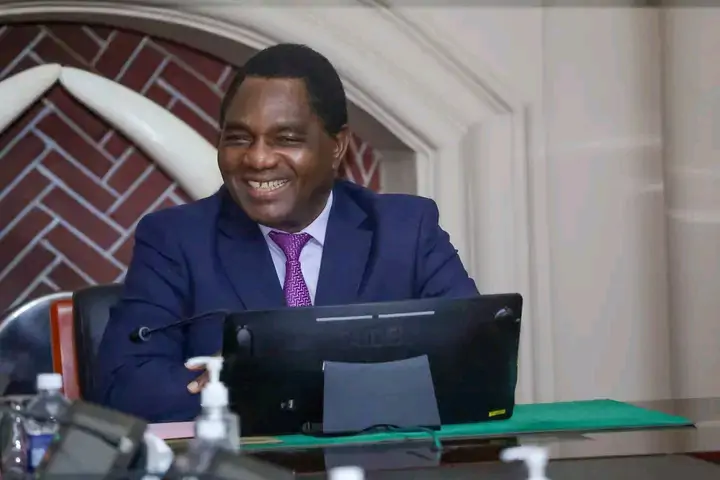
President Hakainde Hichilema has called for stronger and fairer global health systems, telling a high-level meeting on the margins of the United Nations General Assembly that poverty and geography must not decide who gets vaccines, medicines and other health technologies.
The speech was read on his behalf in New York on Thursday by Health Minister Professor Roma Chilengi, at a meeting held alongside the 81st session of the United Nations General Assembly. Mr Hichilema said countries should be able to protect their own populations, and that regions should have the capacity to respond together to health threats.
He said a strong public-health system must work at every link in the chain, from detecting an illness to laboratory testing, regional coordination and access to vaccines and treatment.
“Our shared task is to make those systems more dependable, in everyday care and in times of crisis. At the heart of that task are the people who need care and those who provide it,” he said.
The President then turned to how those systems are paid for. He said Zambia’s experience with debt restructuring had reinforced the need to create fiscal space for essential public services, particularly health. He called for timely and workable debt restructuring and, where necessary, debt relief, saying debt agreements should leave countries room to invest in essential services.
On emergency preparedness, Mr Hichilema called for health-security financing that does not worsen debt distress. He said grants should support cross-border preparedness, while concessional lending should remain consistent with debt sustainability.
He also raised concern over declining development assistance, citing preliminary figures from the Organisation for Economic Co-operation and Development (OECD) showing a real-terms fall of more than 23 per cent in official development assistance in 2025. Zambia, he said, remained committed to working with health partners while increasing its own domestic investment in programmes addressing HIV, tuberculosis and malaria.
The Head of State asked for carefully planned aid transitions, so that patients do not lose access to essential services when donor support changes.
Climate change was the next point on his list. Mr Hichilema said heat, floods and drought threaten safe water, nutrition, disease control and the continuity of healthcare services. He pointed to Zambia’s 2023–2024 cholera epidemic and the severe drought of 2024 as proof of the close links between health, water, sanitation and food security.
He said no country could manage every cross-border health threat alone, which is why regional preparedness matters.
On access to health technologies, the President said the COVID-19 pandemic had exposed major inequalities in access to vaccines. He said the World Health Organisation (WHO) Pandemic Agreement offered a chance to build a fairer system, particularly through arrangements on pathogen access and benefit-sharing. Countries that share pathogen samples and genetic information, he said, should receive timely access to vaccines, diagnostics and treatments in return.
He also called for increased regional production, pooled procurement, technology sharing, predictable demand, effective regulation and investment in research and development.
“Africa must produce knowledge and solutions, not only receive products,” he said.
Mr Hichilema asked countries to create and use fiscal space for health by bringing finance and health authorities, creditors and development partners together around credible investment priorities, timely debt solutions and transparent delivery.
At home, he said, Zambia’s 2026 National Budget allocated K26.2 billion, equivalent to about US$1.1 billion, to health services, representing about 10.3 per cent of the national budget. He said the investment should translate into tangible improvements, including the recruitment of health workers, stronger health infrastructure, the availability of medicines and improved access to healthcare.


Community Feedback