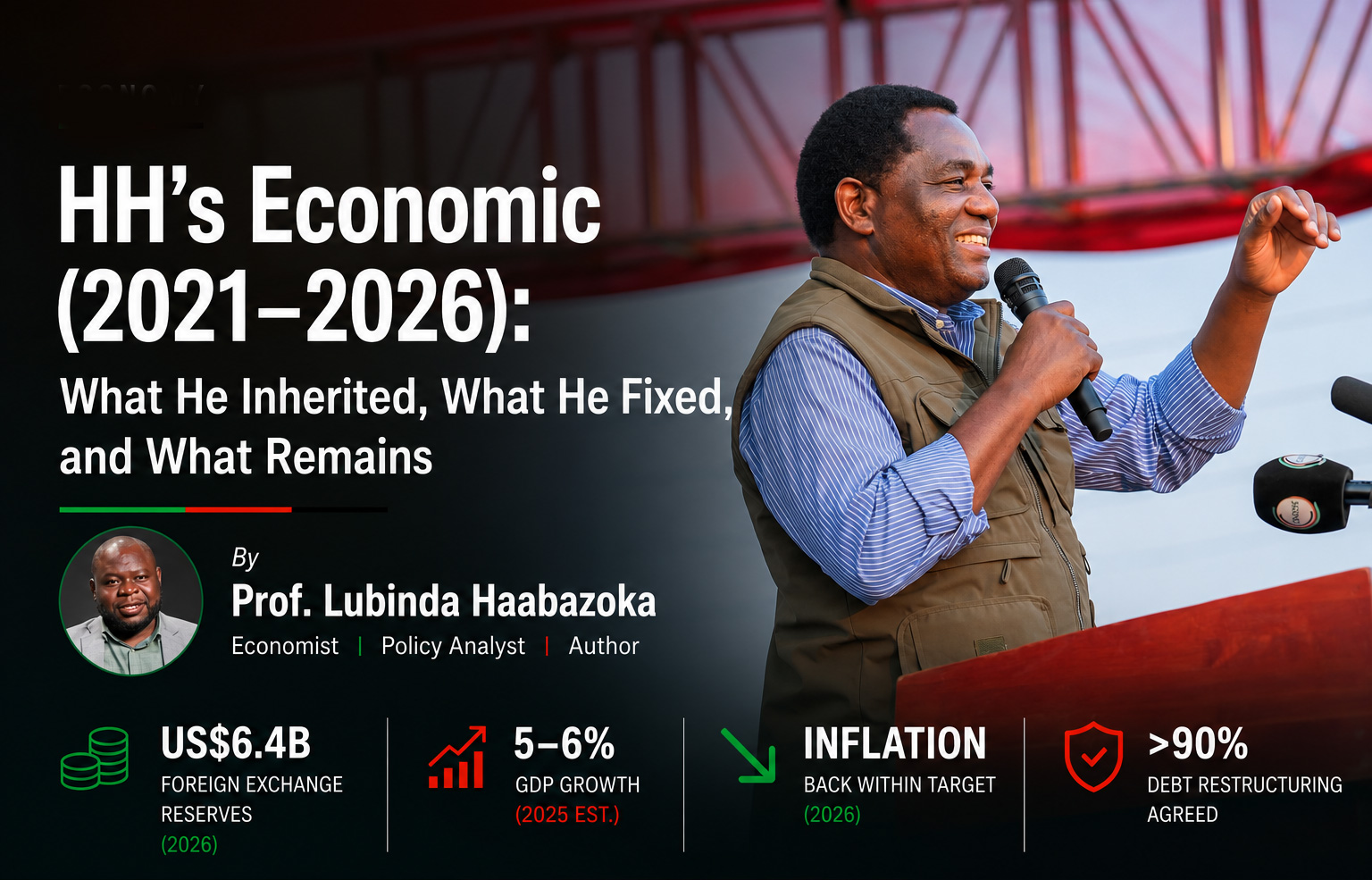
HH’s Economic Journey (2021–2026): What He Inherited, What He Fixed, and What Remains

Breaking News Zambia
NewsBy Dr. Lubinda Haabazoka Five years ago, when President Hakainde Hichilema assumed office in August 2021, Zambia stood at one of the most difficult economic crossroads in its post-independence history. The country had become the first African nation to default on its sovereign debt during the COVID-19 pandemic. Public finances were under immense pressure, investor
Audio article Listen to this story Share Send this storyBy Dr. Lubinda Haabazoka
Five years ago, when President Hakainde Hichilema assumed office in August 2021, Zambia stood at one of the most difficult economic crossroads in its post-independence history. The country had become the first African nation to default on its sovereign debt during the COVID-19 pandemic. Public finances were under immense pressure, investor confidence had deteriorated, inflation was eroding household incomes, the kwacha had significantly weakened, and foreign exchange reserves were dangerously low.
An objective assessment requires separating political rhetoric from economic reality.
What HH Inherited
When President Hichilema took office, he inherited an economy characterised by five major structural challenges.
1. Sovereign Debt Default
Perhaps the greatest challenge was Zambia’s debt crisis.
In November 2020, Zambia became the first African country to default on its Eurobond obligations during the COVID-19 era. The default effectively shut the country out of international capital markets, damaged investor confidence and constrained Government’s ability to finance development.
Public debt had risen to unsustainable levels while debt servicing crowded out expenditure on health, education and infrastructure. Debt restructuring therefore became the administration’s first economic priority.
2. Weak Investor Confidence
The debt default had consequences beyond Government finances.
Foreign investors became increasingly cautious. International credit ratings deteriorated, borrowing costs increased and private investment slowed. Without restoring credibility, attracting new investment into mining, manufacturing and infrastructure would have remained difficult.
3. High Inflation
Inflation remained elevated following the combined effects of COVID-19, exchange rate depreciation and supply disruptions. Higher inflation meant rising food prices, increasing transport costs and declining purchasing power for ordinary households. Economic stability could not be achieved without first bringing inflation under control.
4. Exchange Rate Pressures
The kwacha experienced prolonged depreciation prior to 2021. Currency instability raised the cost of imports, increased production costs for businesses and made debt servicing more expensive.
5. Fiscal Stress
Government finances were extremely constrained. Large debt obligations limited fiscal flexibility while significant arrears affected contractors and suppliers. The economy required both fiscal discipline and renewed confidence.
What Was Fixed
Debt Restructuring
The administration’s most significant economic achievement has been restoring Zambia’s relationship with international creditors.
Following lengthy negotiations, Zambia successfully restructured approximately US$13 billion in external debt, becoming one of the first countries to complete restructuring under the G20 Common Framework. This restored confidence among international investors and development partners.
Restoring Macroeconomic Stability
Economic management gradually shifted from crisis management towards stabilisation.
The IMF has acknowledged that Zambia significantly reduced macroeconomic imbalances, strengthened public finances, rebuilt foreign reserves and made considerable progress in fiscal consolidation while protecting priority social spending. One of the strongest indicators of restored confidence has been the accumulation of international reserves. Foreign exchange reserves have risen to approximately US$6.4 billion, providing stronger protection against external economic shocks.
Exchange Rate Recovery
One of the most visible improvements has been the recovery of the kwacha.
Although exchange rates naturally fluctuate, the currency strengthened considerably from previous lows, supported by improved investor confidence, stronger reserve accumulation and better macroeconomic fundamentals.
A stronger currency has helped reduce imported inflation while improving business confidence.
Declining Inflation
Inflation has steadily declined.
By 2026, annual inflation had returned to the Bank of Zambia’s target range, largely supported by exchange rate appreciation and moderating food prices..
Renewed Investment Confidence
Mining has become one of the largest beneficiaries of renewed investor confidence. Government policy has focused on expanding copper production, encouraging exploration, reopening previously distressed mines and attracting long-term investment.
Agriculture Recovery
The administration has also presided over a significant rebound in agriculture following improved rainfall and increased production. Record maize harvests have strengthened national food security while supporting rural incomes, although they have also created fiscal pressures through grain purchases.
Social Investment
Economic stabilisation was accompanied by substantial public investment in social sectors. Government expanded free education, increased Constituency Development Fund (CDF) allocations, recruited teachers and health workers and continued decentralisation reforms.
What Still Remains
Economic recovery should not be confused with economic completion.
Several major challenges remain.
Cost of Living
The most common concern among citizens remains the high cost of living.
Although inflation has declined, many prices remain significantly higher than they were several years ago.
Youth Unemployment
Perhaps Zambia’s greatest remaining challenge is employment.
Economic growth has improved. Investment has increased. However, employment creation has not yet matched the rapidly growing labour force.
Electricity Security
The recent drought exposed Zambia’s dependence on hydropower. Although investments in solar, transmission infrastructure and alternative energy sources have accelerated, energy security remains a critical policy priority.
Economic Diversification
Copper continues to dominate exports. Long-term resilience will require faster growth in manufacturing, agriculture, tourism, digital services and value addition.
The Overall Scorecard
From a purely macroeconomic perspective, Zambia today is unquestionably in a stronger position than it was in 2021. Debt restructuring has restored international credibility. Inflation has fallen significantly. Foreign reserves have strengthened.The exchange rate has stabilised considerably. Investor confidence has improved.
Advertisement Advertise here Reach readers inside premium article pages.Engage with this story
Comment 0Likes 0Reactions 0Comments 0Shares Be the first reader to react to this storyDiscussion
Join the Conversation
Share your thoughts. Let's keep it respectful and constructive.
Start the discussion Sort by: No comments yetBe the first to bring a thoughtful perspective to this story. Comment as a guest No account is needed. Sign in only if you want your comment tied to your profile. Sign in instead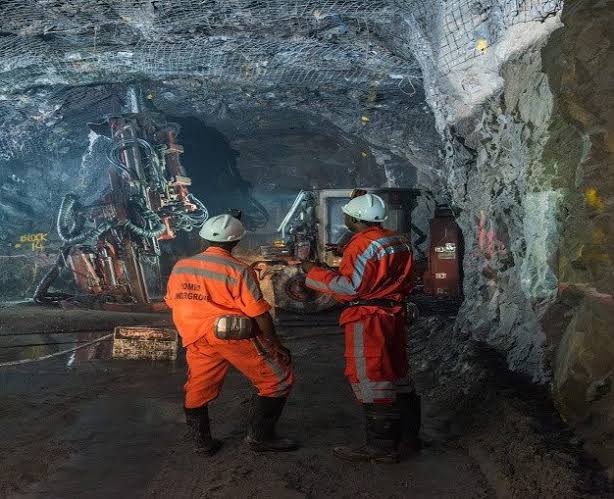

Community Feedback