CONGO DRAWS A HARD LINE: COPPER AND COBALT CONCENTRATES STAY HOME

Breaking News Zambia
NewsCONGO DRAWS A HARD LINE: COPPER AND COBALT CONCENTRATES STAY HOME By Gabriel Manyati The Democratic Republic of Congo has ordered an immediate halt to the export of copper and cobalt concentrates, marking one of the sharpest turns yet in Africa’s push to capture more value from the minerals that power the global energy transition. […]
CONGO DRAWS A HARD LINE: COPPER AND COBALT CONCENTRATES STAY HOME
By Gabriel Manyati
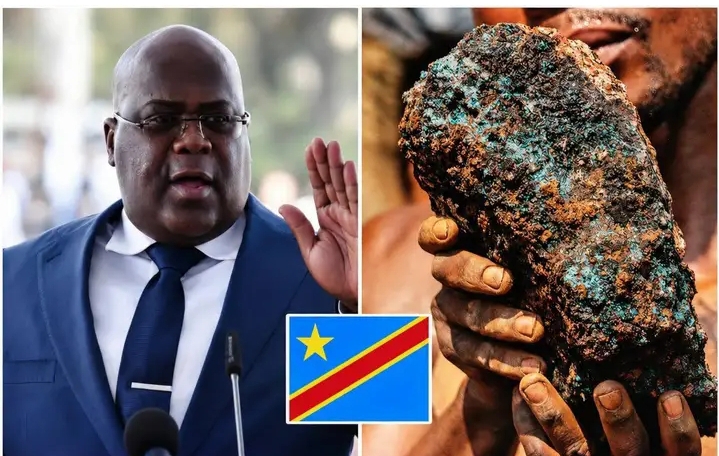
The Democratic Republic of Congo has ordered an immediate halt to the export of copper and cobalt concentrates, marking one of the sharpest turns yet in Africa’s push to capture more value from the minerals that power the global energy transition.
A joint ministerial decree signed on 29 June by Mines Minister Louis Kabamba Watum, Foreign Trade Minister Julien Paluku Kahongya and Economy Minister Daniel Mukoko Samba states plainly that “the export of copper and cobalt concentrates is prohibited.” The ban took effect at once. One-year strategic waivers remain possible, yet the direction of policy is unambiguous.
Kinshasa will no longer allow barely processed ore to leave the country as a matter of routine.
Congo is the world’s largest cobalt producer, accounting for roughly 70 percent of global supply, and ranks second only to Chile in copper output. These two metals sit at the heart of electric vehicle batteries, grid storage and power infrastructure.
For years the country has watched concentrates leave its borders for refining in China and elsewhere, returning only a fraction of the final value. Successive governments have tried export restrictions in 2013, 2019 and 2023, each time granting widespread exemptions when domestic smelting capacity proved insufficient. The latest order repeals the 2023 framework and replaces it with a broader regime that also introduces a new tax on economically significant mining by-products after a three-month transition.
Markets reacted swiftly. Three-month copper on the London Metal Exchange jumped as much as 1.8 percent to $14,369.50 a tonne on the news, the highest level since late January. Operators such as Ivanhoe Mines, whose Kamoa-Kakula complex has long relied on concentrate export exemptions, now face sharper pressure to expand local processing or secure temporary waivers.
Chinese groups including CMOC, Zijin and Huayou, alongside Glencore and Eurasian Resources, dominate production and will feel the policy most directly.
The measure forms part of a wider Congolese strategy that already includes cobalt export quotas introduced after temporary bans in 2025. Officials describe the goal as straightforward: force mining companies to market higher-value products and keep more of the economic upside inside the country.
Similar assertions of mineral sovereignty are visible across the continent. Zimbabwe banned the export of raw lithium in late 2022, prompting Chinese investors to build local processing plants. Namibia followed with restrictions on unprocessed lithium and rare earths. Tanzania has tightened beneficiation rules that require minimum levels of domestic processing
In West Africa, Guinea has raised taxes and state participation in bauxite and iron ore projects, while Mali and Burkina Faso have moved towards greater state ownership and, in some cases, direct control of gold mines. Zambia continues to press for deeper local refining of copper. These policies differ in detail yet share a common logic: African governments no longer accept the role of raw-material suppliers in a value chain that concentrates profits far from the mine gate.
The implications are substantial. For Congo and its neighbours, successful local processing could generate employment, tax revenue and industrial skills that raw exports never delivered. Battery precursor plants, copper cathodes and cobalt sulphates would create denser economic linkages than concentrate shipments. Governments also gain leverage in negotiations with both Western and Chinese partners seeking secure supplies of critical minerals.
Yet the risks are equally clear. Domestic smelting and refining capacity in the DRC remains limited relative to production volumes. Abrupt bans can leave ore stockpiled, disrupt cash flows for miners and raise operating costs. Global supply chains for electric vehicles and renewable energy systems face potential shortages and higher prices.
Battery manufacturers may accelerate research into chemistries that reduce or eliminate cobalt, while copper consumers look to alternative sources or scrap. Investors already factor higher political risk into African mining projects; further unpredictability could slow the very capital inflows needed to build the processing facilities governments demand.
Resource nationalism of this kind is therefore a double-edged instrument. When matched with realistic industrial policy, reliable power and transparent regulation, it can shift more of the green transition’s rewards to the countries that supply its raw materials. When capacity lags behind ambition, it risks short-term disruption without delivering the long-term transformation promised.
Congo’s latest decree tests which path the continent will take.




Community Feedback