
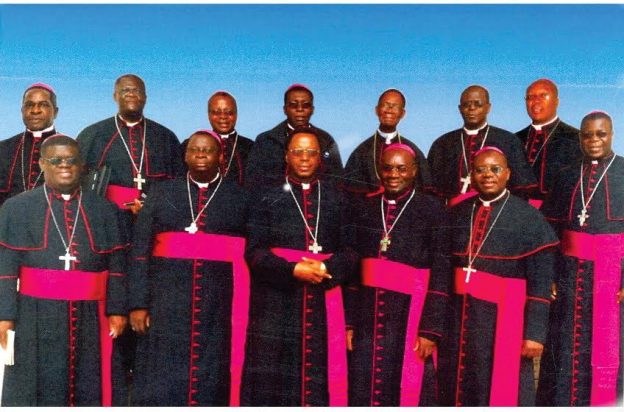
Catholic Bishops break silence on Zambia: ‘Foundations’ at risk as they call for dialogue, electoral reform and an end to arbitrary arrests

Breaking News Zambia
NewsLUSAKA – The Zambia Conference of Catholic Bishops (ZCCB) has issued one of its broadest interventions on Zambia’s current political and institutional situation, warning about growing political polarisation, restrictions on civic space, concerns over the 2026 elections, arrests and detention, political violence and debates over constitutional safeguards. In a six-page Pastoral Statement issued on September […]
LUSAKA – The Zambia Conference of Catholic Bishops (ZCCB) has issued one of its broadest interventions on Zambia’s current political and institutional situation, warning about growing political polarisation, restrictions on civic space, concerns over the 2026 elections, arrests and detention, political violence and debates over constitutional safeguards.
In a six-page Pastoral Statement issued on September 30, the bishops say the country has reached a moment requiring “sober reflection, courage, responsibility and a renewed commitment to the common good”.
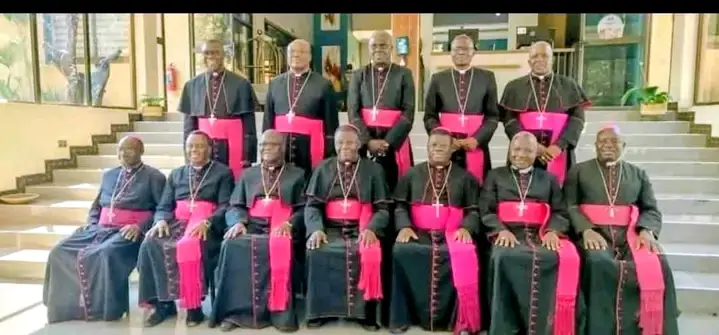
The statement, titled “Pastoral Statement on the Current Situation in Zambia”, was issued after eight bishops met in an extraordinary plenary meeting on September 29 to deliberate on what they described as developments affecting the country.
Zambian Eye has examined the statement, which does not focus on one political party or one individual. Instead, it presents a broad assessment of the political and institutional environment and sets out a series of actions the bishops want pursued.
Its opening question, drawn from Psalm 11:3, sets the tone:
“If the foundations are destroyed, what can the righteous do?”
The bishops say their intervention is not intended to deepen political divisions or take sides in partisan struggles. They say their purpose is to contribute to the protection of human dignity, justice and peace, truth and national unity.
What the bishops say is happening
The statement identifies what the bishops consider a number of developments requiring urgent attention.
At the centre of their concern is what they describe as increasing political polarisation.
They say this is weakening dialogue and cooperation and making it more difficult for citizens to place the common good above partisan interests.
The bishops also raise concern about the use of ethnic identities and tribal sentiments for political purposes. They argue that such tendencies threaten the spirit represented by Zambia’s national motto, “One Zambia, One Nation”, while creating the risk of greater division and mistrust.
They also refer to what they describe as fear among citizens over personal security, freedom of expression, employment and the consequences of expressing political opinions.
The statement then turns to the space available for public disagreement.
The bishops say they are concerned about what they describe as a narrowing of freedom of expression, including concerns over the treatment of independent media, civil society and dissenting voices.
They argue that a healthy democracy requires room for responsible disagreement, scrutiny and peaceful participation.
This is particularly significant for the media because the bishops specifically call later in the statement for greater protection of freedom of expression, freedom of association, responsible journalism and the legitimate work of civil society.
2026 elections under scrutiny
The ZCCB also raises concerns about the credibility and transparency of electoral processes.
Specifically, the bishops refer to concerns raised about the conduct and management of the 2026 General Elections.
They do not set out individual allegations or attempt to determine the validity of particular electoral results in the statement. Instead, they make a broader argument that public confidence in elections is essential to the legitimacy and stability of democratic institutions.
Their proposed response is for electoral processes to be reviewed and strengthened wherever necessary so that citizens can have confidence that their votes are protected and that electoral outcomes are managed transparently and credibly.
This places electoral confidence among the institutional issues the bishops believe require attention beyond the immediate political contest.
Concerns over opposition politics, arrests and detention
The bishops also address the political environment surrounding opposition parties and other political actors.
They say they are concerned about what they describe as reports of harassment, restrictions and arrests, arguing that democracy requires space for alternative political voices and peaceful political participation.
The statement separately raises concerns about intimidation, political violence and cadreism, which the bishops say can discourage citizens from participating freely and peacefully in public life.
They further refer to reports of arbitrary arrests and detention, the presence of military personnel in civilian spaces and reports of excessive or unlawful use of force, including the loss of civilian lives.
The bishops state that every human life is sacred and must be protected.
The statement comes amid a period in which political and institutional questions have featured prominently in national debate. Earlier in September, Catholic Church leaders had also called for dialogue between Government and opposition political players, while the ZCCB issued a statement of solidarity with Archbishop Alick Banda as he appeared before the Drug Enforcement Commission.
The Archbishop Banda case and the wider moment
The statement does not centre on Archbishop Alick Banda, and it does not specifically name his case.
However, its publication comes just days after the arrest of the Lusaka Archbishop, his appearance before the court and his subsequent release on bail after spending a night at Chimbokaila.
Banda has pleaded not guilty to a charge relating to possession of a Toyota Hilux which the Drug Enforcement Commission alleges was reasonably believed to have been unlawfully obtained. He was granted K80,000 bail with three sureties and subsequently released after the bail conditions were fulfilled.
The ZCCB had earlier expressed solidarity with Banda and called for fairness, dignity and due process as he faced the legal process.
The new pastoral statement goes beyond that individual case, however, and places questions of due process, institutional independence, freedom of expression and political participation within a much wider national discussion.
The bishops’ constitutional concern
Another issue raised is the debate surrounding constitutional provisions relating to presidential terms of office.
The bishops say they are concerned particularly where such debates create anxiety about constitutional safeguards and democratic continuity.
They do not propose a particular amendment or position on the presidential term in the statement.
Instead, their broader appeal is for constitutionalism, the rule of law and the independence of institutions established to serve the public.
They say public institutions should be instruments of justice and service rather than sources of fear.
What the Church says should happen now
The bishops’ statement becomes more specific in its fifth section, titled “Actions We Call For”.
Rather than assigning responsibility exclusively to Government, opposition parties, the Church or another institution, the bishops deliberately say the challenges require the contribution of the whole nation.
Their first major proposal is a sustained process of national dialogue, reconciliation and healing involving people and institutions across political, ethnic, religious and social differences.
They also call for measures to strengthen the independence, credibility and effectiveness of institutions responsible for democracy, constitutionalism, justice and the rule of law.
On elections, they want electoral processes reviewed and strengthened wherever necessary.
They also call for intensified civic and constitutional education, particularly among young people, so that citizens understand both their rights and responsibilities and can participate constructively in national life.
At community level, they want stronger peace-building and reconciliation initiatives, with particular attention to preventing political and ethnic tensions from becoming violence.
A direct appeal to political leaders
The bishops address political leaders and actors directly.
They appeal to them to place the common good above partisan interests and reject inflammatory language, tribalism, violence and political intolerance.
Citizens are also given responsibilities.
The bishops call on citizens to resist provocation, reject hatred, tribalism and violence, and avoid using social media to misinform, disinform or insult others.
They also call for citizens to exercise their rights and responsibilities peacefully and responsibly.
That distinction is important because the statement does not place the responsibility for the current environment exclusively on one side of the political divide.
Freedom of the media and civil society
For the media and civil society, one of the clearest sections comes under the bishops’ specific actions.
They call for greater protection of freedom of expression and freedom of association, together with responsible journalism and the legitimate work of civil society.
They also call for protection of every person’s right to due process and access to justice, as well as an end to arbitrary arrests, intimidation and political violence.
The bishops say Zambia must develop a renewed culture of national solidarity and warn that political differences, ethnicity and other interests should not be allowed to destroy the bonds holding the country together.
From statement to action
One of the more significant features of the document is that the bishops acknowledge that issuing a statement is not enough.
They say their pastoral appeal must be accompanied by action.
Among the measures they propose are continued national dialogue, stronger democratic institutions, electoral reforms where necessary, civic education, peace-building, protection of media and civil society, legal and humanitarian support for people affected by violence or arbitrary detention, and a culture of accountability and responsible leadership.
They also say the effort should not end with the statement.
Instead, there should be continued listening, engagement and appropriate action so that the concerns raised are not merely recorded but addressed.
That is perhaps the central test the statement creates: whether the issues identified by the bishops become part of a sustained national conversation or remain another document in Zambia’s political archive.
The bishops’ message of hope
Despite the breadth of their concerns, the bishops deliberately end on a message of hope rather than confrontation.
They say the statement is not intended to deepen fear and acknowledge that many Zambians are anxious and uncertain about the future.
They say the Church will continue accompanying citizens through prayer, listening, dialogue and follow-up action.
They call for a Zambia in which human dignity is respected, justice is accessible, differences can be expressed peacefully and power is exercised as service.
The bishops also refer back to the Church’s 2004 “A Call to Integrity”, stating that the nation cannot be built on lies, corruption and intimidation but on truth, justice and service.
Their final appeal is for dialogue rather than confrontation, reconciliation rather than revenge, truth rather than falsehood, justice rather than impunity, and solidarity rather than division.
October becomes a month of prayer
The statement closes with a specific appeal to the Catholic community.
The bishops note that October is traditionally a special month for the Holy Rosary and are urging clergy, religious and lay faithful to gather in their chosen places for Rosary prayers.
They ask that no day pass without prayer for peace in Zambia.
The statement was issued at Kapingila House on September 30, 2026, on the memorial of St Jerome, and is signed by the bishops who participated in the extraordinary meeting, led by Archbishop Ignatius Chama as ZCCB President and Bishop Charles Kasonde as Vice President.
What this statement adds to Zambia’s political record
The significance of the document is not simply that Zambia’s Catholic bishops have spoken again.
It is the range of issues they have chosen to place in one document: political polarisation, tribalism, freedom of expression, the media, civil society, electoral credibility, institutional independence, opposition participation, arrests and detention, military presence in civilian spaces, political violence, constitutional safeguards and national dialogue.
The bishops’ own explanation is that they are not seeking to take sides in partisan politics.
Instead, they are presenting what they regard as a pastoral response to the circumstances in which Zambians are currently living.
That makes the statement another document to watch in the weeks ahead — not only for what the bishops have said, but for whether Government, political parties, civil society and other institutions respond to the specific issues and actions raised.
For Zambian Eye, the important question now is not simply whether the statement will generate headlines.
It is what happens to the concerns after the headlines disappear.
Community Feedback