Zambia says EU Parliament resolution on post-election situation premature

Breaking News Zambia
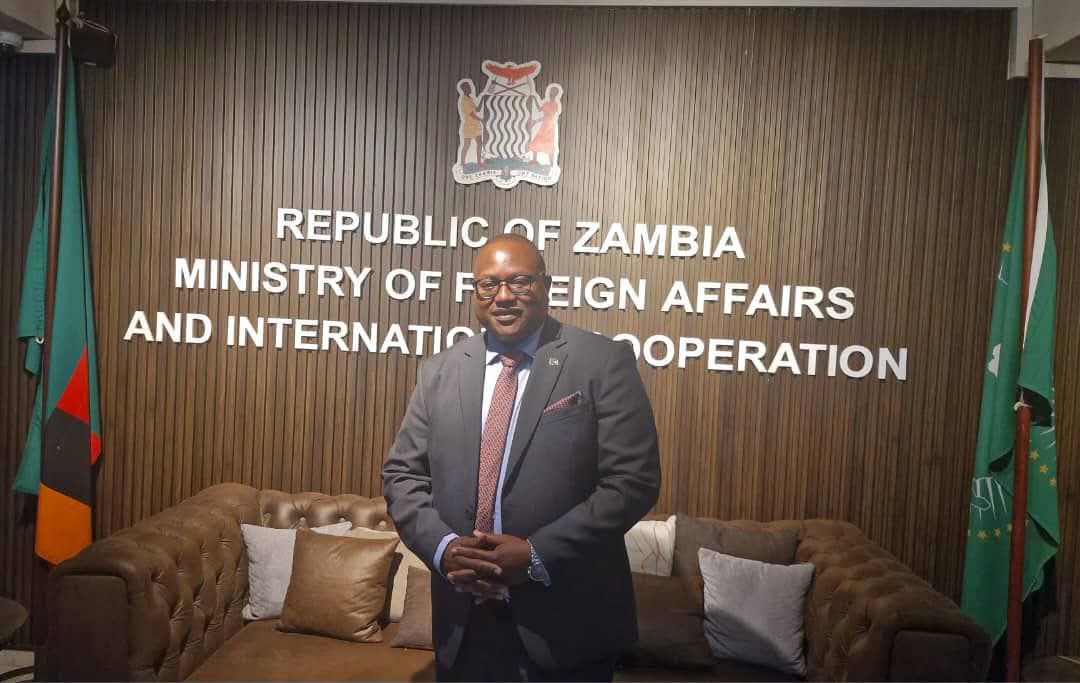
NewsTHE Zambian government says a European Parliament resolution on the country's post-election situation was adopted prematurely and without engagement with Lusaka. In a press statement dated Sept. 19 and signed by Foreign Affairs and International Cooperation Minister Mulambo Haimbe from New York, the government said it has taken note of European Parliament Resolution P10_TA(2026)0311 of
Audio article Listen to this story Share Send this storyTHE Zambian government says a European Parliament resolution on the country’s post-election situation was adopted prematurely and without engagement with Lusaka.
In a press statement dated Sept. 19 and signed by Foreign Affairs and International Cooperation Minister Mulambo Haimbe from New York, the government said it has taken note of European Parliament Resolution P10_TA(2026)0311 of Sept. 17 concerning post-electoral developments in Zambia.
The government said it is concerned that the resolution was adopted under the urgency procedure pursuant to Rules 150(5) and 136(4) of the European Parliament’s Rules of Procedure, without prior engagement with the Zambian government and before publication of the final report of the European Union Election Observation Mission.
“The Government considers that serious determinations concerning a sovereign state should be based on verified facts and informed by engagement with the concerned Government,” the statement said.
In accordance with Articles 3 and 5 of the Samoa Agreement between the European Union and the Organisation of African, Caribbean and Pacific States, which provide for partnership dialogue, mutual respect and shared responsibility, the government said it has requested the EU Delegation in Lusaka to convene a formal partnership dialogue with the European Commission and the European External Action Service at the earliest opportunity.
The government said it remains committed to constitutionalism, the rule of law, fundamental freedoms and its longstanding strategic partnership with the EU and its member states.
On the death of Mutotwe Kafwaya on Aug. 14, the government said it regrets the loss of life and that circumstances surrounding the death are under active investigation by the Zambia Police Service, with independent oversight by the Zambia Human Rights Commission.
The bereaved family has been offered the opportunity to participate in the post-mortem examination through a legal representative and an independent pathologist, the government said, adding that it rejects any suggestion of a policy of extrajudicial action.
On access to justice and treason charges, the government said the judiciary is independent under Article 122 of the Constitution and that the Constitution and laws guarantee protection of the law, including the right to a fair and impartial trial, due process and access to legal representation of one’s choice.
Persons charged with criminal offenses are entitled to appear before competent courts within constitutionally prescribed time limits, receive family visits and appropriate medical care, it said. Matters relating to bail, trial dates and judicial proceedings are determined independently by the courts and are not subject to executive direction.
On alleged arbitrary detentions, the government denied the allegations, saying all arrests and detentions were done in accordance with the laws of Zambia and that official records do not corroborate the figures cited in the resolution.
On the use of force in law enforcement, the government said the Constitution and laws recognize circumstances in which law enforcement officers may use force in execution of lawful duties, subject to legal safeguards and principles of necessity and proportionality. It said it is premature to characterize specific incidents as murder before conclusion of investigations.
The government considers the resolution premature and lacking sufficient consideration of all material facts, particularly in view of ongoing investigations and judicial proceedings before competent courts.
Zambia called upon the European Parliament, the European Commission, the EEAS and all cooperating partners to allow constitutionally mandated institutions to undertake their work independently and without undue influence.
While respecting the role of the European Parliament, Zambia said it is concerned that the process leading to the adoption of the resolution did not sufficiently meet standards of mutual respect, consultation and partnership expected in relations between sovereign states.
Zambia remains committed to its strategic partnership with the EU, including cooperation in trade, investment, development and critical raw materials, and will pursue engagement with relevant European Parliament committees and EU institutions to provide factual clarification, the statement said.
The government said it remains committed to transparent investigations, the rule of law and democratic institutions, and invites the EU to engage on the basis of verified facts, mutual respect and established diplomatic channels.
Engage with this story
Comment 0Likes 0Reactions 0Comments 0Shares Be the first reader to react to this storyDiscussion
Join the Conversation
Share your thoughts. Let's keep it respectful and constructive.
Start the discussion Sort by: No comments yetBe the first to bring a thoughtful perspective to this story. Comment as a guest No account is needed. Sign in only if you want your comment tied to your profile. Sign in instead


Community Feedback