Zambia pushes back against EU Parliament resolution, requests urgent meeting

Breaking News Zambia
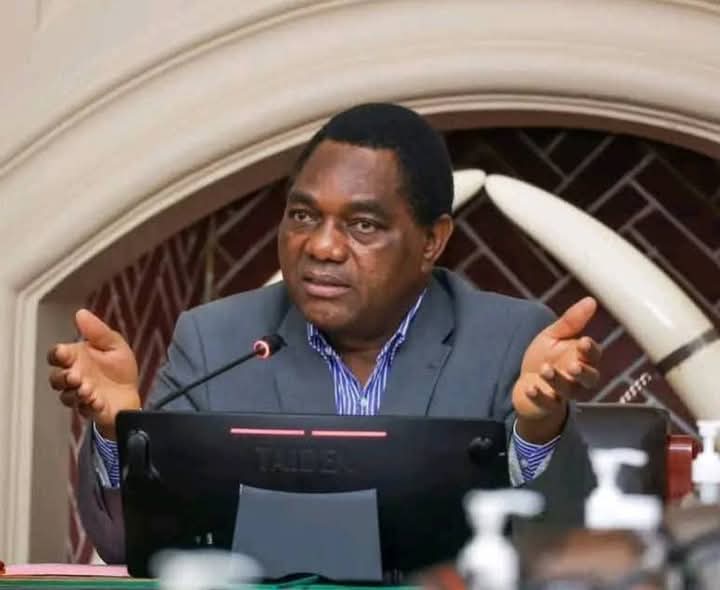
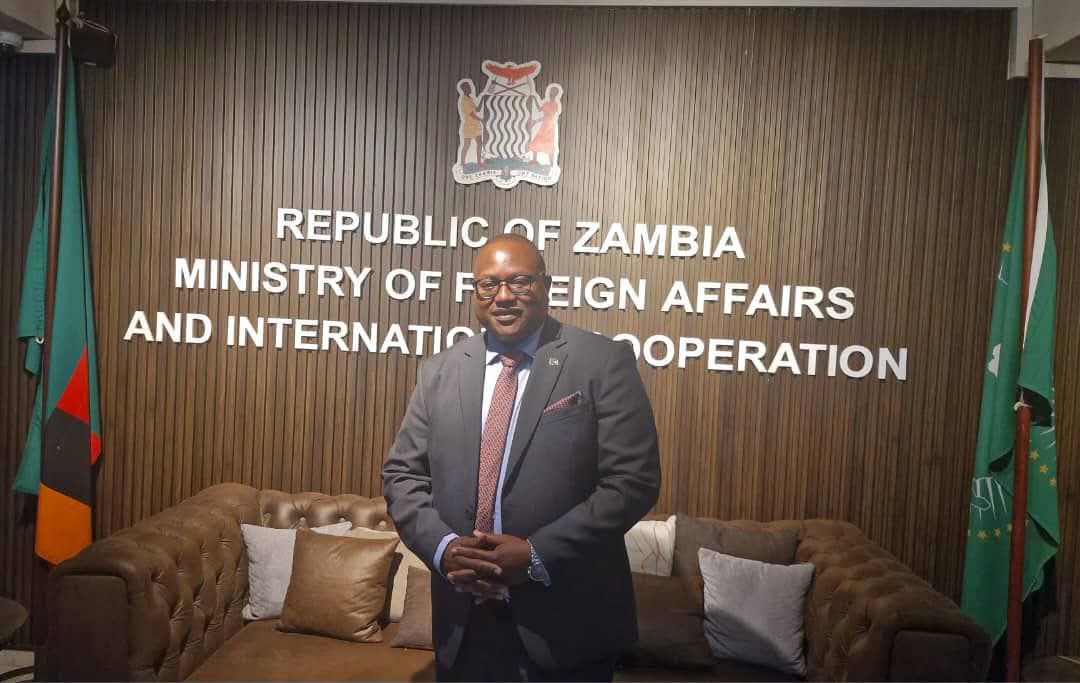
NewsForeign Affairs Minister Mulambo Haimbe responds to the European Parliament resolution on Zambia, Kafwaya’s death, treason cases and post-election concerns. LUSAKA – The Zambian Government has pushed back against the European Parliament’s resolution on the country’s post-election situation, arguing that the resolution was adopted prematurely while investigations and judicial proceedings remain ongoing. In a statement […]
Mulambo Haimbe
Michael McNamara
Foreign Affairs Minister Mulambo Haimbe responds to the European Parliament resolution on Zambia, Kafwaya’s death, treason cases and post-election concerns.
LUSAKA – The Zambian Government has pushed back against the European Parliament’s resolution on the country’s post-election situation, arguing that the resolution was adopted prematurely while investigations and judicial proceedings remain ongoing.
In a statement issued on Friday, Foreign Affairs and International Cooperation Minister Mulambo Haimbe said Government was particularly concerned that the resolution was adopted without prior engagement with the Zambian Government and before publication of the European Union Election Observation Mission’s final report.
Zambian Eye examines what Government is challenging, what it says about the death of former Minister Mutotwe Kafwaya, the treason cases, alleged arbitrary detentions and use of force — and how these positions compare with the concerns raised by the European Parliament and other stakeholders.
Why Zambia says the EU Parliament moved too early
The European Parliament adopted its resolution, titled “Post-electoral repression in Zambia and the killing of Mutotwe Kafwaya”, on 17 September.
The resolution passed by 562 votes in favour, one against and 33 abstentions.
Government, however, says the timing of the resolution is problematic.
Haimbe said the resolution was adopted under the European Parliament’s urgency procedure without prior engagement with Zambia and before the EU Election Observation Mission had published its final report.
“The Government considers that serious determinations concerning a sovereign state should be based on verified facts and informed by engagement with the concerned Government,” Haimbe said.
Zambia has consequently requested the EU Delegation in Lusaka to convene a formal partnership dialogue with the European Commission and the European External Action Service.
The Government says the proposed engagement should take place under the partnership provisions of the Samoa Agreement between the EU and the Organisation of African, Caribbean and Pacific States.
What the European Parliament was concerned about
The European Parliament’s resolution focused on several developments following the 13 August general election.
Among other things, MEPs called for independent and impartial investigations into the death of Kafwaya and allegations involving the use of force, arbitrary arrests and intimidation.
The resolution also raised concerns about the treatment of opposition figures facing criminal proceedings and called for respect for due process, access to lawyers and fair trials.
It also referred to concerns raised by the EU Election Observation Mission regarding the electoral environment and the transparency and credibility of the counting and tabulation process.
The vote therefore covered issues extending beyond the circumstances surrounding Kafwaya’s death.
What Government says about Kafwaya’s death
On Kafwaya’s death, Government says it regrets the loss of life and that the circumstances surrounding his death on 14 August remain under active investigation by the Zambia Police Service.
Haimbe said the investigation has independent oversight by the Human Rights Commission.
Government also says Kafwaya’s family has been offered an opportunity to participate in the post-mortem examination through a legal representative and an independent pathologist.
It rejects any suggestion that there was a policy of extrajudicial action and says the facts should be established through due process.
This is an area where other stakeholders have previously called for an independent investigation.
Amnesty International said in August that the circumstances surrounding Kafwaya’s shooting remained unclear and called for a prompt, independent, impartial, transparent and effective investigation.
The European Parliament has now made a similar call for independent and impartial investigations.
The difference is that Government says such an investigation is already underway, while the European Parliament is calling for an investigation capable of independently establishing the circumstances and accountability.
What about the treason cases?
Government has also rejected concerns over access to justice.
Haimbe said the Zambian Judiciary is independent under Article 122 of the Constitution and that people who come into conflict with the law are protected by constitutional and legal guarantees.
He specifically pointed to the right to a fair and impartial trial, due process and access to legal representation of one’s choice.
Government further stated that people charged with criminal offences are entitled to appear before competent courts within constitutionally prescribed time limits and to receive family visits, appropriate medical care and other rights guaranteed by law.
Importantly, Haimbe said matters relating to bail, trial dates and judicial proceedings are determined independently by the courts and are not subject to executive direction.
This position comes as opposition figures, including Brian Mundubile and Makebi Zulu, face treason proceedings arising from the post-election period.
The European Parliament’s resolution called for detainees to be informed of the reasons for their arrest and charges and to have access to legal representation and a fair trial.
Government rejects arbitrary detention allegations
Another point directly challenged by Government is the allegation of arbitrary detention.
“We deny the allegations that there were arbitrary detentions,” Haimbe said.
Government maintains that arrests and detentions were conducted in accordance with Zambian law and that official records do not corroborate the figures cited in the European Parliament resolution.
Haimbe said all arrests and detentions are subject to constitutional and legal safeguards, including due process.
Government has nevertheless said it remains ready to provide relevant factual information through diplomatic channels.
What does Government say about the use of force?
On the use of force by law enforcement, Government says Zambian law recognises circumstances in which police officers may use force in carrying out their lawful duties.
Haimbe stressed that such force is subject to legal safeguards and the principles of necessity and proportionality.
But Government also says it would be premature to characterise specific incidents as murder before investigations have been completed and competent authorities have made determinations.
“That is a matter that must be assessed on the basis of established facts and applicable law,” Government said.
This position is significant in the Kafwaya case because the circumstances of the security operation that resulted in his death remain disputed.
The European Parliament has called for investigations into allegations of illegal use of force, while Amnesty International has separately called for an independent investigation.
But what did the EU Election Observation Mission actually say?
This is where the debate becomes more complicated.
The European Union Election Observation Mission has not yet published its final report. Its preliminary statement explicitly said that critical stages of the electoral process were still ongoing and that a final report, including recommendations for electoral reform, would follow after completion of the process.
The mission’s preliminary assessment said election day was generally calm and that voters were offered a competitive choice, but it also raised concerns about restrictions on campaigning and advantages associated with incumbency.
The EU subsequently reported concerns about the transparency of the counting and tabulation process.
On 14 August, the ECZ suspended the nationwide counting and announcement of results between 12:00 and 18:00, citing violent incidents targeting polling staff and, in some instances, allegations of ballot-box theft. The EU observers later reported that the conduct of tabulation deteriorated significantly after the suspension was lifted.
The European Union subsequently acknowledged President Hakainde Hichilema’s re-election while saying the EU EOM had identified serious incidents and procedural irregularities during counting and tabulation that affected the transparency and credibility of that process.
So Government’s argument about the timing of the European Parliament resolution is based partly on the fact that the EU EOM’s final assessment had not yet been published.
Where do the two positions differ?
At the centre of the disagreement are two different approaches to the post-election developments.
Government says:
- investigations are already taking place;
- the Human Rights Commission is providing independent oversight;
- the courts are constitutionally independent;
- those facing criminal charges have legal protections;
- arrests were conducted according to the law;
- it is premature to characterise incidents as murder before investigations conclude; and
- the European Parliament should have engaged Zambia and waited for the EU EOM’s final report.
The European Parliament, meanwhile, has called for independent investigations into Kafwaya’s death and allegations of unlawful force, arbitrary arrests and intimidation, while stressing due process and fundamental freedoms.
Amnesty International had already called for an independent, impartial and transparent investigation into Kafwaya’s death before the European Parliament vote.
Zambia does not want the EU relationship to break down
Despite its criticism of the resolution, Government’s statement does not call for a breakdown in relations with the European Union.
Instead, Zambia says it remains committed to constitutionalism, the rule of law, fundamental freedoms and its longstanding strategic partnership with the EU and its member states.
Haimbe said Zambia remains committed to cooperation with the EU in trade, investment, development and critical raw materials.
Government has also said it will engage relevant European Parliament committees and EU institutions to provide what it considers factual clarification.
The statement concludes by inviting the EU to engage Zambia on the basis of “verified facts, mutual respect and established diplomatic channels.”
What does the European Parliament resolution actually mean?
The resolution is politically significant, but it is important to distinguish it from a court judgment or a binding decision by a Zambian institution.
The European Parliament’s vote expresses the position of that EU institution on the issues raised. It does not itself determine who is responsible for Kafwaya’s death, determine the outcome of the treason cases or replace Zambia’s judicial and investigative processes.
The resolution also does not invalidate Zambia’s 2026 election.
Its significance is instead in the political and diplomatic attention it brings to the issues and in the request that the EU and its member states raise those concerns with Zambia.
What happens next?
The immediate question is whether the requested Zambia-EU partnership dialogue will take place and what information will be exchanged.
Another important development will be the eventual publication of the EU Election Observation Mission’s final report.
That report will provide a fuller assessment of the 2026 electoral process and recommendations for future elections. The mission says its findings and conclusions are independent of the EU Delegation, EU member states and Zambian authorities.
Meanwhile, the investigations into Kafwaya’s death and the judicial proceedings involving opposition figures remain matters for the relevant Zambian institutions.
For Zambia, the next phase will therefore involve two parallel processes: the domestic investigations and court proceedings, and the diplomatic engagement with the European Union over the concerns raised by the European Parliament.
Zambian Eye will continue to follow both tracks and examine what the evidence, investigations and official processes establish.

Community Feedback