
Zambia begins talks with IMF on new program focused on growth and jobs

Breaking News Zambia
NewsZAMBIA has begun discussions with the International Monetary Fund on a successor program under the Extended Credit Facility that will focus on growth, investment and job creation, the Ministry of Finance and National Planning. An IMF mission led by mission chief Edward Gemayel is in Lusaka for engagements scheduled through Oct. 10. The team opened
Audio article Listen to this story Share Send this storyZAMBIA has begun discussions with the International Monetary Fund on a successor program under the Extended Credit Facility that will focus on growth, investment and job creation, the Ministry of Finance and National Planning.
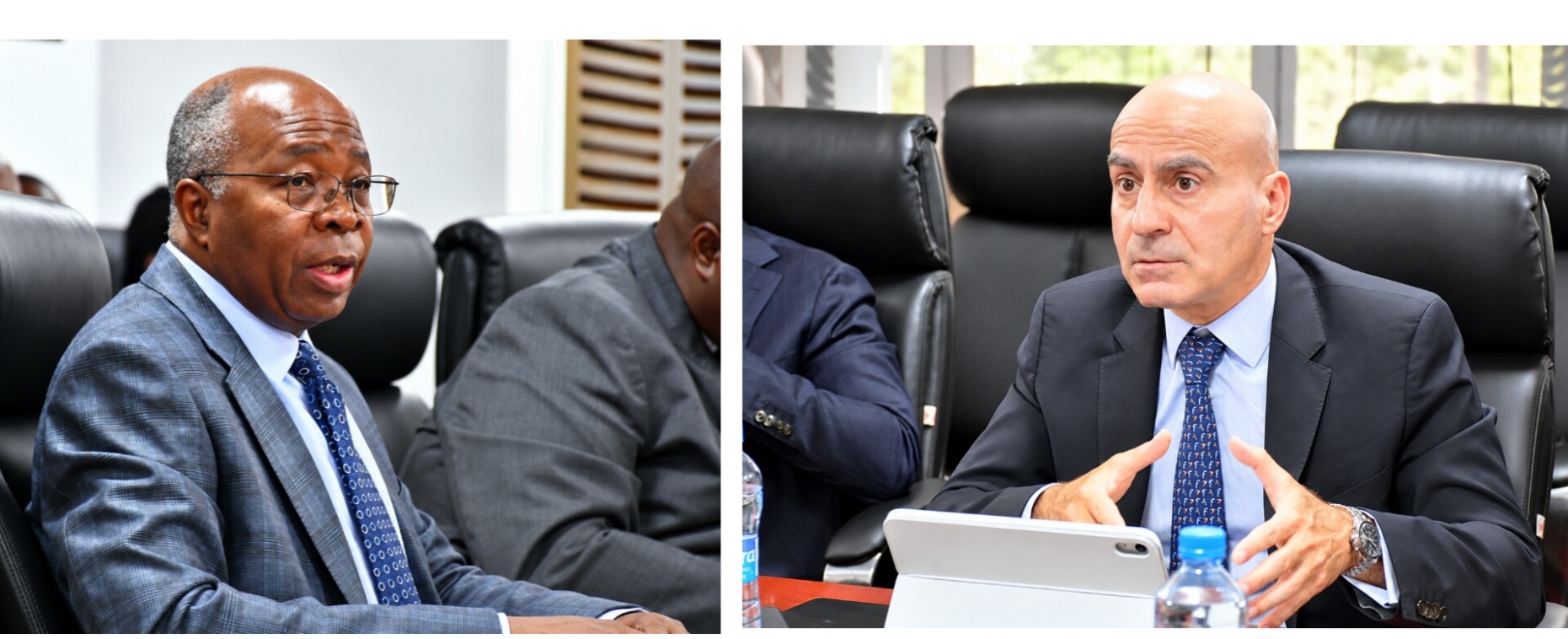
An IMF mission led by mission chief Edward Gemayel is in Lusaka for engagements scheduled through Oct. 10. The team opened talks with Finance and National Planning Minister Situmbeko Musokotwane and his management team at the ministry headquarters.
The mission will hold discussions with the ministry, the Bank of Zambia, the Zambia Revenue Authority and other public institutions on economic and structural policies that will anchor the proposed program, including the 2027 national budget and the 2027-2029 Medium-Term Budget Plan, the ministry said.
The successor program is expected to build on stability achieved under the previous arrangement, with greater emphasis on sustainable and inclusive growth, private-sector-led and export-oriented expansion, investment and diversification while safeguarding debt sustainability.
Gemayel said the successor program would help preserve macroeconomic stability and debt sustainability while aligning with the government’s Grow Zambia agenda to support private-sector investment, exports, diversification, jobs and sustainable growth.
Zambia’s 38-month ECF, approved Aug. 31, 2022, for 978.2 million Special Drawing Rights, about $1.3 billion, concluded Jan. 27 after six successful reviews. The final disbursement of 138.9 million SDR, about $190 million, raised total access to 1.27 billion SDR, about $1.7 billion, equivalent to 130% of Zambia’s IMF quota.
Musokotwane said the focus for the next five years will be maintaining fiscal and macroeconomic stability with a bias toward growth.
“The focus now, over the next five years, is to maintain fiscal stability, macroeconomic stability, with a lot of bias towards growth,” Musokotwane said.
He said youth unemployment remains a major challenge, making stronger investment and sustained growth critical. The government would combine supportive policies with direct investor engagement.
“We have to reach out to investors, talk about our country, talk about the opportunities,” he said.
Musokotwane said the government’s growth strategy rests on four pillars: export-led growth, foreign direct investment, human capital development, and a stronger regulatory and governance environment.
On exports, he said Zambia’s relatively small domestic market made outward-oriented growth essential, citing Germany, Japan and Southeast Asian economies where exports helped generate foreign earnings and expanded domestic demand.
“So export-led growth is very important,” he said.
On foreign investment, Musokotwane said Zambia needed to embrace foreign investments more deliberately to accelerate growth and reduce poverty, citing economies that used international capital, technology and market access to support transformation.
“We’ll continuously be speaking to our fellow countrymen and women to persuade them that FDI is a critical ingredient in our fight against poverty, unemployment, and low incomes,” he said.
On human development, he said the skills policy will extend beyond university qualifications to occupational competence across the economy, including machine artisans, operators, plumbers, mechanics, technicians and other professionals. The government would continue investing in education while addressing skills gaps required by industry.
The fourth pillar centers on the regulatory and governance environment. Zambia needs rules that attract foreign direct investment while enabling domestic businesses to start, expand and compete, he said.
Musokotwane said IMF engagement should retain its focus on maintaining appropriate economic balances while broadening toward facilitating growth.
“It is also time to broaden our thinking about how we facilitate growth in some of these areas that we talk about,” he said.
He said macroeconomic management should support higher investment, productive capacity, exports and employment while safeguarding stability restored through recent reforms.
Gemayel was accompanied by outgoing IMF resident representative Eric Lautier and other senior IMF officials. Musokotwane was accompanied by Secretary to the Treasury Felix Nkulukusa, Permanent Secretary for Economic Management and Investment Mulele Mulele, Permanent Secretary for Budget and Resource Mobilization Mwaka Mukubesa and other senior officials.
Engage with this story
Comment 0Likes 0Reactions 0Comments 0Shares Be the first reader to react to this storyDiscussion
Join the Conversation
Share your thoughts. Let's keep it respectful and constructive.
Start the discussion Sort by: No comments yetBe the first to bring a thoughtful perspective to this story. Comment as a guest No account is needed. Sign in only if you want your comment tied to your profile. Sign in instead


Community Feedback