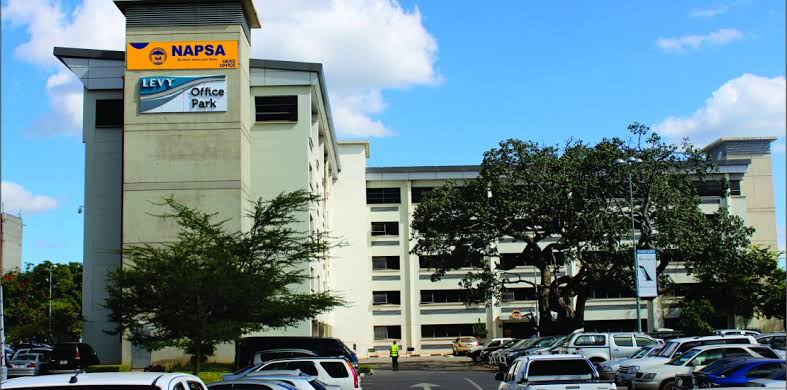
Why can’t NAPSA pension savings be used to finance affordable housing?

Breaking News Zambia
NewsAs Zambia grapples with a widening housing […]
As Zambia grapples with a widening housing deficit and growing calls for innovative financing solutions, experts say the country’s pension system may be fundamentally ill-designed to support home ownership highlighting that structural design, rather than institutional failure, remains the biggest obstacle preventing pension savings from becoming a housing finance tool.
Growing debate around whether pension contributions can be leveraged to expand access to housing has largely focused on institutions such as the National Pension Scheme Authority (NAPSA), but emerging expert insights suggest the issue lies deeper within the architecture of Zambia’s retirement system itself. In an interview with Zambian Business Times-ZBT, a source familiar with pension system structures, whose identity has been withheld, explained that pension schemes operate under specific mandates and cannot simply be expected to finance home ownership unless such a function is deliberately embedded within their design.
The source noted that unlike countries such as Singapore, where pension contributions are intentionally split into separate components including housing and retirement savings, Zambia’s pension structure is designed primarily to provide basic retirement benefits.
“In countries like Singapore, contributors know from the beginning that part of what they are contributing is specifically going toward housing. In Zambia, the structure is completely different because the system is designed mainly to provide a basic pension,” the source said.
The source further explained that Zambia’s contribution framework itself reflects this reality, with workers contributing significantly less toward pension savings compared to tax obligations. “You pay roughly 5 percent toward pension contributions while tax obligations are significantly higher. In some countries this structure is reversed because governments deliberately design systems to allow pension savings to support broader social needs such as housing,” he added.
He also addressed growing public criticism surrounding the affordability of houses developed by pension institutions, particularly NAPSA housing projects, saying the institution’s real estate investments are commercial ventures rather than social housing initiatives.
“When NAPSA builds houses, it is essentially making a business investment. It must recover costs and generate returns based on investment thresholds. It is not structured as a social housing provider,” the source explained.
Article Francine Chibuye





Community Feedback