What that EU Resolution on Zambia really means – David T. Zyambo

Breaking News Zambia
NewsI have long argued that the biggest problem in Zambia is that the most ignorant speak loudest on the most complex issues, while those who truly understand stay silent. That silence leaves a vacuum quickly filled by misinformation, disinformation, and propaganda. This is one of those moments, and I believe it demands clarity, silence is
Audio article Listen to this story Share Send this storyI have long argued that the biggest problem in Zambia is that the most ignorant speak loudest on the most complex issues, while those who truly understand stay silent. That silence leaves a vacuum quickly filled by misinformation, disinformation, and propaganda.
This is one of those moments, and I believe it demands clarity, silence is no longer an option.
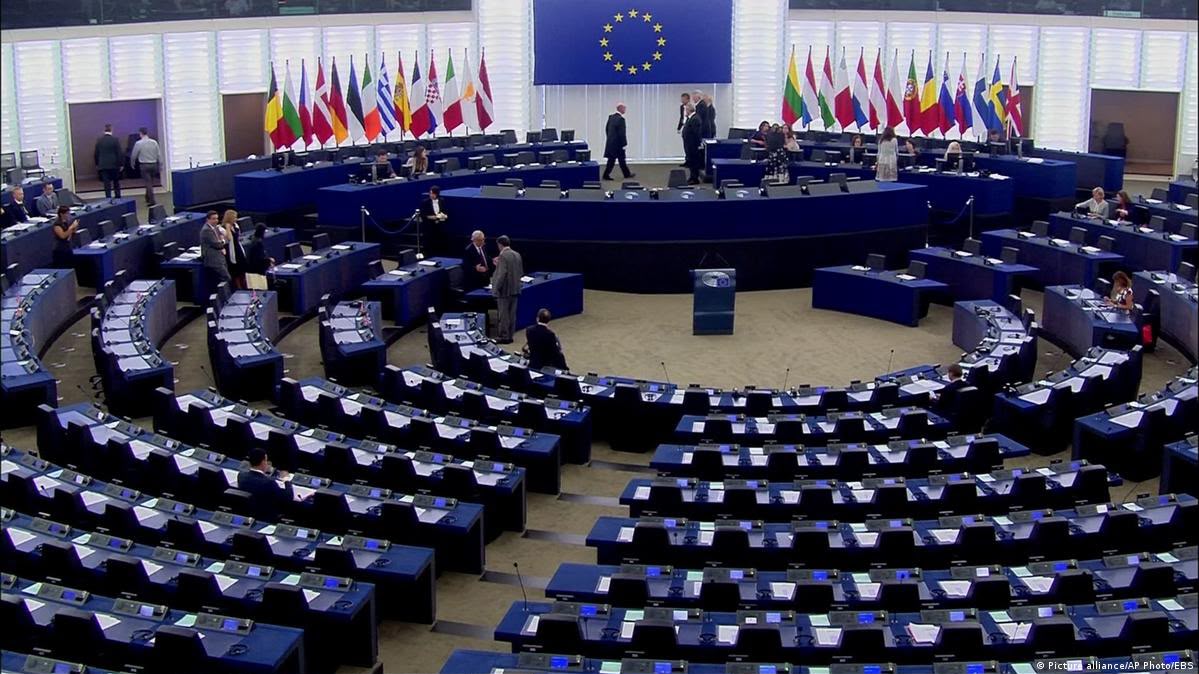
On September 17, the European Parliament passed a motion on Zambia. Within hours, opposition figures and social media commentators went to work. The European Union, they told you, is about to bring our country to its knees. It is a frightening story, but it is also a misleading one.
If you understand how the EU actually works, you realise that what happened in the European Parliament was political posturing-a floor debate, not a policy decision.
The European Union is made up of separate branches doing very different jobs. There is the European Parliament, where hundreds of politicians debate world affairs, pass symbolic motions and give dramatic speeches to get featured on the evening news. Then there is the European Commission, which controls the money, negotiates trade, and runs official diplomacy. And above them both sits the Council, where member state governments—not Members of the European Parliament—decide what the EU actually does.
Resolutions from the European Parliament are non-binding. They are formal statements of political opinion with a letterhead—nothing more. They do not create legal obligations. They do not trigger sanctions. They do not oblige the Commission or member states to act.
This is not my interpretation—it is the explicit text of EU law. Article 288 of the Treaty on the Functioning of the European Union sets out the legal acts the EU may adopt, and resolutions are not among them. The Court of Justice has described such resolutions as written expressions of Parliament’s political position, accompanied by non-binding calls to action.
So the motion passed on September 17 does nothing to alter Zambia’s legal, economic, or diplomatic standing. In practice, the European Commission frequently carries on with normal relations regardless of what the Parliament has just voted for. That is not a contradiction—it is the difference between expressing an opinion and making policy.
We have seen this pattern play out across Africa many times. The European Parliament has passed resolutions on Nigeria—on elections, on security operations, on internal violence. Did the EU cut Nigeria off? Did sanctions follow? No. The Commission kept trading, kept funding joint projects, and kept full diplomatic relations with Abuja. Members of the European Parliament make speeches for the cameras. But in Brussels, the Commission keeps trading, keeps funding projects, keeps talking to governments. It has interests to protect, Members of the European Parliament do not.
When a foreign parliamentary debate is presented to Zambians as an official verdict on our country, that tells you more about the person making the claim than about the EU. It tells you their message cannot survive on its own.
If your case is strong, you argue it here—in Lusaka, in the courts, in the media, in Parliament. You do not need a foreign legislature to make it for you. When a politician’s most compelling evidence is a motion passed nearly eight thousand kilometers away by people who have never set foot in Lusaka, that is an admission that the domestic argument is thin.
Questions of law and justice in our country belong to Zambian judges, not foreign legislators. When external bodies demand particular outcomes or timelines in live legal matters, they are not defending judicial independence—they are undermining it in the very same breath they claim to respect it. The deeper question is not what the European Parliament thinks of us; it is whether our own institutions can still command public confidence in a polarised moment. That is a question only Zambians can answer.
The kwacha will not fall because of a debate in the European Parliament. Investment decisions are not made by Members of the European Parliament. Our currency, our borders, and our courts are managed by Zambians.
A non-binding resolution passed thousands of kilometers away does not diminish Zambia. What diminishes a country is when its own citizens start believing that the only way to settle a domestic dispute is to have it refereed abroad. Zambia has a proud democratic tradition, an entrenched rule of law, and a judiciary whose independence has long been respected. Those are not compliments we should have to hear from foreigners; they are things we should be able to point to ourselves.
No motion passed abroad changes the fact that Zambia is a sovereign nation—governed by its own Constitution, its own courts, and its own laws
Engage with this story
Comment 0Likes 0Reactions 0Comments 0Shares Be the first reader to react to this storyDiscussion
Join the Conversation
Share your thoughts. Let's keep it respectful and constructive.
Start the discussion Sort by: No comments yetBe the first to bring a thoughtful perspective to this story. Comment as a guest No account is needed. Sign in only if you want your comment tied to your profile. Sign in instead



Community Feedback