What happened after Zambia’s election? Why the European Parliament is now asking questions

Breaking News Zambia
NewsThe European Parliament has formally taken up Zambia’s post-election situation, calling for an independent and impartial investigation into the death of former Cabinet Minister Mutotwe Kafwaya and raising concerns over arrests, alleged use of force and the handling of treason cases arising from the aftermath of the 13 August general election. The resolution, titled “Post-electoral […]
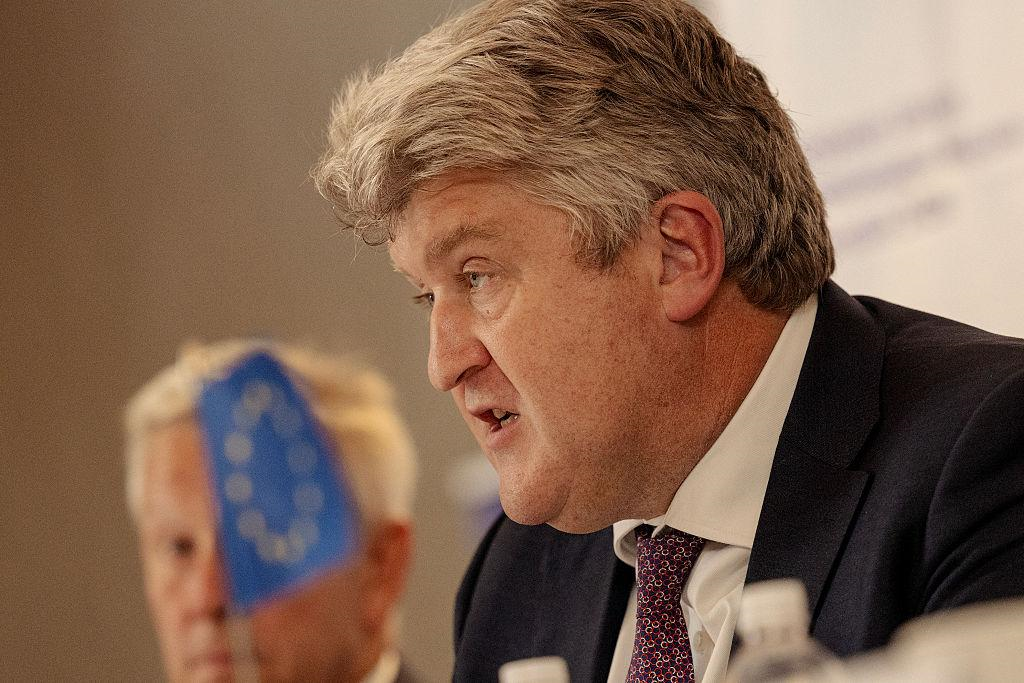
Michael McNamara
The European Parliament has formally taken up Zambia’s post-election situation, calling for an independent and impartial investigation into the death of former Cabinet Minister Mutotwe Kafwaya and raising concerns over arrests, alleged use of force and the handling of treason cases arising from the aftermath of the 13 August general election.
The resolution, titled “Post-electoral repression in Zambia and the killing of Mutotwe Kafwaya,” was adopted on Thursday, 17 September, by 562 votes to one, with 33 abstentions.
But today’s development did not begin in Brussels.
It began in Zambia on the day after the election.
To understand why the European Parliament is now examining events in Zambia, it is necessary to go back to what happened between election day, the counting of votes, the death of Kafwaya and the subsequent arrests and treason charges.
What happened during the election?
Zambia held its general election on 13 August 2026.
The European Union Election Observation Mission, which had been invited by the Zambian authorities, described election day itself as generally calm. It said voting was generally conducted efficiently and that voters were presented with a competitive choice.
But the EU observers also identified concerns surrounding the broader electoral environment.
The mission said restrictions on fundamental freedoms, late legal changes and unequal campaign conditions had affected the playing field.
The more serious concerns emerged during the counting and tabulation of results.
On 14 August, the Electoral Commission of Zambia suspended the nationwide counting and announcement of results between midday and 18:00. The ECZ cited violent incidents targeting polling staff and allegations of ballot-box theft.
The EU observation mission was present in 64 totalling centres.
It reported that before the suspension, the conduct of tabulation was assessed as “very good” in 43 percent of its observations.
After the suspension was lifted, however, the mission said the overall conduct of tabulation deteriorated significantly.
Observers reported that in many centres results were not recorded on tally sheets immediately after being announced, while extended breaks occurred as returning officers appeared to wait for instructions from ECZ headquarters.
The mission also reported a heavier military presence at totalling centres and said this was perceived as intimidating by many people it spoke to.
The EU subsequently said the incidents and procedural irregularities during counting and tabulation affected the transparency and credibility of the process.
That does not, by itself, mean that the European Union rejected the election result.
In fact, on 20 August, the EU formally acknowledged the ECZ’s announcement of President Hakainde Hichilema’s re-election.
Its concern was instead about the conduct and transparency of important parts of the electoral process.
Then came 14 August
While the country was still dealing with the aftermath of the election and the counting of votes, a separate and much more serious incident unfolded in Lusaka.
Former Cabinet Minister and opposition figure Mutotwe Kafwaya was fatally shot during a security operation at a property linked to opposition leader Brian Mundubile on 14 August.
The circumstances surrounding his death remain disputed.
Authorities have said security personnel encountered armed resistance during the operation. Opposition figures and other observers have questioned aspects of the account.
Amnesty International said in August that the full circumstances surrounding Kafwaya’s death remained unclear and called for a prompt, independent, impartial and transparent investigation.
The European Parliament is now making the investigation an international issue.
Why is the EU asking for an investigation?
During Thursday’s debate in the European Parliament, Michael McNamara, who headed the EU Election Observation Mission in Zambia, said the developments after the election came as a “profound shock”.
McNamara said he had spent much of the election period in Zambia and had observed what he described as the country’s strong democratic traditions and respect for the rule of law.
He called for the circumstances surrounding Kafwaya’s death to be investigated quickly and transparently, including accountability where appropriate for those exercising command responsibility.
That is significant because McNamara is not speaking simply as an outside political commentator.
He led the EU mission that was present during Zambia’s election and whose observers independently assessed the electoral process.
The EU mission’s assessment and today’s parliamentary resolution are therefore connected to observations made during and after the election.
What about the treason cases?
Michael McNamara with Mundubile (l), Makebi (r)
The European Parliament’s concern extends beyond Kafwaya’s death.
Opposition figures, including Brian Mundubile and Makebi Zulu, are facing treason charges together with other accused persons following the post-election security operation.
During Thursday’s debate, McNamara called for speedy and transparent proceedings in the treason cases and said those charged should have unimpeded access to legal representation.
The important point is that the EU is not determining whether those accused are guilty or innocent.
That remains a matter for the Zambian justice system.
The question being raised internationally is whether the cases proceed through transparent legal processes, with the accused having access to lawyers and the normal safeguards of a fair trial.
So what does today’s European Parliament resolution actually do?
The resolution puts the European Parliament’s position formally on record.
It does not overturn Zambia’s election.
It does not determine who was responsible for Kafwaya’s death.
It does not determine the guilt or innocence of those facing treason charges.
And it does not replace Zambia’s courts or investigative institutions.
What it does is place international parliamentary attention on the conduct of the post-election period and call for investigations and legal processes that meet standards the European Parliament considers necessary.
The resolution is therefore another development in a process that began with the EU’s election observation mission and has now moved beyond the election itself.
What could it mean for Zambia?
The immediate question is whether the Zambian authorities will respond to the concerns raised by the European Parliament and the EU’s election observers.
The EU remains an important international partner for Zambia, and the European Union has repeatedly described its relationship with Zambia as a long-standing partnership.
At the same time, the EU has now publicly linked concerns about the election, the post-election violence, Kafwaya’s death and the treatment of opposition figures.
That creates a broader conversation about Zambia’s democratic institutions and the country’s international reputation.
There is also a practical question.
If an independent investigation into Kafwaya’s death is conducted, will its findings address the questions now being raised by both Zambian and international observers?
And if the treason cases proceed, will the proceedings demonstrate that the accused have received the protections guaranteed by law?
Those questions cannot be answered by a European Parliament resolution.
They can only ultimately be answered by what happens in Zambia.
The bigger story
The significance of today’s European Parliament action is therefore not simply that European politicians have criticised Zambia.
The bigger story is the sequence of events.
An election that the EU described as generally calm on polling day was followed by serious concerns over the counting and tabulation process.
The day after the election, a former Cabinet Minister was killed during a security operation.
Opposition figures were arrested and some subsequently faced treason charges.
The circumstances of Kafwaya’s death remain contested.
The EU’s chief election observer has now called for a speedy and transparent investigation and transparent treason proceedings.
And the European Parliament has formally adopted a resolution putting those concerns on record.
The question now moves back to Zambia: what happens next?


Community Feedback