South Africa should study Zimbabwe’s history very carefully.

Breaking News Zambia
NewsBy Dereck Goto South Africa should study Zimbabwe’s history very carefully. Marco Rubio’s visa restrictions, announced on 15 September 2026 and targeting certain foreign nationals over policies and conduct in South Africa, are not yet a Zimbabwe-style economic sanctions regime. But Pretoria should understand the significance of what has begun. Washington is explicitly linking punitive […]
By Dereck Goto
South Africa should study Zimbabwe’s history very carefully.
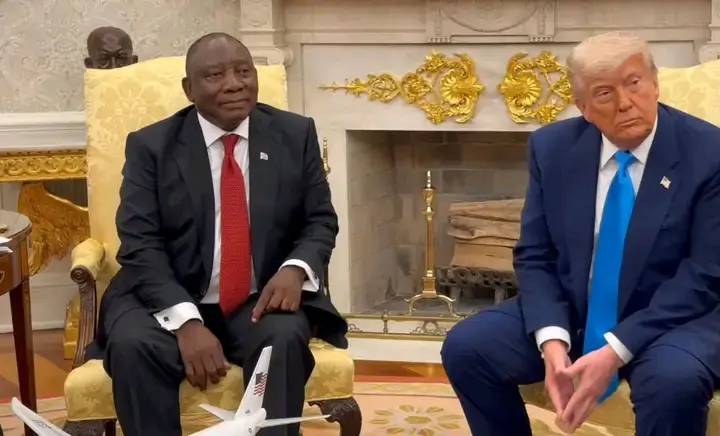
Marco Rubio’s visa restrictions, announced on 15 September 2026 and targeting certain foreign nationals over policies and conduct in South Africa, are not yet a Zimbabwe-style economic sanctions regime. But Pretoria should understand the significance of what has begun. Washington is explicitly linking punitive measures to South Africa’s land and race policies.
Zimbabwe knows this terrain intimately.
The confrontation between Zimbabwe and the West intensified dramatically around Fast Track Land Reform. Washington’s own congressional record shows that land reform, compulsory acquisition and private-property rights were central issues in the debate surrounding ZDERA, alongside false American allegations about elections, human rights and the rule of law. Indeed, congressional debate at the time explicitly described land reform as a major issue.
Then came years of pressure and isolation.
The lesson is that sanctions are not merely punishments. They are instruments of statecraft – using access to markets, finance, institutions and international legitimacy to increase the cost of policies Washington opposes.
There is now an extraordinary historical irony. During Zimbabwe’s darkest period of confrontation with the West, influential voices in South Africa often treated Zimbabwe as the regional cautionary tale – a country whose predicament could simply be dismissed as self-inflicted.
It would, however, be remiss of me not to acknowledge President Thabo Mbeki. At a crucial moment in Zimbabwe’s history, Mbeki resisted enormous external pressure to turn South Africa against its neighbour. He later wrote that his government opposed attempts by the UK and US to impose regime change on Zimbabwe, including proposals involving military means. Mbeki also stated that Tony Blair wanted South African cooperation with a military invasion to remove President Robert Mugabe.
Whatever one’s interpretation of that period, Mbeki’s insistence that Zimbabweans should determine Zimbabwe’s political future deserves recognition. In that respect, he occupies an important place in Zimbabwe’s modern political history.
Two decades later, the strategic question Mbeki confronted over Zimbabwe has acquired new relevance for Pretoria itself. South Africa must now consider how far external powers should be permitted to use diplomatic and economic leverage to influence domestic policies dealing with land, race and historical inequality.
South Africa is not yet where Zimbabwe was. But it is encountering something Zimbabweans recognise: domestic policies concerning historical land and racial inequalities becoming matters of direct American foreign-policy pressure.
Pretoria would therefore be wise to quietly consult Zimbabwe’s Government and ZANUPF in particular. Whatever one’s politics, they possess more than two decades of institutional experience dealing with American sanctions, diplomatic isolation and attempts to mitigate their effects. South Africa can study what worked, what failed and what it should never repeat.
Yesterday, Zimbabwe walked that road largely alone. Today, South Africa can see the entrance.
Those who once looked north with amusement may discover that sanctions look very different when Washington’s letter carries your name.


Community Feedback