
“Our Diplomacy Must Help To Grow Zambia,” Haimbe Tells New York

Breaking News Zambia
Top StoriesForeign Affairs and International Co-operation Minister Mulambo Haimbe signed joint communiqués establishing diplomatic relations with Uruguay and Vanuatu in New York. The signings opened Zambia’s campaign at the 81st Session of the United Nations General Assembly (UNGA81), where…
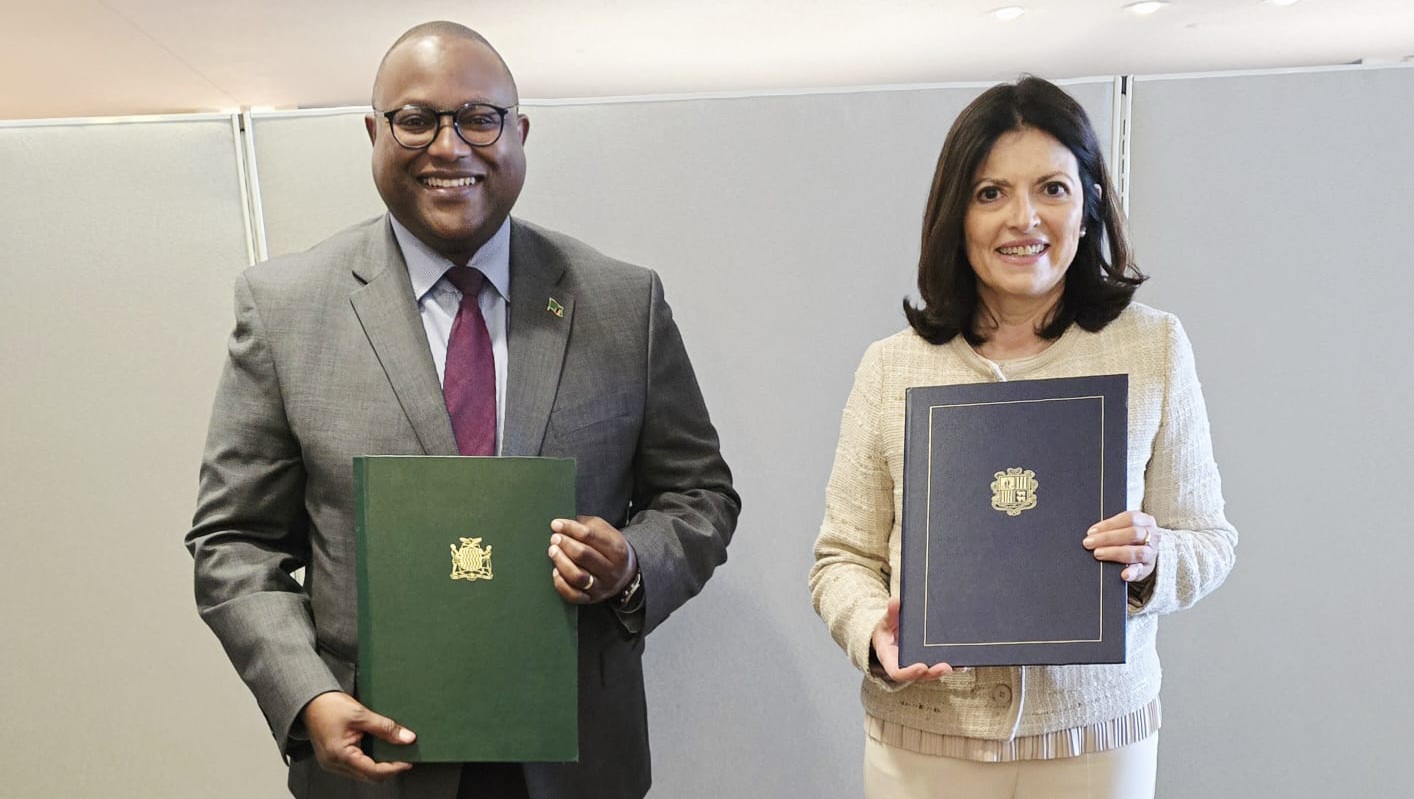
Foreign Affairs and International Co-operation Minister Mulambo Haimbe signed joint communiqués establishing diplomatic relations with Uruguay and Vanuatu in New York. The signings opened Zambia’s campaign at the 81st Session of the United Nations General Assembly (UNGA81), where the delegation is working to turn foreign relations into new markets, investment and partnerships under the Grow Zambia agenda.
Mr Haimbe is representing President Hakainde Hichilema at the Assembly. His delegation includes Health Minister Roma Chilengi and Permanent Secretary for International Relations and Co-operation Etambuyu Gundersen. This year’s proceedings opened under the theme “Restoring Trust, Managing Transformation: A United Nations that Delivers for All.”
The minister said Zambia’s diplomacy had to serve the country’s development priorities.
“Our diplomacy must help to grow Zambia,” Mr Haimbe said. “New diplomatic relationships mean new markets for our farmers, new partners for our investment drive and new friends for Zambia in the institutions that shape the global economy.”
New York is the first major diplomatic outing since the Head of State’s re-election in August. Government has made economic growth the core of its second-term programme. Namatama Njekwa, first secretary for press and public relations at Zambia’s Permanent Mission to the United Nations, said in a statement that the delegation’s work was focused on financing for development, investment, trade and partnerships that support economic growth.
Under the communiqué signed on Monday, Zambia and Uruguay will explore co-operation in agriculture and livestock, trade and investment. The two countries will also pursue economic, social, cultural and people-to-people exchanges.
The agreement with Vanuatu covers climate change adaptation, agriculture, eco-tourism and people-to-people exchanges. It gives Lusaka its first formal diplomatic link with the Pacific island state.
Mr Haimbe also held talks with Malawi’s Foreign Affairs Minister George Chaponda. The two sides agreed to explore closer co-operation in trade, investment, infrastructure, energy and connectivity.
Malawi’s interest in the Lobito Development Corridor came up in the discussions. The neighbours agreed to convene their Joint Permanent Commission of Co-operation in Malawi. Zambia also thanked Lilongwe for leading the SADC Election Observation Mission that monitored the August polls.
In a separate meeting, Mr Haimbe and Cuba’s Foreign Affairs Minister Bruno Rodríguez Parrilla reaffirmed the long-standing friendship and solidarity between Lusaka and Havana. The Foreign Affairs Minister thanked Cuba for its support to Zambia’s health and education sectors. Both sides committed to keep co-ordinating at the United Nations and on other multilateral platforms.
Zambia used its meetings with Uruguay, Vanuatu, Malawi and Cuba to seek support for its bid for a seat on the UN Human Rights Council for the 2027 to 2029 term.
Lusaka and Havana also exchanged support for each other’s candidatures for the 2028 to 2030 period and for the Advisory Committee on Administrative and Budgetary Questions.
Zambia’s top diplomat paid a courtesy call on UN Under-Secretary-General and Special Adviser on the Prevention of Genocide Professor Chaloka Beyani. They discussed the rule of law, human rights, misinformation and the importance of regional early warning mechanisms.
He then met Assistant Secretary-General for Development Coordination Oscar Fernández-Taranco. Their talks covered Zambia’s co-operation with the UN development system and the strengthening of the resident coordinator system.
On the margins of the Assembly, Mr Haimbe joined Commonwealth Secretary-General Shirley Botchwey at the 74th Extraordinary Meeting of the Commonwealth Ministerial Action Group.
Professor Chilengi worked on the human capital side of the growth agenda. At a high-level World Food Programme (WFP) meeting titled School Meals for Future Leaders: Accelerating Progress, he presented Zambia’s school feeding programme as an investment in the workforce the economy will need.
“School meals are the bedrock of this human capital development,” Professor Chilengi said.
“By ensuring adequate nutrition, improving cognitive development, and keeping children, especially girls, in the classroom, we are actively shaping a highly capable workforce ready to drive Zambia’s future economic transformation.”
The programme now reaches more than 4.6 million learners in over 8,000 schools across the country. Government aims to extend it to 5.6 million learners by the end of 2026, with an ultimate target of 6.6 million children.
Zambia kept and expanded the programme through the severe El Niño-induced drought. The National Drought Response Plan made school meals a core intervention, and an additional 2.2 million children were reached across 36 drought-stricken districts.
The minister said Government had tied the programme to local economic development by decentralising procurement and buying directly from farmer co-operatives. He said the approach had given smallholder farmers stable markets and regular incomes while putting capital into rural communities.
Professor Chilengi also attended the launch of the report of the Accra Reset High-Level Panel on Reform of the Global Health Architecture and Governance. The report proposes reforms that strengthen countries’ own priorities and capabilities rather than requiring them to organise around separate institutions and funding streams.
Beyond bilateral talks, the delegation met United Nations officials on development co-ordination and the strengthening of regional early warning systems.
Zambia was due to co-host a follow-up meeting on the Sevilla Commitment on Wednesday. Further bilateral engagements on investment, energy and infrastructure are lined up for the rest of the week. Mr Haimbe will deliver Zambia’s national statement to the General Assembly on Monday, 28 September, setting out the country’s priorities and its position on the key issues before the international community.


Community Feedback