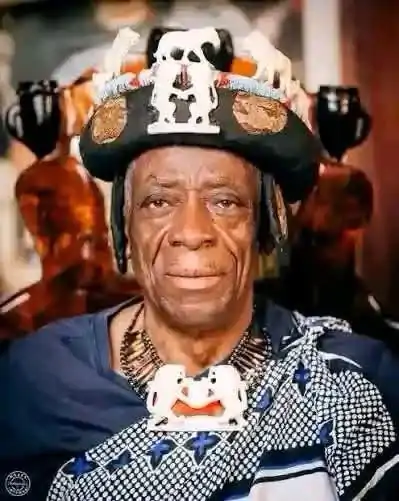
ON THE QUESTION OF PARAMOUNT CHIEFS- Fred M’membe

Breaking News Zambia
NewsON THE QUESTION OF PARAMOUNT CHIEFS Let me begin with what is not in dispute. Chief Mukuni is an old and honoured institution. The Leya people have lived along that stretch of the Zambezi for centuries, they were there before Livingstone was a town, before the railway, before the bridge, and before there was a […]
ON THE QUESTION OF PARAMOUNT CHIEFS
Let me begin with what is not in dispute.
Chief Mukuni is an old and honoured institution. The Leya people have lived along that stretch of the Zambezi for centuries, they were there before Livingstone was a town, before the railway, before the bridge, and before there was a Zambia to argue about. Nothing I say here takes anything away from them. Their history does not need my permission to be true, and it does not need a government notice to be true either.
But a petition has been filed in the Constitutional Court asking that Chief Mukuni be reclassified as a Paramount Chief. Three other traditional rulers have tried to enter that case and have been turned away. The country is now being invited to take sides between chiefs. Before we do that, we should ask a question that almost nobody is asking.
Where does the title of the paramount chief actually come from?
It does not come from our ancestors. It comes from a colonial filing cabinet.
In 1936, the colonial government passed two laws – Ordinance No. 9 and Ordinance No. 25. The Native Authorities Ordinance Number 9 covered Northern Rhodesia. The Barotse Native Authorities Ordinance Number 25 covered Barotseland.
The Native Authority Ordinance No. 9 of 1936 was a foundational colonial law enacted in Northern Rhodesia (now Zambia) that formalised and regulated traditional leadership and local administration under the system of indirect rule.
The Ordinance defined “Paramount Chief,” “chief,” or “sub-chief” as any native recognised as such by the colonial government, establishing the legal category of a “Native Authority” (which could be an individual chief, a council, or a group of natives).
The law shifted the legal framework from direct appointment to official government recognition by the territorial governor, who held the ultimate power to recognise, suspend, or withdraw recognition from traditional leaders.
It empowered Native Authorities to issue local orders and make rules for maintaining order, managing tribal areas, and developing tribal self-government on traditional lines.
Promulgated alongside complementary legislation, the ordinance facilitated the creation of Native Treasuries in 1937, allowing authorities to collect revenue, impose local rates, dues, and fees, and pay salaries to local administrative staff.
Much of the structure introduced by this 1936 ordinance—including government recognition of traditional leadership—carried forward into post-independence Zambian legal frameworks, influencing modern chieftaincy legislation.
Barotse Native Authority Ordinance No. 25 of 1936 was a parallel, distinct ordinance tailored specifically to the unique status of Barotseland and the Litunga (the Paramount Chief of the Barotse). It explicitly recognised the unique governing structure and the Paramount Chief of the Barotse within the protectorate framework.
It prompted the creation of Native Treasuries alongside Ordinance No. 10 of 1936 and allowed native authorities to collect taxes (such as poll and hut taxes), pay staff salaries, fund public works, and eventually build primary schools, clinics, and infrastructure by the 1950s.
Ordinance No.9 and Ordinance No.25 took the authority our peoples already had, and which they had exercised long before any European arrived, and sorted it into a colonial ladder. Areas were drawn. Offices were graded. Some men were entered in the register as paramount, others as senior, others as chiefs, others as sub-chiefs. Four were placed at the top, and four remained there today.
Our peoples had kings, councils, courts, and law long before 1936. That is not what the colonial government created. What it created was the ranking. The grading was not an act of respect for our traditions. It was an instrument of indirect rule. A small colonial administration could not govern this country by itself, so it graded our traditional authority into a chain of command, put itself at the top of that chain, and governed through it.
That is the honest origin of the word we are now quarrelling over.
Now consider what we ourselves did about this after independence, because we did do something about it, and we should be proud of it.
In 2016, we amended our Constitution. Article 165 says that the institution of chieftaincy is guaranteed and shall exist in accordance with the culture, customs, and traditions of the people to whom it applies. And it says something stronger. It says that Parliament shall not enact any law giving any person or any authority the right to recognise a chief or to withdraw recognition from a chief.
Read that again. Not the president. Not a minister. Not a permanent secretary. Nobody.
Then, in December 2019, the Constitutional Court finished the job. In the case brought by Chief Mwene Mutondo Mulubisha of the Nkoya people, the court struck down sections three to seven of the Chiefs Act and ordered that they be removed from our statute book altogether. Section three was the section that allowed the President, by statutory order, to recognise a person as the holder of the office of Paramount Chief, Senior Chief, Chief, or Sub-Chief. That power is gone. The court took it away because it was a colonial relic, and because chieftaincy belongs to the people whose chieftaincy it is.
So let us now answer the question plainly.
Who in Zambia today has the lawful power to make a paramount chief?
Nobody has it. The President does not have it. Parliament is forbidden from giving it to anyone. It was deliberately abolished, and it was abolished only seven years ago, in a case brought by a chief who was tired of being graded by politicians.
This is the part that troubles me most. The petition before the court invokes Article 165. But Article 165 is the very provision that exists to keep the state out of this. You can not ask the State to rank you by relying on the clause that forbids the State from ranking anybody. If that argument succeeds, we will not have corrected a colonial injustice. We will have restored the colonial machinery under a new name and handed the president back a power our own Constitutional Court took off him.
And we all know what that power would be used for because we have just come out of an election.
It is a matter of public record that Chief Mukuni endorsed the incumbent’s re-election. I do not accuse him of a bargain, and I have no evidence of one. But I will say this, and I say it to every chief in this country. Once your elevation is sought from a government you campaigned for, you will never again be able to prove that your standing was earned rather than paid for. The suspicion alone is the damage. Your subjects will carry it long after the politicians who created it have moved on.
Only last week, I wrote that when traditional leaders surrender their independence to politicians, they are reduced to tools used during election cycles and discarded afterwards. I did not know then how quickly the point would be tested.
And where does this end? If rank can be granted, then the Lamba will ask, and the Lunda will ask, and the Kaonde, the Luvale, the Nkoya, the Namwanga, the Tonga, and the Mambwe will ask. Every one of them has a history as long and as proud as anybody else’s. On what principled basis will the twentieth petitioner be refused what the first was given? We will spend the next decade ranking ourselves by tribe in a courtroom. In a country still bleeding from August, I can think of a few things more dangerous.
Now I must not be misunderstood because what follows is the heart of our position and it is the opposite of what some people will expect to hear from me.
We are not saying our chiefs should be quiet. We are saying they have been given far too little, not too much.
The Socialist Party has never said that the problem of this country is simply and solely one president or one political party. We have said it for years, and we will keep saying it. Our problem is the system of governance itself – imitekele, mibusezo. You can, every five years, remove a man and leave the system standing, and nothing changes. What we are seeking is not simply or solely a change of power or office occupant. It is a change of system of governance.
And at the centre of that change is a single demand: the Power must be shared.
Shared with whom? With all the authentic leaders of our people. Our traditional leaders. Our religious leaders. The other leaders our communities actually trust and actually listen to. Power must be returned to those in whom it was originally vested.
Before the colonisers came here, our people were governed by their chiefs. The chief was the supreme authority. There was nobody above him but God. We did not have local politicians in this territory until the late 1940s and early 1950s. And when the colonisers came and took our power, they did not take all of it. They left our chiefs something. It was after 1964, when our own politicians took over, that the rest was quietly and eventually taken away. Today, the politician governs alone. The rest are ceremonial and have to support the politician of the day in power.
For more than sixty years, this country has been led by the politician and by nobody else. Look where it has brought us!
And let nobody tell you that politicians governing alone is what a modern country looks like because it is not true. Look at the countries whose systems we copy so eagerly!
The United Kingdom is not governed by politicians alone. Its head of state is the monarch – King or Queen. The Church of England sits inside the state itself. There is a House of Lords, where men and women who have excelled in medicine, law, science, the arts, the military, and public service are brought in to give guidance and direction to society. And then there is the House of Commons, where the politicians sit, elected directly by the people and led by a Prime Minister. But no Prime Minister takes office until the monarch has assented to it.
And that United Kingdom is more than one country in one. Scotland has five million people, its own language, its own anthem, its own flag, its own banknotes, its own parliament, its own education system, and its own church. Wales has three million people, its own parliament, its own laws, and its own language. Northern Ireland has its own assembly. Each of them fields its own national soccer and rugby team and competes for the World Cup in its own name. And they remain one country.
Can we really learn nothing from that? I am not saying copy it. I am saying draw inspiration from it.
And it is not only the British. Sweden, Denmark, Norway, the Netherlands, Hungary, Austria, Portugal, Belgium, and Spain are all governed that way. The head of state of Japan is an emperor. Malaysia and Thailand are governed that way. So are many Arab states. And China, which has no kings and no queens, carries a civilisation of more than five thousand years and deliberately builds its history, its culture and its traditions into how it governs, through its own institutions and its own logic for bringing its people into government.
Look closely, and you will find something consistent. Where power is sufficiently shared, there is more political stability. And where there is more political stability, there is generally more economic progress.
But let me be very precise about what sharing power means because it will be deliberately misunderstood.
It does not mean traditional ceremonies and supporting the president of the day. Our ceremonies are magnificent, and I honour every one of them, but a ceremony is a ceremony, a tourist attraction, not a share of power or governance. Inviting a chief to sit under a canopy once a year and clap for a guest of honour is not participation in governance. It is decoration. Moreover, all institutions – religious, state, or government – have ceremonies of one form or the other.
We mean the real thing. We mean governance and economic decisions being made collectively or in a shared way, with the genuine participation of the other leaders of our people.
And if power is to be shared, then areas of leadership, of control, and influence must be properly defined. Chiefdoms must be defined and defined historically, not arbitrarily, and not by whoever happens to hold State House. That is the serious work waiting to be done in this country, and it is a far weightier question than which of our chiefs is addressed by which title.
Now let me show you the cost of what we have done instead, in figures that are not mine.
The five provinces of this country that had the strongest traditional leadership are today the five poorest provinces in Zambia. According to our own Living Conditions Monitoring Survey, Muchinga is the poorest at 82.6 per cent, followed by Western Province, which is Barotseland, at 78.6 per cent, then Northern Province at 78 per cent, then Luapula at 77.3 per cent, then Eastern Province at 76.4 per cent.
That is not a coincidence. Those are precisely the areas where a functioning system of traditional authority was hollowed out and replaced with nothing.
Everything in those areas was once properly managed, and it was managed by traditional leadership. Now go and look for the fish. It is depleted. Go and look for the game. It has been wiped out across most of those areas. Go and look for ifinkubala. It is finished. Mashroon. It hardly grows anymore. Birds of all sorts that used to fill the Barotse plains. They have gone to the Amazon. These places sit on immense natural wealth, and our politicians have failed to manage a single part of it.
So when I say that no title has ever fed a village, I am not belittling our chiefs. I am saying the opposite. We have handed them the ceremony and stripped them of power, and then we blame them for the poverty of the people they can no longer protect.
Our position is therefore simple, and it has not changed.
The State should have no hand in grading our chiefs because our Constitution says so, and our courts have said so. If the standing of any traditional institution is to be settled, let it be settled by the people whose institution it is, through their own customs, not by petition to a government and not as a reward for political loyalty.
But do not stop there, because that alone would leave our chiefs exactly where they are. Let us define our chiefdoms honestly and historically. Let us bring our traditional leaders, our religious leaders, and the other authentic leaders of our people into the places where governance and economic decisions are actually made. Let us end sixty years of the politician governing alone.
The dignity of a chief was never in the political ranking. It was always in the people. And, the power our chiefs need is not a title from a president. It is a real share in the government of this country.
Fred M’membe
President of the Socialist Party
Community Feedback