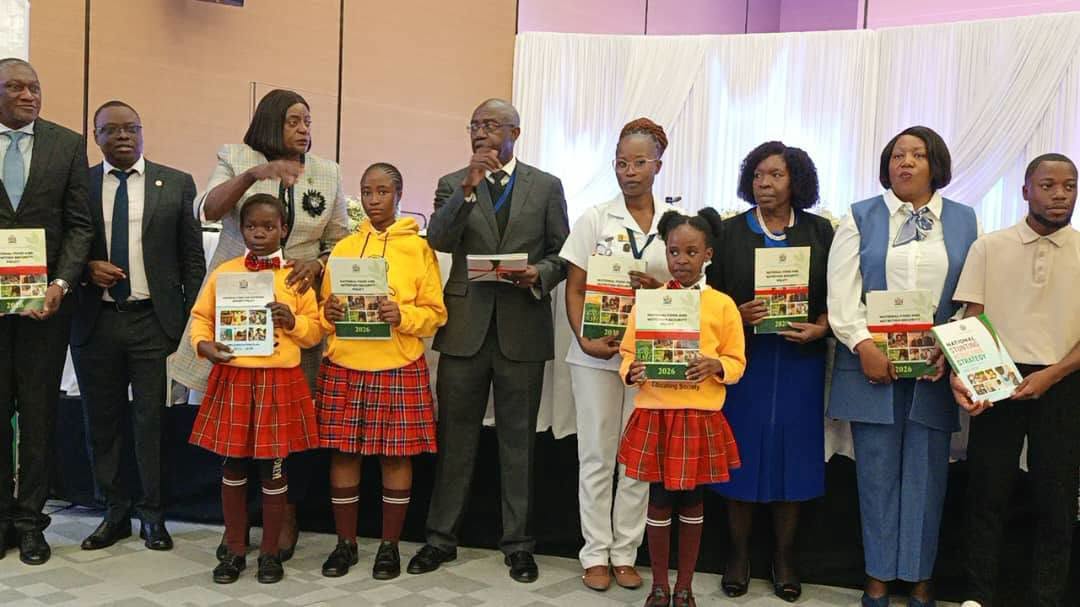
Office of the Vice President reveals plans to scale up nutrition interventions

Breaking News Zambia
Top StoriesPermanent Secretary for Administration in the Office of the Vice President, Lillian Kapusana has revealed plans by government to scale up nutrition interventions in order to reduce stunting levels from 32 to 15 percent by the year 2030. Ms Kapusana has noted that the Country’s…
Permanent Secretary for Administration in the Office of the Vice President, Lillian Kapusana has revealed plans by government to scale up nutrition interventions in order to reduce stunting levels from 32 to 15 percent by the year 2030.
Ms Kapusana has noted that the Country’s stunting levels have dropped by three percent, from the previous 35 to 32, despite various challenges such as the drought, Cholera and Covid experienced in the recent past.
She attributed the achievement to various interventions by government, such as the School Feeding Programme and revival and empowerment of small-scale farmers, among others.
The Permanent Secretary said this when she paid a courtesy call on Chongwe District Commissioner Evans Lupiya, in Chongwe, during her tour of Schools to appreciate the School Feeding Programme and School production units.
She however, stated that the current 32 percent stunting levels are still a source of concern, adding that this is why the government launched the National Stunting Reduction Strategy for 2026 to 2030, among other interventions.
“32 percent stunting levels, what does it mean? It means that in every three children, there’s one child who is stunted. This could be your grandchild, my grandchild or nephew and that is a source of worry for the coordinating team,” she stressed.
Ms Kapusana also disclosed that government is implementing other initiatives such as the Transformative Emergency Response for Nutrition Improvements in Zambia (TERNIZA) in partnership with the World Food Programme (WFP) and the German government.
She expressed hope that through the project, which seeks to improve food security, nutrition and promote climate resilient livelihoods and other initiatives, the country will be able to reduce stunting levels to 15 percent by 2030.
And Chongwe District Commissioner Evans Lupiya expressed gratitude for the revival of school production units in the country.
He noted that production units compliment the school feeding programme as schools are able grow their own food.
“The reviving of production units is commendable as some children will be able to acquire agricultural skills through this; besides the nutritional benefits,” he said.






Community Feedback