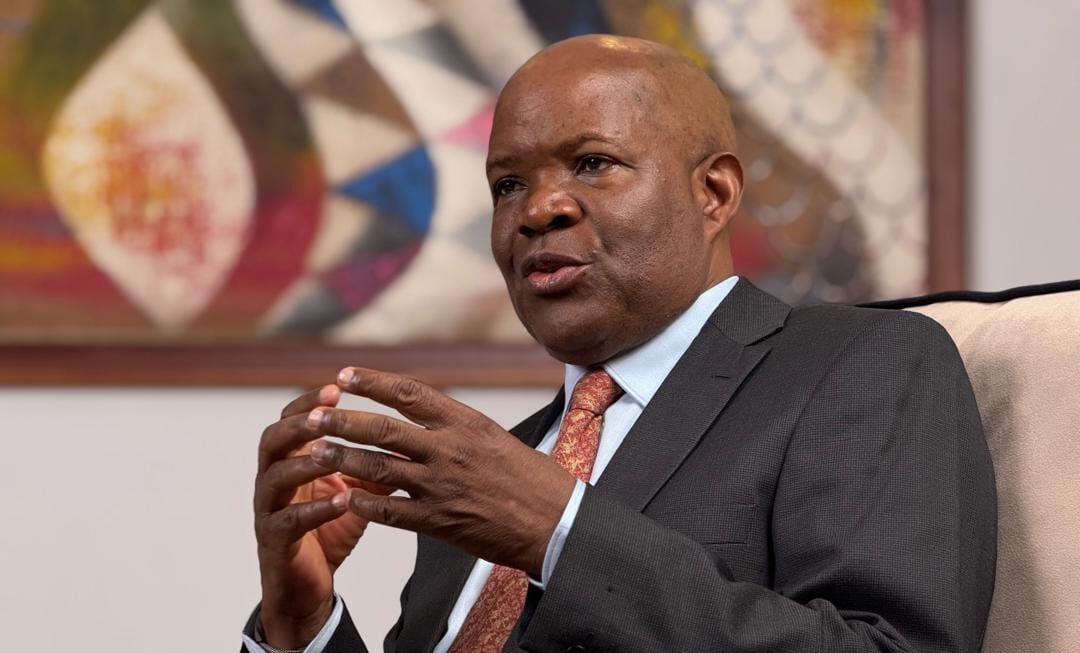
Zambia : M'membe Lays Out Sweeping Reform Agenda Ahead Of Hichilema's Second-Term Inauguration

Breaking News Zambia
NewsLusaka - Zambia: On the eve of President Hakainde Hichilema's inauguration for a second term, Socialist Party president Fred M'membe released a wide-ranging
Headlines 5 min.Read M’membe Lays Out Sweeping Reform Agenda Ahead of Hichilema’s Second-Term Inauguration By editor September 1, 2026 FacebookTwitterPinterestWhatsAppOn the eve of President Hakainde Hichilema’s inauguration for a second term, Socialist Party president Fred M’membe released a wide-ranging policy manifesto calling for structural reforms across government, mining, taxation, and urban planning, framing Zambia’s economic and social system as afflicted by what he termed “high viscosity syndrome” — a condition in which upward mobility is blocked, merit is undermined by patronage networks, and public resources are consumed by an oversized state apparatus.
In a post on his Facebook page, M’membe urged the incoming administration to move decisively from what he described as bureaucratic consumption toward grassroots wealth creation, presenting the proposals as a “loyal opposition” manifesto for the new term.
Cutting the size of government
M’membe called for parliamentary and local council business to move to a fully digital model, arguing this would eliminate the recurring cost of centralized physical sessions in Lusaka and in council chambers nationwide. Under his proposal, members of Parliament and ward councillors would work from constituency-based digital hubs, attending live virtual legislative sessions while being required to spend a statutory minimum number of days each year physically present in their constituencies, except during declared national emergencies.
The manifesto also calls for the permanent abolition of political advisor positions across government ministries and of the office of District Commissioner, with local district administration handled instead by professional, merit-based civil servants. It proposes consolidating Cabinet into a smaller, non-duplicative executive team, with Permanent Secretary appointments made strictly on technocratic grounds and governed by performance-based delivery contracts. M’membe additionally proposed eliminating all Deputy High Commissioner and Deputy Ambassador posts across Zambia’s foreign missions, saying missions should be staffed leanly and focused on trade and commercial diplomacy.
Settling 500,000 youths on productive land
M’membe proposed that savings from downsizing government be redirected into large-scale youth settlement and vocational programs rather than general spending. The plan calls for settling 500,000 trained youths as commercial producers on state-allocated agricultural land across all provinces, with settlement packages that go beyond land titles to include mechanized land preparation, solar-powered boreholes, starter seed and input packs, and training in commercial crop production, poultry, aquaculture, and horticulture.
A parallel vocational track would provide young bricklayers, mechanics, plumbers, and electricians with professional toolkits, equipment-leasing credit lines, and guaranteed access to local public maintenance contracts. M’membe argued this would expand the domestic tax base, strengthen food security, and connect GDP growth more directly to household incomes.
Expanding state equity in mining
On the mining sector, M’membe’s manifesto calls not for privatization but for an expanded state ownership stake. It proposes requiring a minimum 51% equity stake for ZCCM-IH in all new mining licenses, with existing mines offered a 30% state equity option. Dividends from these holdings would flow into a proposed Copper Revenue Stabilisation Fund, which the manifesto models on Chile’s FEES fund and Botswana’s Pula Fund.
The plan also calls for a dedicated Transfer Pricing Enforcement Unit, supported by GPS-enabled monitoring of mineral exports and mandatory quarterly revenue reporting, which M’membe said would close loopholes that have allowed mineral wealth to leave the country undertaxed.
Tax changes
The manifesto calls for the immediate repeal of taxes on mobile money transactions, arguing they function as a barrier to financial inclusion for micro-merchants, market traders, and rural households, and proposes shifting that tax burden onto service providers instead of users. It also calls for widened Pay-As-You-Earn tax brackets to increase disposable household income.
Separately, the plan proposes a new wealth tax targeting luxury real estate, offshore assets, and unproductive domestic capital, along with an escalating land holdings tax on any landholding above 200 hectares. Under the proposal, that land tax would be waived only if the titleholder can show active commercial use of the land through filed turnover tax, income tax, and VAT returns.
A cess on commercial frontage properties
M’membe’s manifesto describes a spatial divide in Zambian cities, where malls, office parks, and commercial plazas sit along main roads while the compounds directly behind them lack paved roads, drainage, water, and sanitation. To address this, it proposes a mandatory Municipal Community Cess applied nationwide to commercial properties on primary and secondary road frontages, including retail malls, corporate offices, fuel stations, banks, distribution yards, and private health facilities.
City, municipal, and town councils would set the rating schedules based on local valuation rolls, traffic volume, and commercial footprint. By law, all cess revenue would be ring-fenced into a Compound Infrastructure and Human Development Fund, barred from covering council salaries or general administrative costs, and instead used to pave internal compound roads, install stormwater drainage, extend treated water networks, install street lighting, build solar-powered digital learning hubs, and construct electrified market stalls for informal traders.
Mining sector labor and environmental provisions
The manifesto proposes a statutory windfall profit-sharing mechanism requiring mining companies to distribute a set percentage of excess revenue to mine workers during periods of high global metal prices, along with mandatory inflation-indexed hazardous duty allowances for underground and high-risk personnel. It also calls for higher, differentiated road tolls on mining transport fleets to offset road wear caused by heavy mineral haulage, which M’membe said currently falls on regular motorists.
On the environment, the plan calls for mining houses to pay a fixed statutory charge per metric tonne of ore extracted — or a set percentage of gross export value — into an independently audited Environmental Remediation and Resettlement Sinking Fund. It calls for real-time, progressive ecological rehabilitation of land, rivers, and vegetation as mining advances, rather than remediation deferred until mine closure, and for immediate resettlement of communities living in industrial pollution zones, with new housing, water access, and soil detoxification. The manifesto further proposes giving the state a statutory first lien over mining companies’ physical assets, processing plants, and export receivables until independent auditors certify environmental reclamation is complete.
M’membe’s framing
M’membe said maintaining the current system — protecting redundant offices, insulating politically connected insiders, and taxing the poor while rewarding speculators — would not break what he called Zambia’s cycle of generational poverty. He said the combined package of measures was intended to “dissolve systemic friction and unleash the latent energy, talent, and enterprise of every Zambian.”
— Based on a policy manifesto released by Fred M’membe, President of the Socialist Party of Zambia.
Loading read count...LEAVE A REPLY Cancel reply
Hot this week
General NewsNorth Chief hails HH leadership August 31, 2026 0 Chief Mwamba of the Mambwe people of Mbala district... General News
Serenje Chief calls for illegal mining end August 31, 2026 0 Senior Chief Muchinda of the Lala people of Serenje... General News
UPND petitions parley seats in Muchinga August 31, 2026 1 The United Party for National Development (UPND) has petitioned... Sports
We’ll be back for the title – Mwila August 31, 2026 0 ZESCO Ndola Girls Head Coach Florence Mwila has described... General News
Government calls for stronger HAI surveillance August 31, 2026 0 Government has called for stronger and sustainable Healthcare-Associated Infections...
Topics
General NewsNorth Chief hails HH leadership 0 Chief Mwamba of the Mambwe people of Mbala district... General News
Serenje Chief calls for illegal mining end 0 Senior Chief Muchinda of the Lala people of Serenje... General News
UPND petitions parley seats in Muchinga 1 The United Party for National Development (UPND) has petitioned... Sports
We’ll be back for the title – Mwila 0 ZESCO Ndola Girls Head Coach Florence Mwila has described... General News
Government calls for stronger HAI surveillance 0 Government has called for stronger and sustainable Healthcare-Associated Infections... General News
Hero stadium turf protector Installed 0 The Ministry of Youth, Sport, and Arts has confirmed... General News
Ministry of Green Economy hands over vehicles to Eastern Province 0 The Ministry of Green Economy and Environment has handed... Sports
GOLF: Nkana scoops National Quadrangular 0 Kitwe’s Nkana Golf Club have won the 2026 Zambia...
Related Articles
Security Chiefs Inspect Heroes Stadium Ahead of Ceremony
Headlines August 31, 2026Mundubile, Makebi Zulu, Findlay Transferred to Mukobeko on Treason Charges Headlines August 31, 2026
Zambia’s election victory looks clear. What has followed does not sit easily with anyone.
Columns August 31, 2026M’membe Calls for Independent Inquiry into Zambia Army Conduct During 2026 Elections
Headlines August 30, 2026 Headlines August 30, 2026Popular Categories
HeadlinesGeneral NewsSportsEconomyRural NewsColumnsFeature Politics Previous articleNorth Chief hails HH leadership




Community Feedback