
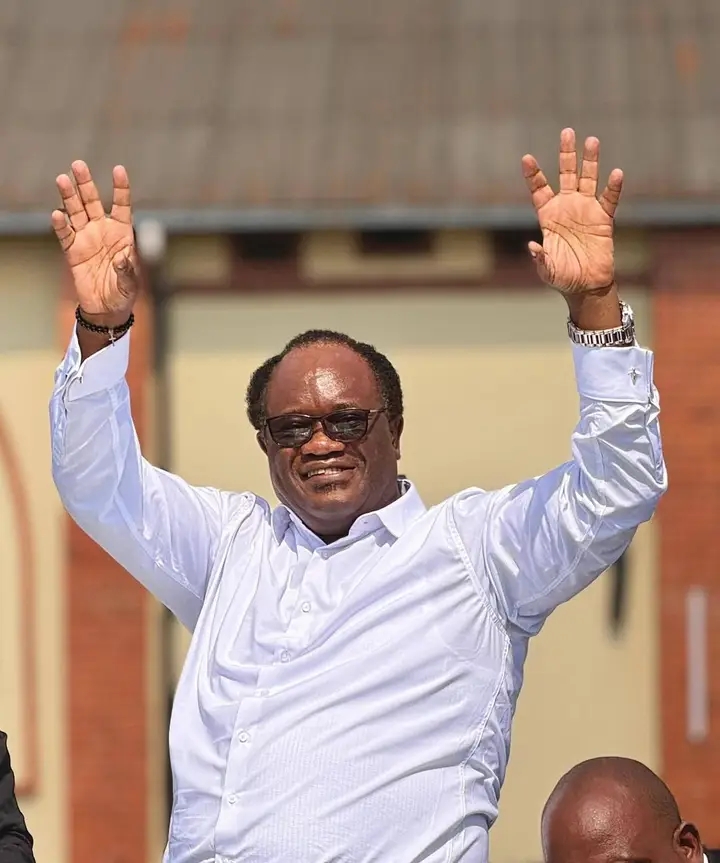
Mundubile Is Right: Reserves High, Homes Hurting- Professor Namukolo Miyanda,

Breaking News Zambia
BusinessMundubile Is Right: Reserves High, Homes HurtingProfessor Namukolo Miyanda, Pan-Africanist and Governance Expert29th June, 2026 Dr. Situmbeko Musokotwane recently told Zambians that Mr. Brian Mundubile is “totally unsuitable” for the presidency because he questioned the value of holding USD 6.5 billion in forex reserves while inflation is low. The blunt truth is this: Mundubile is […]
Mundubile Is Right: Reserves High, Homes Hurting
Professor Namukolo Miyanda, Pan-Africanist and Governance Expert
29th June, 2026
Dr. Situmbeko Musokotwane recently told Zambians that Mr. Brian Mundubile is “totally unsuitable” for the presidency because he questioned the value of holding USD 6.5 billion in forex reserves while inflation is low. The blunt truth is this: Mundubile is right, and Musokotwane is defending the wrong scoreboard.
The central issue is not whether reserves look strong on paper. The issue is whether ordinary Zambians feel the economy working in their homes, markets, and small shops. For two periods, 2008-2011 and 2021-2025, the pattern is the same. Reserves are built. The kwacha looks steadier. Inflation comes down. Meanwhile, money does not move where people live. Poverty remains stubbornly high, rural areas stay underserved, and small businesses stay squeezed. That is not success. That is stability without circulation. It is a failure of translation.
Look at the facts on the ground. After five years of UPND government, Western Province still waits on the Sesheke-Livingstone road. Energy supply in the province is still unreliable. Without roads and power, no investor will come, no matter how large the central bank’s dollar pile is. You cannot eat reserves. You cannot commute on them. You cannot run a milling plant, a cold room, or a welding shop with them.
Balanced growth demands deliberate public investment in lagging regions to narrow the rural-urban gap. When that investment is missing, headline buffers become just that: headlines. An economy that cannot move money into roads, energy, and productive enterprise is stable for statistics but strained for families.
On small businesses, the gap is just as clear. When input costs spiked between 2022 and 2024, many countries gave micro and small firms targeted tax relief or lighter compliance to keep cash flowing. Zambia did not do that at scale. CIT and VAT obligations stayed heavy. Working capital shrank. Hiring slowed. The result is simple: less money circulating in markets, townships, and villages.
An economy that cannot move money into productive hands cannot create jobs at the scale Zambia needs. Hoarding external liquidity while domestic demand contracts is not prudence. It is inaction.
Mundubile’s line that low inflation is “irrelevant” while households are hurting is blunt, but it cuts to reality. Price stability without income stability is false comfort. A patient with a normal temperature but failing organs is still unwell. Likewise, celebrating low inflation while 6 in 10 Zambians live in poverty misdiagnoses the country’s condition
Zambians also have a right to full transparency on the USD 6.5 billion. What share is gold, what share is foreign currency, and how exactly those resources are being deployed to grow local enterprise, not only to cover imports and debt? Without that breakdown, claims of prudence cannot be tested.
Zambia has viable alternatives. Closer regional sourcing, including from Africa’s own refineries, can reduce exposure to volatile global fuel shocks. Combined with SME tax relief when costs rise, urgent investment in rural energy and roads, and credit guarantees for youth-led businesses, that approach puts money into people’s hands faster than reserve accumulation alone.
Dr. Musokotwane’s record shows competence at managing accounts. Zambia now needs leadership that manages outcomes for people. Mr. Brian Mundubile has named the gap between numbers and lived reality, and he has put the welfare of ordinary citizens first.
For that reason, he is the right man for the job of President of the Republic of Zambia. On election day, the people should vote for him and choose an economy that works from the ground up, not only from the top down.

Community Feedback