
Lweendo Hamusankwa, dead never forgotten

Breaking News Zambia
News32 Views …Lady Macbeth would have blushed at his courage AM 7th Sept 2026 LUSAKA The young in Zambian journalism do not know him, the old have begun to forget him, but I refuse to let the name Lweendo Chiinda Hamusankwa slip into oblivion. Born on 4 May 1965, gone too soon on 5 September […]
32 Views …Lady Macbeth would have blushed at his courageLweendo Hamusankwa
AM 7th Sept 2026 LUSAKA
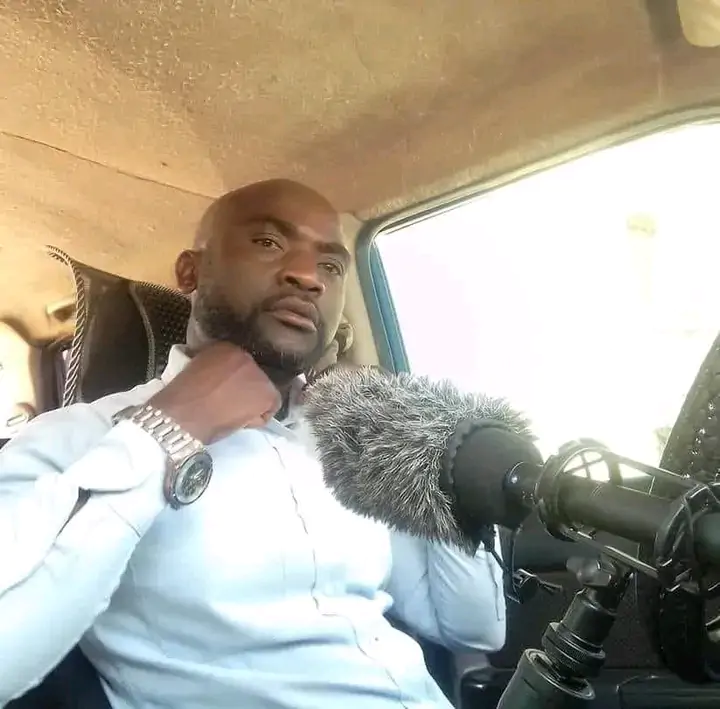
The young in Zambian journalism do not know him, the old have begun to forget him, but I refuse to let the name Lweendo Chiinda Hamusankwa slip into oblivion. Born on 4 May 1965, gone too soon on 5 September 2026 at the tender age of sixty, he was one of those rare journalists whose pen cut through the heart like a hot knife through butter. His older brother, Habeenzu, mourned him with words that sting: “Sixty is a young age to die at, and I miss my brother deeply.” A typical death time or age according to Zambia government stats for a man is about 68. Lweendo was no ordinary scribe. He was part of that thunderous generation that emerged when Zambia returned to multiparty democracy in 1991 — a time when journalism was not a profession but a perilous calling. He first sharpened his skills at the Anti‑Corruption Commission, where journalists were often recruited as investigators because of their uncanny ability to question, probe, and analyze. From there, he joined the famous Post newspaper, rubbing shoulders with fearless contemporaries like Jowie Mwiinga, Chris Chitanda, Joseph Raphael Chilaizya, and Paschalina Phiri. Later, he moved to the Nizam‑Zahid owned Sun newspaper, where I worked alongside him, and where he nudged me toward the International Visitors Leadership Programme (IVLP) — that prestigious U.S. fellowship whose alumni include presidents, ministers, and media greats beyond Zambia, not applied for but specifically chosen by the embassy. For me under Lweendo, y Uncle Sam door opened in 1994. When the Sun dimmed under Mr. John Musukuma, who later became a Presidential Press Assistant to President Levy Mwanawasa from our newspaper, Lweendo did not retreat. He led the formation of The Chronicle, working with hombres like Isaac Chipampe, Amos Malupenga, Paschalina Phiri, Emmanuel Chilekwa, Peter Chilambwe and myself. I eventually left the local grove for the international wire agencies, first stop Bloomberg, but Lweendo remained the kind older brother in the newsroom — sipping tea lazily, reading his paper warmly, and nudging rookies forward. Paschalina, “Auntie P,” loved to gossip about him without malice, and Lweendo, never angered, would chuckle: “Paschalina, I am here in the office.” She would laugh, replying in Bemba, “Chi Lweendo nshachishiba ati epoli” — “I didn’t know you were here; you know I love to gossip like my mother.” Laughter erupted, and all was forgiven. That was the newsroom of thunder, not the sterile press‑statement factories of today, copy and paste. I recall vividly one evening in 1993 at Oasis when he pulled me out of a queue as we got ready to boogie with hombres and said: “Tony, my young brother, you have a bright future in the media and beyond. Come to the Sun tomorrow, we will work out something.” I was barely twenty. I took him at his word, and the media world became my oyster. Without knowing it, God would later make me head of a foreign mission, from journalism to media thanks brother Lweendo. The last time I saw him alive was in 2014. I was Deputy Managing Director at the Zambia Daily Mail, soon to be MD, just as he had predicted. I was in London for ninety days, interning at the Bureau of Investigative Journalism after winning the World Bank Investigative Journalist of the Year Award. Brother Lweendo looked at me and said: “I told you one day you would excel. Now the sky is the limit, work harder dont slow down Tony.” He had settled in England with his great family, but his warm heart remained in Zambia. Great brother no bone of contempt. He is survived by three sons — Cholwe Chiinda Hamusankwa, Nchimunya Obed Hamusankwa, and Chipo Hamusankwa — “real Tonga bulls,” as big brother Habeenzu fondly described them. His body is being prepared to return home from England for burial. The Age of Dangerous Pens Lweendo wrote at a time when it was almost treason to joke about President Frederick Chiluba (FTJ) after Kenneth Kaunda. Those were the days of dangerous stories — “Maharaji Heaven on Earth” by Jowie Mwiinga and Joe Chilaizya, Coppergate Scandal, FTJ’s golden BMW gift from Pilatus, the Twikatane Farms Moonies. Journalists then did not wait for press conferences; they investigated, intimidated, and wrote. It was the age of Kondwani Chirambo, Dave Sakala, Gerald Mulwanda, Zarina Geloo, Fred M’membe and Davis Makasa Mulenga etc — and a fly rookie like me, fresh out of college and off to the U.S., watched in awe. We also learnt a lot from Lweendo’s ilk. Would Lweendo’s journalism survive today in Zambia? In this diabolical age of recycled press statements, I doubt it. His was the journalism of Carl Bernstein and Bob Woodward, of Watergate‑style courage, of Hamlet’s brooding irony and Lady Macbeth’s ruthless candour. Today, the newsroom has been domesticated, declawed, and house‑trained. Yesterday’s lions have been replaced by today’s parrots. The Legacy of a Brother Lweendo never forgot to remind me: “Tony, do not ever forget your journalism roots just because you are now in international relations head.” He lectured at the first Norma Jean, alongside his gossip‑mate Paschalina, with diction so polished it could rival the BBC. His column at The Sun, “Speakeasy,” was a masterclass in wit and irony. He studied at Lusaka Boys (1974–1980), Kafue Boys Secondary (1981–1985), and Evelyn Hone College (1987–1989). He embodied the spirit of a generation that believed journalism was not a job but a vocation, a calling, a cross to bear. Laugh, Cry, and Remember I laugh when I recall his chuckles at Paschalina’s gossip. I cry when I remember his warm hand pulling me out of that Oasis queue. I invoke satire when I imagine him today, sipping tea lazily, watching modern journalists regurgitate press releases, and whispering ironically: “Is this what we fought for?” The Bible says in Ecclesiastes 3:1: “To everything there is a season, and a time to every purpose under heaven.” Lweendo’s season was journalism’s golden age in Zambia. His purpose was to remind us that truth, however dangerous, must be told. They don’t make them like Lweendo, Jowie, Kellys Kaunda, Zaza etc., anymore. But as long as I breathe, I will not forget him. Goodbye my brother & friend. By Amb. Anthony Mukwita Author & International Relations Analyst


Community Feedback