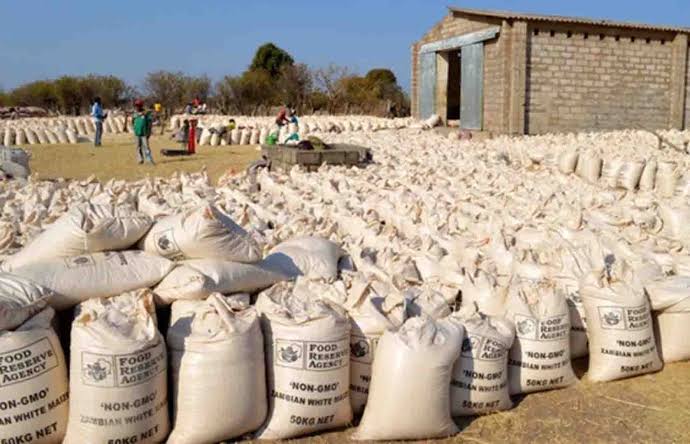
Kenya maize deal: Will farmers get more than FRA payments?

Breaking News Zambia
NewsLivingstone Cooperatives Union (LCU) has indicated that […]
Livingstone Cooperatives Union (LCU) has indicated that Zambia’s signed deal to export 10.8 million 90 kg bags of maize to Kenya could create a wider economic benefit for small-scale farmers beyond payments they receive for maize delivered to the Food Reserve Agency (FRA).
Speaking in an interview with Zambian Business Times-ZBT, LCU Chairperson Rwinick Mapanza said the deal could create additional market space for farmers while allowing Zambia to earn much-needed foreign exchange.
“If government can clinch deals with other countries, it means it is creating space for our smallscale farmers to produce and fill that given space, and it is also an indication that economically the country is becoming viable and generating income,” said Mapanza.
He added the benefits should eventually move through the agricultural value chain, particularly by giving farmers confidence that there will be a market for increased maize production.
“This is a welcome move because exports to countries like Kenya create room for further production by our small-scale farmers, while also allowing the country to earn foreign exchange, and that is the kind of opportunity that can encourage farmers to increase production,” said Mapanza.
He noted that increased export earnings could also strengthen the government’s ability to pay farmers for maize already purchased, reducing pressure to rely heavily on borrowing to meet agricultural obligations.
“If government exports and generates income, it means it can have enough money to pay farmers who still have produce to sell, unlike a situation where government is borrowing from banks while farmers wait for their payments, and that kind of cycle can help improve the economy,” said Mapanza.
However, the LCU Chairperson said farmers should not necessarily expect a fixed percentage of export proceeds because international maize transactions are structured differently from direct farmer payments “Economically, it does not work like that because international business has requirements to meet, and government has the capacity to export from one country to another while smallscale farmers support that process by supplying the required stocks,” he said.
Mapanza said the more direct benefit to farmers would therefore come through stronger government purchasing capacity, expanded markets, and increased production opportunities created by regional demand.
“The same money government earns from exports will trickle down to the farmer because it can be used to buy more maize from small-scale farmers, meaning the farmer supports government by producing while government helps the farmer by exporting and earning foreign exchange,” he said.
Article by Philip Sinkala





Community Feedback