INSIGHT | UPND Cannot Win by Becoming What Zambians Rejected

Breaking News Zambia
News🇿🇲 INSIGHT | UPND Cannot Win by Becoming What Zambians Rejected When Zambians voted for the UPND in 2021, they were not simply electing a new government. They were rejecting a style of politics that many believed had become synonymous with intimidation, cadre violence and the erosion of public order. Markets had become political territories. […]
🇿🇲 INSIGHT | UPND Cannot Win by Becoming What Zambians Rejected
When Zambians voted for the UPND in 2021, they were not simply electing a new government. They were rejecting a style of politics that many believed had become synonymous with intimidation, cadre violence and the erosion of public order. Markets had become political territories. Bus stations were controlled by party cadres. Council revenue disappeared into informal collections. Civil servants, traders and ordinary citizens often found themselves at the mercy of politically connected groups operating outside the law.
That promise of restoring order became one of the UPND’s greatest political assets. Within months of taking office, bus stations returned to local authorities, illegal tax collection largely disappeared, councils began collecting revenue directly, and institutions rather than political cadres gradually resumed control of public spaces. Those reforms mattered because they demonstrated that the rule of law, not party structures, would govern public life.
It is against that background that recent reports of campaign violence deserve serious scrutiny. During the past several weeks, the Tonse Alliance has alleged attacks on its campaign in Kitwe, Ndola, Solwezi and, most recently, Luampa District in Western Province.
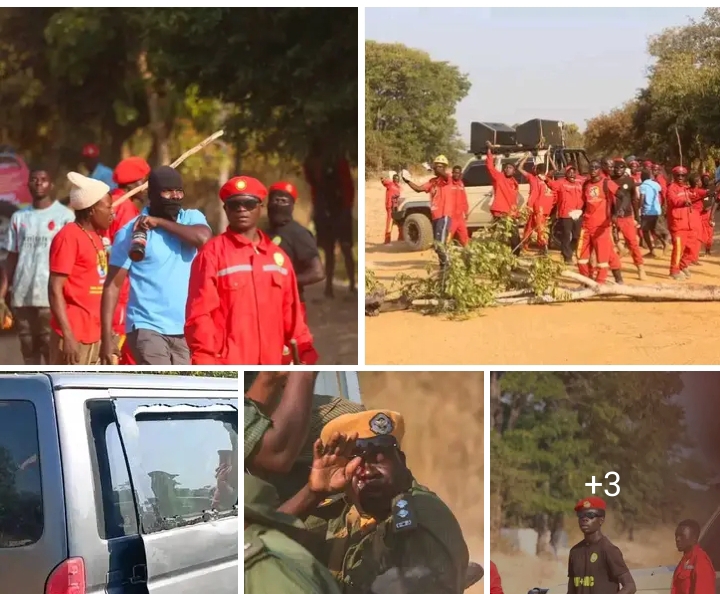
Videos circulating online show individuals wearing UPND regalia throwing stones at opposition vehicles, although the circumstances surrounding each incident require independent investigation. On Tuesday evening, President Hakainde Hichilema himself responded publicly.
“The reports of political violence from certain parts of the country are deeply concerning and are condemned in the strongest possible terms.”
He added:
“Violence, intimidation, or lawlessness by any political party, candidate, or supporter will not be tolerated. Every political party has the lawful right to campaign… Anyone who attempts to disrupt or prevent that process is breaking the law and must face the full consequences.”
Those words were necessary. They now require visible enforcement.
Some voices within the ruling party have argued that the people seen in the videos were not genuine UPND supporters but opposition activists wearing UPND regalia to discredit the governing party. If that explanation is correct, then it strengthens, not weakens the case for immediate police action. The footage exists. Witnesses exist. Vehicles were reportedly damaged. Identifying and prosecuting those responsible would establish the truth and remove speculation from the political debate.
If, on the other hand, those involved were genuinely acting in the name of the UPND, then they too should face the full weight of the law. There should be no political exemption. The principle must remain the same regardless of party colours.
The political logic behind these incidents is difficult to understand. The Tonse Alliance remains considerably weaker in provinces such as Southern, Western and North-Western than in its traditional support bases. In many of those areas, opposition convoys have travelled through communities where residents openly chant the UPND slogan, “Forward.”
Electoral history suggests the ruling party already enjoys significant advantages there. Intimidating a weaker opponent offers little strategic value while creating substantial reputational damage.
History also offers an important warning. The Patriotic Front did not lose public confidence only because of economic pressures. Many Zambians had grown weary of cadre militancy, political intimidation and lawlessness. The demand for a more civil politics became one of the defining themes of the 2021 election. That memory has not disappeared. It remains fresh in the minds of voters who deliberately chose a different political culture.
For that reason, the governing party carries a higher burden than the opposition. It controls the executive, oversees national security institutions and bears constitutional responsibility for ensuring every candidate campaigns freely. Leadership is measured not by condemning violence after it occurs, but by preventing it, investigating it and ensuring those responsible face justice. Such an obligation cannot be delegated to party spokespersons or explained away through competing political narratives
The opposition, equally, has the right to campaign in every province allocated by the Electoral Commission of Zambia, whether it is popular there or not. Elections are not decided by restricting opponents from entering perceived strongholds. They are decided by persuading voters.
A convoy travelling through Western Province, North-Western Province or Southern Province should be met with ballots, not stones. If voters reject the opposition, the ballot box is sufficient. Violence adds nothing to democracy and subtracts from everyone.
At The People’s Brief, we apply the same standard to every political actor. We criticised cadre violence when it undermined Zambia’s democracy before 2021. We cannot become silent if similar conduct reappears under a different administration. Governments change. Principles should not.
If the President has declared that political violence “will not be tolerated,” the country now expects the institutions under his authority to demonstrate exactly what those words mean.
© The People’s Brief | Ollus R. Ndomu



Community Feedback