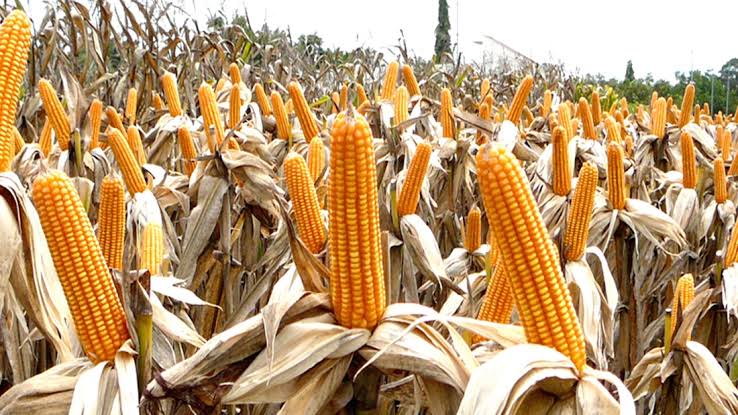
Expanded mining on the Copperbelt threatens to wipe out maize production

Breaking News Zambia
NewsA Climate expert who is also the […]
A Climate expert who is also the Climate Protection Zambia (CPZ) Executive Director, Noah Chongo has warned that maize production on the Copperbelt is likely to decline if mining expansion continues without proper regulation and balance.
Speaking in interview with the Zambian Business Times – ZBT, Chongo said while mining is important for economic development, failure to balance it with environmental protection and community well-being will continue to create serious challenges, including reduced agricultural productivity.
“If we advance economic development at the expense of community well-being and the environment, then problems will continue because we need to balance economic, environmental, and community interests,” he said.
He told ZBT that most mining projects are implemented without adequate consultation with affected communities, particularly small-scale farmers who depend on the land for their livelihoods.
Zambia has recently experienced increased mining activity, especially on the Copperbelt, driven by new investments and expansion of mining operations aimed at boosting copper production and economic growth.
However, this growth is coming at a cost, as land previously used for farming is being converted into mining and infrastructure, reducing the amount of arable land available for agriculture.
In the 2025/2026 farming season, the Copperbelt produced 522,138.98 metric tonnes of maize, ranking number three in the country, highlighting its growing importance in Zambia’s food basket.
Chongo warned that if current trends continue, the province risks losing its position as a key contributor to national food security due to declining production levels. He noted that small-scale farmers, who contribute over 60% of Zambia’s food production, are the most affected by mining expansion, as they face displacement, reduced access to land, and limited capacity to adapt to new economic conditions.
“Once these farmers are displaced and not supported to adapt, they will reduce production, and that directly affects national food security,” he said.
Chongo further highlighted concerns over environmental degradation, including water contamination and soil damage caused by mining activities, which negatively affect crop yields and food safety.
He added that reduced access to water for irrigation due to mining operations is another major challenge, especially for farmers who rely on consistent water supply for crop production.
The environmentalist emphasized the need for government and stakeholders to ensure inclusive planning that involves local communities before implementing large-scale mining projects.
“If these issues are not addressed, the Copperbelt will not sustain its current maize production levels, and the country’s food security will be at risk,” said Chongo.
He also called for deliberate efforts to build the capacity of affected farmers so that they can either adapt to new livelihoods or continue farming sustainably despite the changing environment.
Article by Philip Sinkala




Community Feedback