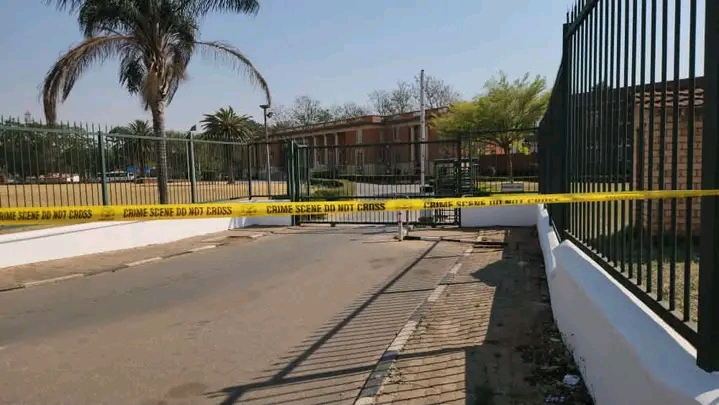
Courts enter day 2 of closure as security concerns continue

Breaking News Zambia
News30 Views Zambian courts entered a second day of closure on Tuesday, with access to the High Court and Constitutional Court still restricted amid heightened security concerns. Court staff and members of the public could not access premises, as security personnel maintained a heavy presence around the judiciary buildings in the capital. No official timeline […]
30 ViewsZambian courts entered a second day of closure on Tuesday, with access to the High Court and Constitutional Court still restricted amid heightened security concerns.
Court staff and members of the public could not access premises, as security personnel maintained a heavy presence around the judiciary buildings in the capital.
No official timeline has been given for when normal operations will resume.
According to critics, the continued closure has disrupted court business, with scheduled hearings and filings affected.
Authorities have not provided further details on the nature of the security concerns prompting the restrictions.
Meanwhile, pressure group Chapter One Foundation says it remains deeply concerned about the ongoing closure of the courts and the blocking of access to judicial services, calling for the immediate reopening of all courts.
In a statement, the Foundation said courts are more than buildings and rooms where judges sit.
Read the rest of the statement below:
They are where people go when they need the law to protect them. Closing courts therefore does more than shut doors. It shuts people out of justice and protection under the law.
Right now, ordinary people across Zambia are being denied access to judicial remedies. That should concern every Zambian. It should also cause serious reflection among those who authorised this operation, those who implemented it, and those within our institutions who have allowed it to continue without ensuring that justice remains available to the public.
When courts close, justice is delayed for everyone. In some cases, justice is simply denied. A survivor of gender based violence may be unable to obtain a protection order under the Anti-Gender Based Violence Act. A person who has been wrongfully arrested may remain in detention because they cannot be brought before a court. An accused person may be unable to seek bail. Families, workers, businesses and other citizens may be unable to obtain urgent orders or protect rights that cannot simply wait.
Security concerns may be serious. But security cannot mean that justice stops. The duty to protect court premises does not remove the duty to keep justice functioning.
The Management of the Judiciary should have ensured that alternative arrangements were put in place immediately. If physical access to court buildings could not safely continue, there should have been clear arrangements for urgent filings, emergency hearings, bail applications, protection orders and other essential judicial services.
The continued absence of such measures is not a minor administrative failure. It means that the consequences of the closure are being borne by people who had no part in the security situation and whose rights still require the protection of the law.
We have therefore filed a complaint before the Human Rights Commission and will pursue other appropriate legal, regional, and international remedies to ensure accountability for the closure of the courts, the decisions that led to it, and the failure to put in place adequate measures to keep justice services available.
Those responsible for this situation should understand the weight of what has happened. Courts exist precisely for difficult moments, when the nation faces threats or when rights are contested. Courts are important when power is exercised, liberty is at risk, and society is under strain; access to an independent court matters most.
Posterity may well remember these as the days when justice was suspended for all Zambians. That is a terrible precedent for any constitutional democracy: that when circumstances become difficult, the doors of justice can simply be closed and those responsible not held to account.
– Chapter One Foundation



Community Feedback