Charge Mundubile And Zulu Or Free Them, Miti Tells State Over Kafwaya Death

Breaking News Zambia
Local NewsHuman rights activist Laura Miti has challenged the Government to either take opposition leaders Brian Mundubile and Makebi Zulu to court or release them, warning that more than a month of official silence over the death of former Cabinet minister Mutotwe Kafwaya has left the…
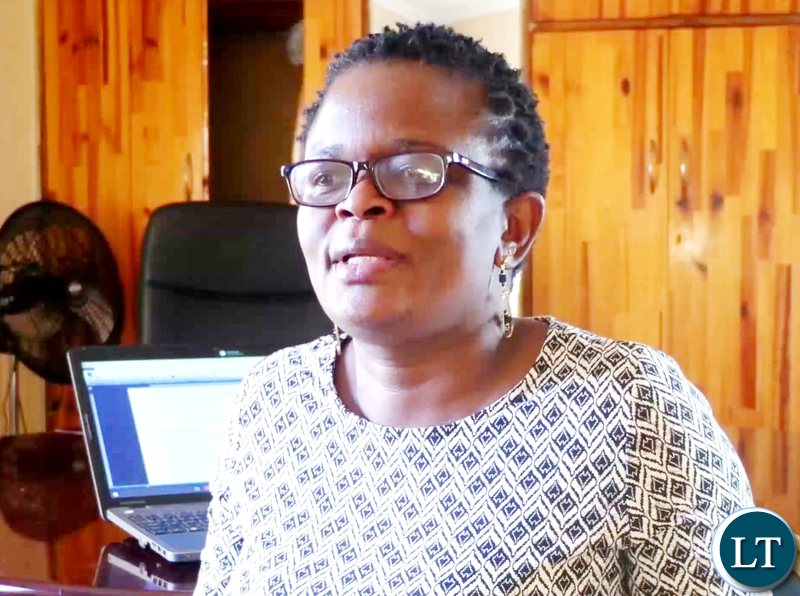
Human rights activist Laura Miti has challenged the Government to either take opposition leaders Brian Mundubile and Makebi Zulu to court or release them, warning that more than a month of official silence over the death of former Cabinet minister Mutotwe Kafwaya has left the State exposed to accusations of an unlawful killing.
Mr Kafwaya, an opposition figure, died during a security operation in the aftermath of the elections. More than a month on, Ms Miti said, the public still had no way of knowing what happened to him. “The State has been mute,” she said. “We need information from the State, and that information only comes when everybody who was arrested around that issue is taken to court, or when we are simply given the information.”
The burden, in her view, rests entirely with the authorities. A government that withholds information cannot complain when its own citizens and the international community reach “the very first conclusion” that a man was killed unlawfully, and every day the detainees spend out of court adds to the questions.
“None of us at this point can categorically say Mr Kafwaya was shot unlawfully. And that is wrong, because we are running into over a month now,” she said. “Why don’t we know? Why does the State find it possible to hold back this kind of information?”
The European Parliament has called for an independent and transparent investigation into the death. Ms Miti questioned who such an investigator would be in a matter involving the conduct of state security agencies, noting that even a commission of inquiry answers to the Government that establishes it. Zambia, she recalled, had once brought in British investigators in a matter she said involved former President Frederick Chiluba.
The deeper problem lies with the country’s institutions. “The fact that we do not trust the police, that we do not know whether we will ever be told the truth, should worry us. The fact that when you go to court, you are not sure whether the judge sitting there has been bribed should worry us,” she said. “Maybe the death of a former minister will be investigated in a manner in which the truth will never come out.”
Before any talk of foreign investigators, the activist said, the Government must take a step already within its power. “Right now, can Mr Mundubile and Mr Zulu be taken to court? Can the State give us the information it has?” she asked. “There are only two things that the State must do. Take the people to court or release them. You can’t have it both ways.”
Both roads carry a cost. Release without charge would leave the authorities answering why a man died, why people were arrested at all and why they spent so many days in cells. A prosecution on weak evidence, she warned, would invite the same reckoning: “Is this the evidence for which someone died? Is this the evidence for which you kept people in cells?”
Naming Mr Mundubile, Mr Zulu and Bishop Mwamba among those held, she added: “Government had better have evidence against these people, and had better be able to justify why someone was shot dead.”
Her message to the ruling United Party for National Development (UPND) was blunt. “The Government, the President, the UPND should know that if Mr Mundubile and Mr Zulu come out of those cells not having been taken to court, or the evidence adduced in court is flimsy, all of us in our minds will know that a great abuse of power has happened here.”
The case, she said, is long overdue. Asked whether the Director of Public Prosecutions was behind the delay, she said she did not know, but someone within law enforcement owed the public an answer. The silence of the first days after the death had already allowed speculation to run unchecked. “Someone needs to tell us why these people are not in court.”
Ms Miti was equally firm that the picture of Zambia painted abroad is overstated. The Government deserves to be “strongly criticised for what is true”, she said, pointing to the detentions and its conduct during the elections, including the closure of courts. Claims that the country is on fire or that citizens live in fear were not true, and army deployment at election time was nothing new, with soldiers seen on the streets in 2016 and 2021.
“You can become addicted to rage,” she warned. “The expression of outrage can become an end in itself, where you get used to saying this is wrong and you fail to interrogate it.”
Her sharpest words were for former diplomat Emmanuel Mwamba, on whom she said foreign voices were relying despite his habit of making up stories. “Emmanuel is a fugitive from justice. He actually probably should be extradited home to face his case.”
Zambians in the United States planning to protest at the United Nations General Assembly over the elections and Mr Kafwaya’s death had every right to do so, she said, and she would not call for them to be stopped. The protest would become a problem, however, if Mr Mwamba stood among them, given what she described as the disinformation he had spread on the matter.
The cancellation of passports belonging to certain individuals abroad drew equal criticism. “Governments should not throw tantrums. That is a tantrum,” she said. “Every action should have a goal. What is the goal? What have they achieved, other than bringing our name out there for discussion?”
Having spoken publicly since her twenties, Ms Miti ranked the UPND as the most thin-skinned government she had seen and the Movement for Multi-party Democracy (MMD) as the least. Both the Patriotic Front (PF) and the UPND, she said, had governed with the emotions of an individual, with vengefulness and insults coming from those who speak on the State’s behalf.
“Government is not a human being. Government should not have emotion,” she said. “Government must be able to allow citizens to criticise it, and criticise it viciously if they must, as long as citizens are not breaking the law.”
A caller from Lukulu took the opposite view, backing the passport cancellations and saying those who insulted President Hakainde Hichilema from abroad were insulting the millions who voted for him and should come home to answer. Ms Miti agreed that the personal attacks on the Head of State were “terrible”, adding that her own rule was never to write or broadcast anything she could not say to a person’s face.
On the detentions, her position did not move. No explanation has been given for why the case has not started, and Mr Mundubile and Mr Zulu remain in cells awaiting the State’s decision to charge them or let them go.





Community Feedback