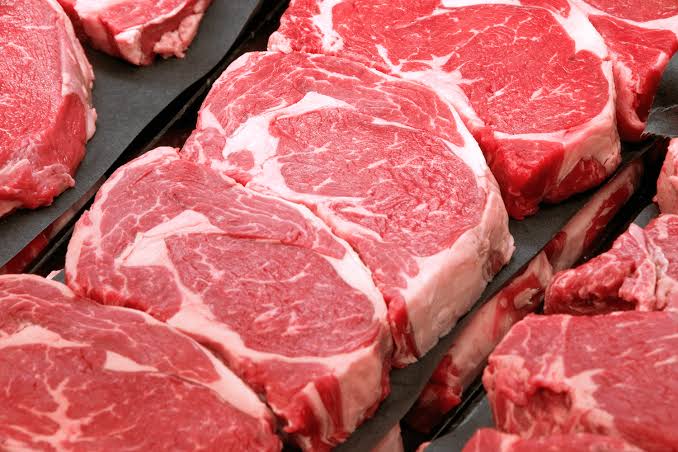
Can Zambia Meet $1bn beef export target wihout stock depletion?

Breaking News Zambia
NewsFormer Veterinary Association of Zambia (VAZ) President […]
Former Veterinary Association of Zambia (VAZ) President who is also a Doctor of Veterinary Medicine, Malcolm Chiyoya has revealed that it is not possible for Zambia to export beef worth $1 billion annually currently despite having quality cattle herds.
In an exclusive interview with Zambian Business Times-ZBT, Dr. Chiyoya stated that Zambia does not have the numbers required to support such an ambitious export target. “We don’t have sufficient numbers to achieve those ambitious dreams, and secondly, there’s no corresponding investment in the sector,” he said.
However, last year, the Ministry of Livestock and Fisheries announced an ambitious plan to increase Zambia’s national cattle population from 5.1 million to 7.4 million by 2027.
Dr. Chiyoya added that the sector also continues to face serious constraints, including inadequate human resources and livestock diseases that are reducing productivity and causing animal deaths.
“We have the high burden of diseases, and animals are dying from tick-borne diseases across the country, with contagious bovine pleuropneumonia spreading across various areas,” he said.
Dr. Chiyoya said the challenge is not the quality of Zambia’s cattle but the insufficient numbers available for large-scale international markets.
“In terms of quality, I think we have about the best type of animals, and the Angoni animals are some of the best animals that you put in a feedlot because they give you the best quality meat,” he said. Dr. Chiyoya indicated that Zambia’s previous ambition to export 1 million goats to Saudi Arabia annually demonstrates how inadequate livestock numbers can frustrate lucrative export opportunities.
“You can try to buy 100 heifers now and see if anyone will sell them to you, we don’t have the numbers,” he said. Dr. Chiyoya warned that projected El Niño conditions could further undermine livestock productivity through poor animal conditions, infertility and increased mortalities.
“With the projected El Niño, we expect even more increase in low productivity, and we are going to have a lot of infertility because the animals are not going to be in good condition, and some may die,” he said.
The Veterinary Medicine doctor said Zambia needs to modernise disease control, improve productivity and learn from countries such as Ethiopia that have successfully built livestock export markets.
“We need to come out from some of these old-fashioned ways and look at the modern dynamics, including scientific developments to deal with tick-borne diseases,” said Dr. Chiyoya.
He further indicated that Zambia’s estimated cattle-holding capacity of about 14 million heads means the country still needs significant growth before it can support massive beef exports.
“At five million, at 10 million, are still not sufficient animals in the country because we need huge numbers if we are to export that kind of huge income from beef,” said Dr. Chiyoya.
However, he acknowledged that the $1 billion target is a good ambition, but government must match it with investment, disease prevention, modern technology and increased productivity.
“It’s good to dream like this, but also put in place all measures to ensure that we have increased productivity,” said Dr. Chiyoya.
Article by Phillip Sinkala




Community Feedback