Zambia : OPINION: Nyon’go, Nyon’go Nyon’go: Has The ‘Mufasa Effect’ Of The Two Boys Gotten Under HH’s Skin?

Breaking News Zambia
NewsLusaka - Zambia: There are moments in an election campaign when a politician says far more through his temperament than through the actual words coming out of
Columns 8 min.Read OPINION: Nyon’go, Nyon’go Nyon’go: Has the ‘Mufasa Effect’ of the Two Boys Gotten Under HH’s Skin? By Lusaka Times Editor July 24, 2026 FacebookTwitterPinterestWhatsApp Nyon’go, Nyon’go: Has the ‘Mufasa Effect’ of the Two Boys Gotten Under HH’s Skin?By Mabvuto Banda
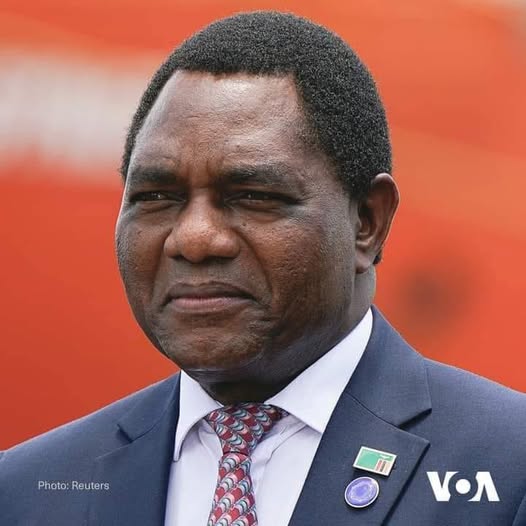
There are moments in an election campaign when a politician says far more through his temperament than through the actual words coming out of his mouth. President Hakainde Hichilema’s repeated “Nyon’go, Nyon’go, Nyon’go” utterances, directed at Gary Nkombo, may have been intended as political theatre, but they revealed something else: a President appearing increasingly willing to abandon presidential restraint and descend into the language of irritation and ridicule. The “Nyon’go” remarks were not directed at Brian Mundubile or Makebi Zulu, and that distinction matters. But so does the temperament behind them. At this stage of an increasingly competitive campaign, such an outburst inevitably raises questions about whether the pressure is beginning to show.
For a man who is not only Head of State but also an elder in the church, the tone was particularly striking. A President is entitled to campaign aggressively, defend his record and challenge his opponents, but there is a difference between campaigning hard and appearing to lose the dignity that comes with the office. The presidency does not disappear simply because there is a microphone, a rally and an opponent to attack. And perhaps that is where the real story lies. Something appears to be getting under the President’s skin.
The “Nyon’go” episode may have involved Nkombo, but elsewhere on the campaign trail, the two men Hichilema repeatedly dismisses as “boys” have brought something to this election that also seems to be testing his patience. The confidence remains, but increasingly, so does the irritation.
THE MUFASA EFFECT
It is becoming something of a Mufasa effect. In The Lion King, Mufasa’s name alone carried weight. Mention it in the wrong company and the reaction was immediate: fear, discomfort and a sudden change of mood. Mufasa did not even have to enter the room. Sometimes the name alone was enough.
That is increasingly what Brian Mundubile and Makebi Zulu appear to be doing to President Hichilema politically. These are the same two men he has repeatedly reduced to “boys”, yet listen to how much political attention they now command. The more dismissive the language becomes, the harder it is to believe that the people being dismissed are politically irrelevant. If the “boys” do not matter, why do they appear to provoke such a reaction?
That is the Mufasa effect. It is not necessarily about who is stronger or who will ultimately win on August 13. That decision belongs to the Zambian people. It is about the psychological effect an opponent begins to have on another. Right now, Mundubile and Zulu appear to have found a way of occupying political space that their supposed insignificance should never have allowed.
THEN CAME THE COPPERBELT
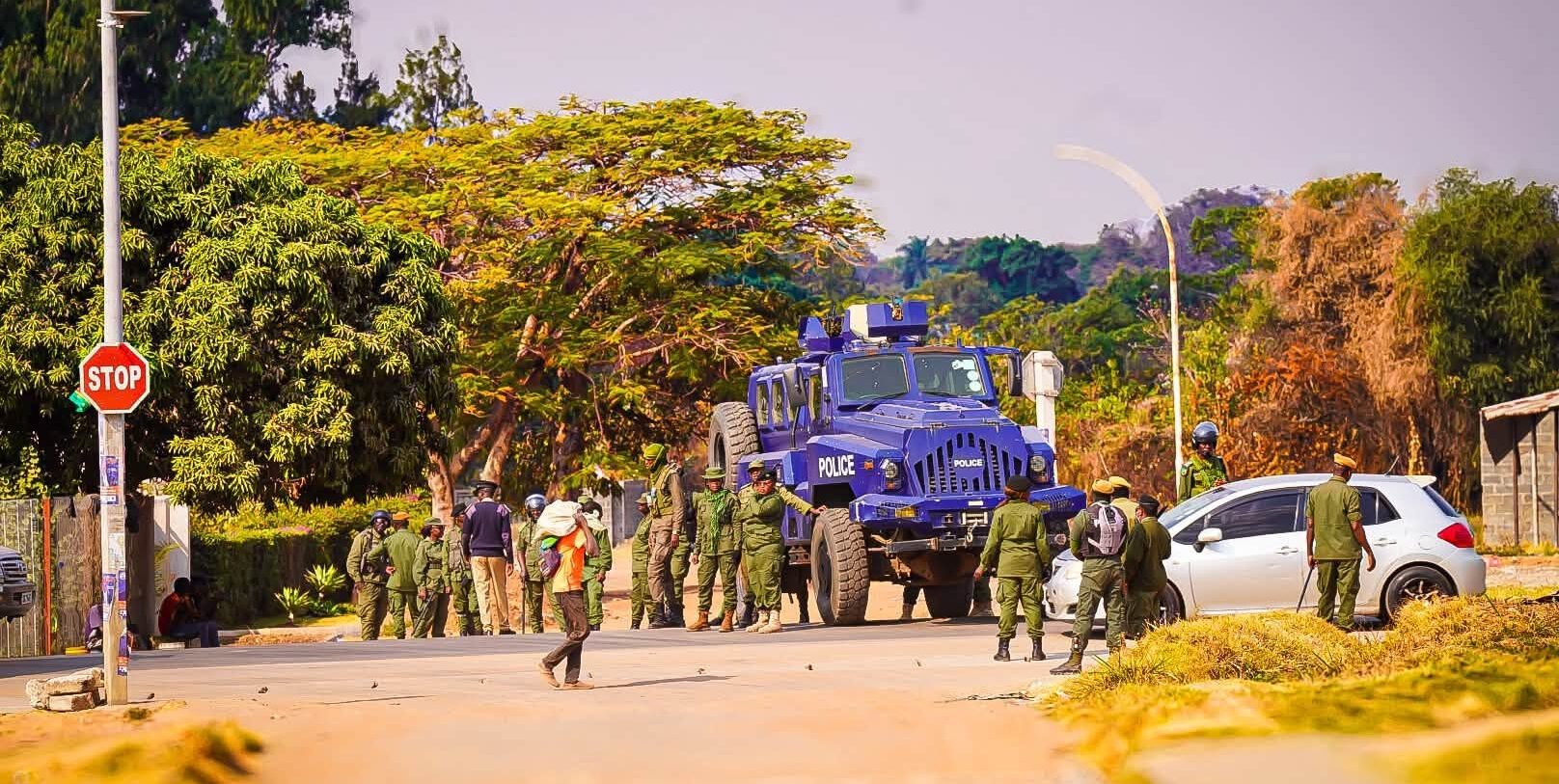
Then came the Copperbelt, where NRPUP campaign vehicles were reportedly attacked and their windows shattered by people the opposition identified as UPND cadres. A driver was allegedly assaulted, while cash and a mobile phone were reportedly stolen from the convoy. Later came the extraordinary scenes in Luanshya, where Mundubile’s convoy encountered a police blockade as it attempted to reach supporters waiting in Mpatamatu.
And that begs an even bigger question: what peace is President Hakainde Hichilema actually talking about? On the ground in Mpatamatu on Friday, peace looked like this: an opposition convoy pelted with stones, a road into Luanshya sealed off by the very police force that is supposed to protect every candidate equally, and a presidential hopeful forced to talk his way past a blockade simply to reach voters who had been waiting for him.
If this is what the President’s “peace” produces, it is worth asking who it is actually peaceful for, because it was certainly not peaceful for Mundubile’s campaign. Vehicles were stoned. Police blocked the road. And this was not an isolated incident. On the same day, NRPUP campaign vehicles elsewhere on the Copperbelt reportedly had their windows smashed, a driver assaulted, and cash and a phone stolen.
Mundubile said his people had been attacked, assaulted and their vehicles vandalised while the government continued to speak of a peaceful campaign season. That description of peace is becoming increasingly difficult to reconcile with what Zambians are seeing.
KALINGALINGA CANNOT BE ERASED
And Luanshya did not happen in a vacuum. Only a week earlier came Kalingalinga, where police used teargas during a confrontation surrounding an opposition campaign event and reports emerged that a young girl had been shot. Government officials subsequently disputed aspects of the account, maintaining that police had used teargas and that no lives were lost. Whatever version one accepts, Kalingalinga raised uncomfortable questions about the policing of opposition political activities during an already heated election campaign.
Then, on the same afternoon as the Luanshya blockade, police walked onto Mundubile’s campaign stage in Ndola. By the time his convoy encountered trouble in Luanshya, interaction with law enforcement was becoming part of the opposition’s campaign story rather than something happening at its margins. Kalingalinga, Ndola and Luanshya have different circumstances and must each be judged on their own facts, but taken together with the reported attacks on campaign vehicles, they leave an uncomfortable question about the environment in which the opposition is being expected to campaign.
THE DISCIPLINE OF THE ‘TWO BOYS’
What is remarkable is not simply that stones reportedly flew or that police blocked a road being used by a presidential candidate. What is remarkable is that Mundubile and his running mate Makebi Zulu refused to give the provocation the reaction it appeared capable of producing. They did not turn the convoy around. They did not allow shattered windows, stones or a police blockade to become bigger than the political message they had travelled to deliver.
They proceeded to Mpatamatu and addressed the people who had been waiting for them. Zulu stood before miners, youths and farmers and told them in Bemba that their cries had been heard. Mundubile, rather than spending his speech attacking those accused of trying to prevent him from reaching the rally, pledged to establish a National Miners’ Day to honour the men and women whose labour has helped build Zambia’s economy.
That is discipline, but it is also political calculation. The opposition appears to understand that one angry reaction could change the entire story. A scuffle, a retaliatory stone, a broken window or an exchange with police could quickly provide the excuse to stop a procession, disrupt a rally or portray the opposition itself as the source of disorder.
The opposition therefore finds itself carrying an extraordinary burden. It must campaign, absorb provocation and simultaneously police its own reaction. It must remain calm enough not only to protect its supporters, but also to deny those confronting it the very excuse that could be used to restrict its campaign further.
WHAT PEACE ARE WE TALKING ABOUT?
That is why the President’s own temperament matters. “Nyon’go, Nyon’go, Nyon’go” was directed at Gary Nkombo, not Mundubile or Zulu. But the episode remains relevant because it offered a glimpse of a President appearing increasingly impatient at precisely the moment when Zambia needs presidential restraint most.
When the same Head of State is also reducing political opponents to “boys”, while opposition vehicles are reportedly being damaged and opposition convoys are encountering police blockades, the contrast becomes difficult to ignore. The President may regard some of this language as campaign banter, but presidential words carry a weight that ordinary campaign rhetoric does not. The office requires more.
President Hichilema cannot demand peaceful conduct from everyone beneath him while creating the impression that political pressure is eroding his own patience. He cannot preach restraint while allowing his language to drift towards ridicule. And those entrusted with maintaining law and order cannot allow circumstances to develop in which opposition candidates appear to require extraordinary patience simply to exercise their right to campaign.
The burden of maintaining peace cannot rest on the opposition simply refusing to retaliate. Real peace is not achieved when one side throws a stone and the other side decides not to throw it back. Real peace exists when nobody is allowed to throw the stone in the first place, and when the police stand between competing political forces without fear, favour or partisan appearance.
WHEN THE REACTION SAYS IT ALL
This is where the Mufasa effect becomes politically interesting. Nobody needs to pretend that Mundubile and Zulu have already won anything. Zambians will make that decision themselves on August 13. President Hichilema remains the incumbent and continues to campaign on his government’s record. Elections are decided by voters, not metaphors.
But you do not need to win an election before you begin affecting the behaviour of your opponent. Sometimes you simply need to get into his head. Perhaps the “boys” have brought more to the table than was anticipated. Perhaps Mundubile and Zulu have discovered that refusing to be provoked can itself become a political weapon.
Perhaps the scenes from Kalingalinga to the Copperbelt matter precisely because they allow voters to compare the temperament of those wielding power with the restraint of those seeking it. Government officials have denied wrongdoing in relation to previous incidents, while responsibility for the reported Copperbelt attacks must ultimately be established through proper investigation rather than political accusation. Police had offered no comment on Friday’s reported convoy attack at the time of writing.
But politically, the images already carry their own weight. Zambians vote on August 13. The closer that date gets, the less useful speeches about peace become if the experience on the ground tells another story. Kalingalinga happened. Then came Ndola, the reported attacks on campaign vehicles and the confrontation in Luanshya. Against that background stands a President whose language appears increasingly impatient as the “two boys” he has repeatedly dismissed refuse to disappear.
“Nyon’go, Nyon’go, Nyon’go” was directed at Gary Nkombo, but perhaps its wider significance was the glimpse it offered of a President under pressure. And that is what makes the Mufasa effect interesting.
Mundubile and Zulu do not have to say they are getting under the President’s skin. Sometimes, the reaction says it for them.
Loading read count...LEAVE A REPLY Cancel reply
Hot this week
Feature PoliticsNkombo Urges President Hichilema to Stay Out of Presidential Contest July 24, 2026 5 Independent Mazabuka Central parliamentary candidate Gary Nkombo has advised... Feature Politics
Brian Mundubela Raises Concern Over Alleged Political Violence in Kitwe July 24, 2026 2 Opposition figure Brian Mundubela has questioned whether the reported... Feature Politics
President Hichilema assures completion of Monze – Niko Road July 24, 2026 1 President Hakainde Hichilema has assured the people of Namwala... General News
Evelyn Hone College holds 59th Graduation Ceremony July 24, 2026 0 Government has reaffirmed its commitment to promoting competence-based training... Feature Politics
ECZ cations against political violence July 24, 2026 0 The Electoral Commission of Zambia (ECZ) has cautioned that...
Topics
Feature PoliticsNkombo Urges President Hichilema to Stay Out of Presidential Contest 5 Independent Mazabuka Central parliamentary candidate Gary Nkombo has advised... Feature Politics
Brian Mundubela Raises Concern Over Alleged Political Violence in Kitwe 2 Opposition figure Brian Mundubela has questioned whether the reported... Feature Politics
President Hichilema assures completion of Monze – Niko Road 1 President Hakainde Hichilema has assured the people of Namwala... General News
Evelyn Hone College holds 59th Graduation Ceremony 0 Government has reaffirmed its commitment to promoting competence-based training... Feature Politics
ECZ cations against political violence 0 The Electoral Commission of Zambia (ECZ) has cautioned that... General News
Govt. hands over agricultural equipment to farmers in Manyinga 0 Government has reaffirmed its commitment to strengthening household food... General News
ECZ to promote inclusive electoral participation 0 The Electoral Commission of Zambia (ECZ) has reaffirmed its... General News
Government Injects K15m into Sports 1 Government says it has disbursed about K15 million toward...
Related Articles
How a Canadian mining giant infiltrated Zambia’s democracy
Columns July 22, 2026Politicians don’t be like frogs; you’ve eaten a lot, let others enjoy as well! Columns July 21, 2026
The Violent Price of Hichilema’s Silence — Mundubile Please Promise Accountability
Columns July 20, 2026Mr President, four years and five months is long enough to know what Luapula needed
Columns July 19, 2026Mukandila: What You Ordered vs What You Got
Columns July 17, 2026Popular Categories
HeadlinesGeneral NewsSportsEconomyRural NewsColumnsFeature Politics Previous articleNkombo Urges President Hichilema to Stay Out of Presidential Contest
Community Feedback