
Zambia hosts Nuclear Security Detection regional workshop

Breaking News Zambia
BusinessGovernment has called for stronger regional cooperation in detecting and responding to nuclear and radioactive materials that fall outside regulatory control. Ministry of Technology and Science Permanent Secretary, Brilliant Habeenzu, says Zambia’s long borders and busy trade…
Government has called for stronger regional cooperation in detecting and responding to nuclear and radioactive materials that fall outside regulatory control.
Ministry of Technology and Science Permanent Secretary, Brilliant Habeenzu, says Zambia’s long borders and busy trade corridors make regional collaboration critical in preventing illicit movement of nuclear and radioactive materials.
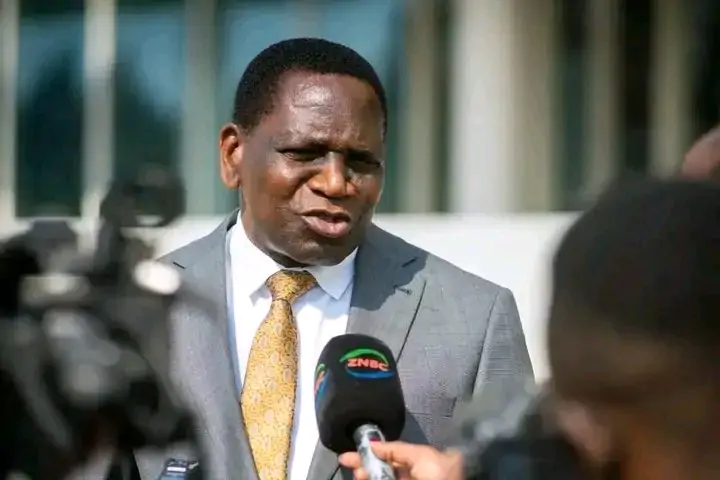
He said this today in a speech read on his behalf by Radiation Protection Authority (RPA) Board Chairperson Msafiri Sinkala, during the official opening of a five-day regional workshop on Nuclear Security Detection Architecture (NSDA), organised by RPA, with support from the International Atomic Energy Agency (IAEA), in Lusaka.
Dr Habeenzu said nuclear and radioactive material that escapes regulatory control in one country can quickly become a security concern for neighbouring countries.
He noted that Zambia will work with countries participating in the workshop on joint exercises, lawful information sharing and improvement plans that extend beyond individual border posts.
“Regional cooperation in this field is not a courtesy. It is the work itself,” Dr. Habeenzu said.
He stated that nuclear security detection is not the responsibility of a single institution, but requires coordinated action involving regulators, customs, police, national security agencies, the National Anti-Terrorism Centre and technical institutions.
The Permanent Secretary disclosed that Zambia has established a legal and institutional framework for managing radioactive materials through the RPA, which maintains the national inventory of radioactive sources and authorises their import, export and transit.
He said Zambia’s nuclear security framework is also supported by its safeguard arrangements with the IAEA and Cabinet’s approval in principle, in August 2025, for accession to the Vienna Convention on Civil Liability for Nuclear Damage.
Dr Habeenzu further linked nuclear security to Zambia’s broader development agenda, noting that radioactive materials are already used in medicine, industry, agriculture and research, while nuclear energy forms part of the country’s planned energy mix.
“Government’s target of generating 10,000 megawatts of electricity by 2030 makes it necessary to maintain strong regulatory and security systems around nuclear technology,” he added.
And RPA Executive Director, Boster Siwila said Zambia’s geographical position as a landlocked country surrounded by several neighbouring states, makes effective control of the movement of nuclear and radioactive materials across borders critical.
Dr Siwila said the evaluation provides an opportunity for Zambia and participating countries to identify gaps in their nuclear security systems and determine areas requiring improvement.
He observed that Zambia, has over the past several years, developed key elements of a national nuclear security architecture with support from the IAEA, including a legal framework.
Dr Siwila said the IAEA’s Incident and Trafficking Database, which records incidents involving the illicit trafficking of nuclear and radioactive materials, further demonstrates the importance of effective detection architecture.
He has also encouraged regional participants to share experiences and strengthen cross-border cooperation, saying face to face discussions during the workshop will help advance regional nuclear security efforts.
Meanwhile, IAEA representative, Nikolas Economy has also called for stronger regional cooperation among customs, law enforcement, regulatory and security institutions to strengthen the detection of nuclear and radioactive materials moving across borders.
Mr Economy said nuclear security detection architecture is only as strong as the connections between the institutions responsible for detecting, assessing and responding to nuclear security incidents.
He explained that NSDA comprises integrated systems and measures, supported by legal and regulatory frameworks, used to detect nuclear and other radioactive material outside regulatory control.
He said effective detection requires coordination among multiple institutions, noting that while equipment such as radiation portal monitors may be operated by border authorities, alarms can require police intervention and technical assessment by regulatory bodies and experts.
Mr Economy has also urged participants to view evaluation as a continuous improvement process rather than an audit or criticism.
He pointed out that threats evolve, equipment ages and trained personnel are transferred or retire, making regular evaluation necessary to ensure detection systems remain effective.
Mr Economy further stressed the need for countries to adopt a regional perspective, saying nuclear and radioactive materials moving across borders do not stop at jurisdictional boundaries.
The IAEA has since pledged continued support to participating countries.
The five-day workshop has brought together experts and officials from Kenya, Lesotho, Rwanda, Tanzania, Uganda, Zimbabwe, Nigeria and Zambia, representing regulatory, customs, security, law enforcement and technical institutions.
The engagement focus is on evaluating national nuclear security detection architectures, objectives, performance metrics and continuous improvement strategies.




Community Feedback