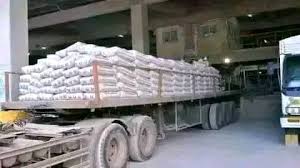
Zambia exports cement worth of K157 million to DRC in a single month

Breaking News Zambia
SportsZambia’s export sector continues to show signs […]
Zambia’s export sector continues to show signs of resilience and growing regional competitiveness, with value-added products increasingly driving trade performance,According to the latest official data Zambia exported Portland cement worth K157.4 million.
Speaking in an interview with Zambian Business Times-ZBT National Secretary Nicholus Obby Mainza described the development as a major milestone for Zambia’s manufacturing sector, noting that the country is beginning to demonstrate its ability to diversify exports beyond copper and establish itself as a regional industrial supplier. “This is a very telling signal for Zambia’s trade direction.
Cement is not a raw commodity — it is a value-added manufactured product. When you see exports of K157.4 million in a single month going into the DRC, it means Zambia is beginning to position itself as a serious regional manufacturing player,” Mr. Mainza said.
He explained that the surge in cement exports has positive implications for Zambia’s trade balance, particularly at a time when the country has been seeking to reduce overdependence on copper exports. “For decades, Zambia’s export profile has largely been driven by copper.
While copper remains important, developments like this show progress in diversifying the export base through non-traditional exports. That is critical because it reduces vulnerability to global copper price fluctuations,” he stated.
Dr Mainza noted that the strong demand from the DRC is largely being driven by expanding infrastructure projects and reconstruction activities in the neighboring country, creating an opportunity for Zambian manufacturers to scale production and increase regional market penetration. “The DRC currently has enormous infrastructure demand.
Zambia is strategically positioned to supply construction materials competitively because of proximity and existing trade corridors. If managed well, this could become a sustained export market rather than a temporary spike,” he said.
He further observed that the export earnings generated from the cement trade could provide much-needed foreign exchange inflows into the economy, helping stabilize the local currency and ease pressure on the kwacha.
These inflows are important because Zambia still imports critical commodities such as fuel, machinery and industrial inputs. Increased exports help strengthen foreign exchange reserves and support currency stability,” Dr Mainza explained.
He added that regional trade arrangements under COMESA and SADC are beginning to yield tangible benefits for Zambia’s industrial sector by opening wider regional markets for locally manufactured products. Dr.Mainza said the growth in cement exports also sends a positive signal regarding Zambia’s industrial competitiveness and manufacturing efficiency.
“Exports of this magnitude suggest that local manufacturers are achieving economies of scale and becoming more competitive regionally. This is important for industrialization, employment creation and economic transformation,” he said.
However, he cautioned that policymakers and industry players must focus on sustaining the momentum over several quarters rather than viewing the March figures as an isolated achievement.. He urged government and private sector stakeholders to continue investing in energy reliability, transport infrastructure and manufacturing incentives to ensure Zambia fully capitalizes on growing regional demand for construction materials.
“If Zambia can maintain production efficiency, competitive pricing and reliable logistics, cement exports could become one of the country’s strongest non-traditional export success stories in the region,” he said.
Article by Francine Chibuye








Community Feedback