Zambia : Election Promises: Do They Really Influence Voters?

Breaking News Zambia
NewsLusaka - Zambia: With polling day fast approaching, Zambians are once again weighing a familiar question: do campaign promises actually shape how people vote?
Headlines 4 min.Read Election promises: Do they really influence voters? By Lusaka Times Editor August 8, 2026 FacebookTwitterPinterestWhatsAppWith polling day fast approaching, Zambians are once again weighing a familiar question: do campaign promises actually shape how people vote? Writer and political commentator Alfred Sayila argues that the electorate has grown far more discerning since independence, no longer taking rhetoric at face value regardless of which party makes the pledge.
Since 1964, campaign promises have been used unsparingly by ruling parties to win support, and at times those promises have helped opposition parties ascend to power. But voters have come of age. They now sift through political rhetoric with far greater discernment, separating substance from spin.
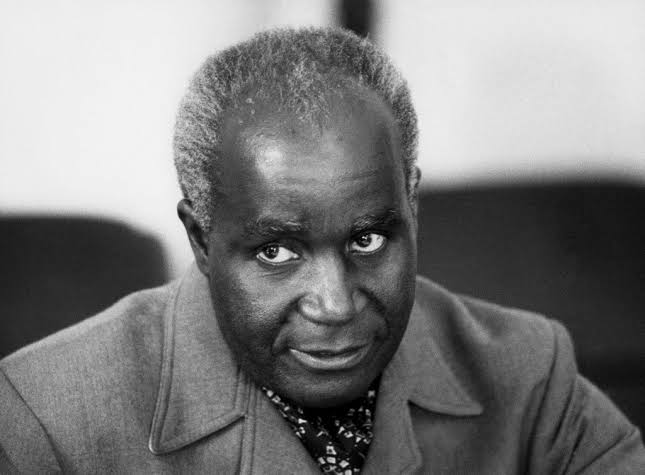
Founding President Kenneth Kaunda used to say no one can take Zambian people for granted. He learned this the hard way in 1991, when the crowds he had commanded at rallies for 27 years turned against him at the ballot box, handing victory to Fredrick Chiluba, a man Kaunda had once dismissed as a political dwarf because of his short stature.
If that rejection could befall a leader who delivered real development, peace and unity, the consequences for candidates offering only unfulfilled pledges could prove far harsher. Voters increasingly ask a pointed question before casting their ballots: what did previous leaders fail to do that they now claim they will finally accomplish? Unfulfilled promises, in the eyes of many voters, carry little more weight than lies, and no late window-dressing can restore lost confidence.
Cheap electioneering built on empty promises breeds suspicion among an electorate that has already walked that road before. Rallies, dances, hymnals, handouts and donations often amount to little more than vote-chasing theatre, while the real decision in most voters’ minds is settled long before polling day.
Several campaign pledges circulating this election season raise questions about feasibility. These include promises to build universities in rural capitals, construct skills centres nationwide, build an international airport in a terminus town, further increase the Constituency Development Fund, install solar plants everywhere, employ millions of people and pay farmers within three working days of submitting claims. Such promises invite an obvious question: where would the funding come from, since many are not backed by demonstrated fiscal detail?
Some pledges being presented as new are, in fact, programmes with long historical roots. Free education, for instance, existed in a form during the colonial era through Native Authorities, which offered access to schooling with only small fee contributions, alongside bursaries for vulnerable children. School feeding programmes for boarders also existed under colonial-era grants administered through native authorities, structures that functioned similarly to today’s Constituency Development Fund. The first post-independence government under Kaunda largely consolidated and diversified what it inherited rather than inventing entirely new systems.
The point extends even to the “One Zambia, One Nation” ethos some politicians now invoke. Cross-country transfers of civil servants during the colonial period, though designed to serve a divide-and-rule strategy, inadvertently mixed tribes and cultures across regions, a process the mining industry on the Copperbelt also accelerated. That intermingling laid groundwork Kaunda later built on with his unifying slogan, and its legacy persists in families that settled far from their ancestral regions, illustrating that many of today’s talking points describe processes already well underway long before current candidates entered public life.
Politicians should therefore be cautious about presenting themselves as pioneers of ideas that predate them. Making a promise is one thing; having the resources to deliver it is another. Pointing to numbers of newly employed civil servants offers little persuasive weight, since recruiting public workers is a routine government function and a perpetual drain on the treasury rather than an extraordinary achievement. A more meaningful measure of good governance lies in creating conditions for private-sector job creation and supporting small and medium enterprises.
A genuinely good government also lightens the burden on citizens through subsidies on food, medicine, fuel, fertiliser and seeds. Free education alone means little if households sending children to school are stalked by hunger, and in some areas free education has led to overcrowding, poor facilities and staff exhaustion, undermining the quality of instruction it was meant to improve.
Campaign messaging, Sayila argues, would be more credible if grounded in physical projects already initiated or completed, rather than repeated promises. Voters today want to see improvement in living standards through affordable prices, not abstract statistics about inflation or exchange rates; they want that progress reflected in real purchasing power and reduced cost of living.
Ultimately, elections are rarely won through last-minute campaigning, colourful posters, slick advertisements or borrowed slogans. They are won when politicians own their mistakes and credibly promise to do better. A candidate’s underlying character tends to show through regardless of rehearsed charisma, and unconvincing promises rarely manage to sway voter judgement in the end.
Given the closeness expected in this race, with no single presidential candidate likely to muster the 50-plus-one threshold in the first round, the Electoral Commission of Zambia carries a democratic duty to ensure the process remains free and fair, with the possibility of a run-off remaining real.
Loading read count...LEAVE A REPLY Cancel reply
Hot this week
ColumnsMast Editorial: Police IG must prove critics wrong on election violence August 8, 2026 0 The Inspector General of Police, Graphel Musamba, issued a... General News
REA Completes Luwingu’s K19.4 million Grid Extension August 8, 2026 0 The Rural Electrification Authority (REA) has completed the implementation... General News
VEEP Urges Clergy to Pray for Peaceful Elections August 8, 2026 2 Vice President Mutale Nalumango has called on the clergy... General News
Government hails Joseph Katema’s enduring development legacy August 8, 2026 0 Government has eulogised the late former Cabinet Minister, Joseph... General News
Govt. launches National Carbon Registry August 8, 2026 0 Government has launched the National Carbon Registry, marking a...
Topics
ColumnsMast Editorial: Police IG must prove critics wrong on election violence 0 The Inspector General of Police, Graphel Musamba, issued a... General News
REA Completes Luwingu’s K19.4 million Grid Extension 0 The Rural Electrification Authority (REA) has completed the implementation... General News
VEEP Urges Clergy to Pray for Peaceful Elections 2 Vice President Mutale Nalumango has called on the clergy... General News
Government hails Joseph Katema’s enduring development legacy 0 Government has eulogised the late former Cabinet Minister, Joseph... General News
Govt. launches National Carbon Registry 0 Government has launched the National Carbon Registry, marking a... General News
Govt. hands over CDF-funded Market Shelter, Ablution Block in Kafue 0 The Local Authority in Kafue District has handed over... Feature Politics
President Hichilema touts UPND’s four-year development achievements 0 President Hakainde Hichilema says the UPND government has Implemented... General News
Government to build three mini hospitals in Kafue 1 Lusaka Province Health Director Simulyamana Choonga says Government will...
Related Articles
Retired officers, clergy and academics condemn pre-election violence
Headlines August 7, 2026Oscar Chavula responds to Kawana over Hot FM propaganda claims Headlines August 7, 2026
Former Labour Minister Austin Liato dies at 60
Headlines August 7, 2026Police order arrests as government and opposition trade blame over election violence
Headlines August 7, 2026President Hichilema Urges Manyama Residents to Vote UPND, Pledges Continued Development
Headlines August 7, 2026Popular Categories
HeadlinesGeneral NewsSportsEconomyRural NewsColumnsFeature Politics Previous articleMast Editorial: Police IG must prove critics wrong on election violence

Community Feedback