
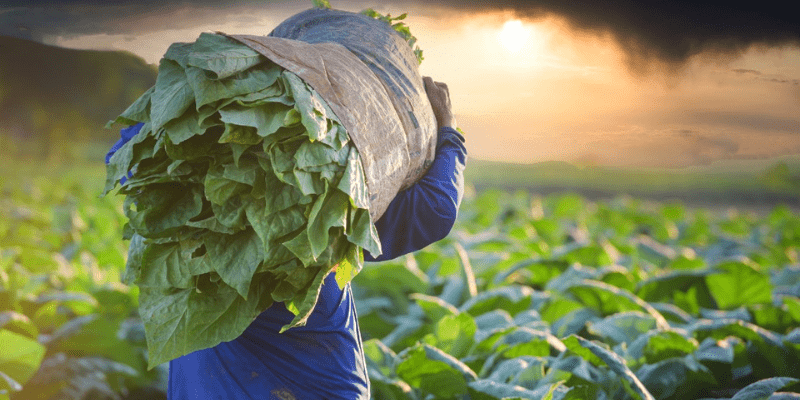
Will Tobacco board reforms address sector unfair pricing concerns?

Breaking News Zambia
BusinessRecently, Parliament passed the Tobacco Bill No. […]
Recently, Parliament passed the Tobacco Bill No. 16 of 2016, a piece of legislation that increases participation of stakeholders in the board and agriculture as a whole. But experts warn that representation alone will not eliminate the pricing gap between smallscale and large-scale farmers.
Speaking in an interview with Zambian Business Times-ZBT, agriculture expert Oliver Bulaya said large-scale growers have historically held stronger bargaining power due to better access to market information, finance, storage, and direct buyer links, while smallholders often rely on contract farming with little room to negotiate prices.
He welcomed the inclusion of both grower associations on the board, saying it creates a platform for small-scale farmers to raise concerns formally, scrutinize contracts, and push for transparency in pricing.
“But institutional representation alone cannot guarantee fair pricing,” Bulaya said that for the reform to have impact, it must be backed by strong market information systems, transparent grading, independent dispute resolution, and collective bargaining for smallholders.
He noted that grading remains a major pain point for smallscale growers. Bulaya urged the Small-Scale Tobacco Growers Association to use its proposed statutory seat to present evidence-based pricing proposals and push for standardized, independently verifiable grading systems.
Beyond representation, Bulaya said the board needs broader technical expertise to handle climate, market, and trade challenges. “Climate variability is one of the biggest threats to agriculture in Zambia.
The board must include climate-smart agriculture experts, along with tobacco processing, export, finance, and economics specialists,” he said. Bulaya said the bill focuses on governance and domestic management, not direct tobacco control.
“However, a more diverse and professional board can improve oversight, strengthen traceability, and ensure compliance with export and sustainability standards,” he added.
Article by Francine Chibuye




Community Feedback