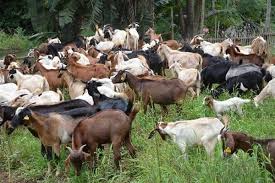
Why Zambia’s 1 million goat export to Saudi Arabia deal stalled

Breaking News Zambia
BusinessIn 2016, Zambia and the Kingdom of […]
In 2016, Zambia and the Kingdom of Saudi Arabia signed a Memorandum of Understanding over the export of K1 million goats per annum, a report that elated farmers and promised huge returns for the livestock sector. Despite years of high-profile bilateral announcements, the initiative has stalled.
Speaking in an interview with the Zambian Business Times, Zamgoat founder and CEO Paul Nyambe said the country’s challenge is the lack of capacity to process meat to the market standards of the Gulf region.
“The issue wasn’t really the number of goats in the country or the population of goats, but rather the capacity in terms of processing infrastructure that would meet the market standards of that market and others in the broader GCC region,” he explained.
Nyambe noted that previous discussions around the Saudi export deal were undermined by over-politicization and limited government facilitation of private sector participation.
He argued that government’s role should be to link local processors with buyers in Saudi Arabia and support capacity-building for compliant processing facilities.
“The market is there. It still exists, and it’s not just Saudi Arabia. It’s in the broader GCC region. The market is there. There’s a real market opportunity that we need to take advantage of as a country,” he said.
Nyambe pointed to Kenya as a regional example, where more than seven meat processing facilities are currently exporting meat products, including goat, to the Middle East. He cited one Kenyan facility that processes over 80,000 goats daily for export.
He added that Zambia’s indigenous goat breeds already align with Middle Eastern market preferences. Contrary to earlier proposals to introduce Boer goats and Kalahari Reds, buyers in the region favor the traditional breeds Zambia already keeps.
“The breed of goats that they want is actually what we already have as Zambia – the same traditional goat breed that yields around 8 kg of carcass weight,” he said.
Nyambe advised that priority should be placed on disease management and improved nutrition rather than introducing exotic breeds, which he said are more demanding and less suited to smallholder farmers.
“What we need to improve on as a country is managing the disease burden and our nutritional regime. Once we do that, we can achieve better results in terms of meat quality and yield from the very same traditional goats we keep in the country.”
He also emphasized that Zambia needs targeted investment in market-opening infrastructure. He criticized the current approach to export promotion, which he said often involves taking businesses to international trade fairs without the underlying processing capacity to meet buyer requirements.
Article by Francine Chibuye







Community Feedback