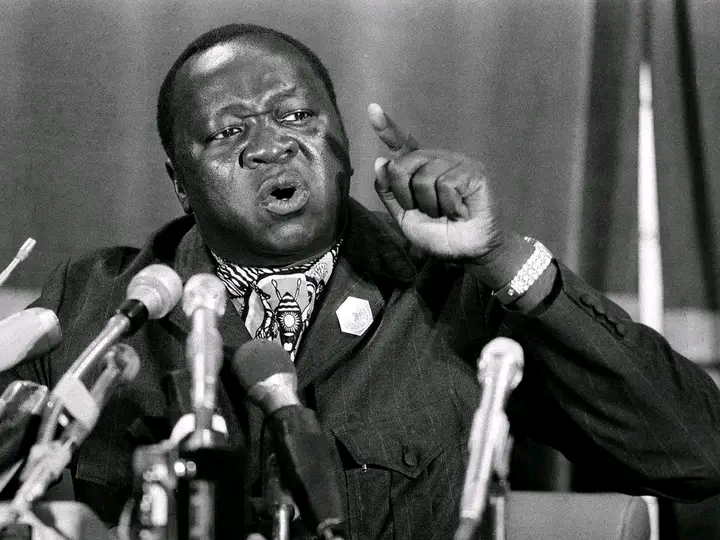
Why Museveni Refused to allow Iddi Amin Dada ‘s dead body to be brought home in 2003

Breaking News Zambia
NewsWhy Museveni Refused to allow Iddi Amin Dada ‘s dead body to be brought home in 2003 In August 2003, Idi Amin Dada, the former President of Uganda, died in Jeddah, Saudi Arabia at age 75. As he lay in a coma at King Faisal Specialist Hospital, his wife Nalongo Madina made a final request: […]
Why Museveni Refused to allow Iddi Amin Dada ‘s dead body to be brought home in 2003
In August 2003, Idi Amin Dada, the former President of Uganda, died in Jeddah, Saudi Arabia at age 75. As he lay in a coma at King Faisal Specialist Hospital, his wife Nalongo Madina made a final request: that Amin be allowed to return to Uganda to spend his last days at home.
The man who responded was President Yoweri Museveni. His answer was no.
1. He Must Answer for His Sins
Museveni’s position was direct. He told Amin’s family that if Amin returned, he would have to answer for his sins the moment he was brought back.
For Museveni and many Ugandans, Amin was not just an ex-president. From 1971 to 1979, his military government was linked to mass killings, torture, and disappearances. Estimates of those killed range from 100,000 to 500,000. High-profile victims included Chief Justice Ben Kiwanuka and religious leaders.
To Museveni, allowing a state burial would mean ignoring those crimes.
Protecting Uganda’s Memory and Stability.
Museveni, whose rebel group helped oust Amin in 1979 with Tanzanian troops, has consistently called Amin a primitive dictator. Under his government, there are no monuments to Amin in Kampala and no streets named after him.
By refusing the body, Museveni sent a clear message: acts of violence, ethnic persecution, and economic sabotage will not be honored.
Two other reasons shaped this decision.
Economic damage.
Amin’s 1972 expulsion of Asian business owners collapsed businesses and damaged Uganda’s economy.
National reconciliation.
Honoring Amin would reopen wounds for victims’ families and survivors. Museveni argued that Uganda needed to move forward, not glorify a painful chapter.
The Burial in Exile.
Because Uganda refused, Amin was buried in Jeddah, Saudi Arabia on 16 August 2003. He was laid to rest in Al Ruwais Cemetery in a simple grave, without state ceremony or fanfare. His death was barely acknowledged in Uganda.
Over the years, some of Amin’s supporters have lobbied for his remains to be returned, arguing that he also stood for African solidarity and local industry. Museveni’s government has rejected these calls, including proposals for an Amin memorial institute.
Conclusion
Museveni’s refusal was not just about one man. It was about how a nation remembers its past. For Museveni, bringing Amin’s body home would risk turning a brutal dictator into a national hero.
Instead, Amin remains buried abroad — a reminder of a dark period Uganda chose not to celebrate.



Community Feedback