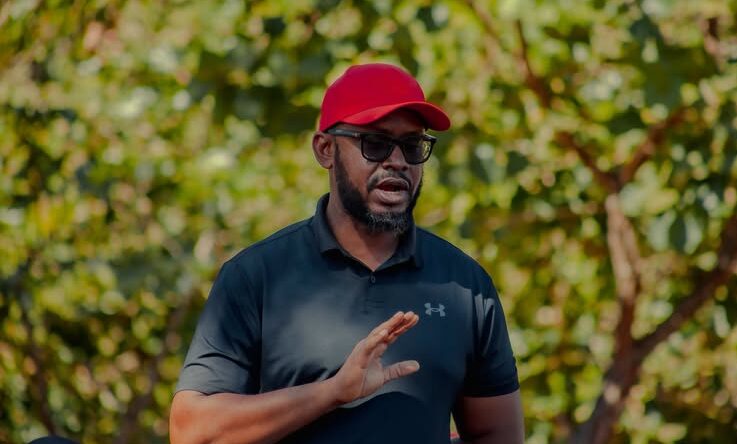
Village People At Play: Sunday Chanda Proves That A Crocodile Will Always Be A Crocodile

Breaking News Zambia
Top StoriesVillage People at Play: Sunday Chanda Proves a Crocodile Will Always Be a Crocodile Politics has a remarkable way of exposing those who believe they have successfully reinvented themselves. A politician may change parties, exchange campaign colours, adopt new slogans and stand…
Village People at Play: Sunday Chanda Proves a Crocodile Will Always Be a Crocodile
Politics has a remarkable way of exposing those who believe they have successfully reinvented themselves. A politician may change parties, exchange campaign colours, adopt new slogans and stand shoulder to shoulder with people he once fought with relentless determination. Yet, every so often, instinct overpowers calculation. Years of political conditioning suddenly surface, exposing convictions that no new membership card can erase. When that happens, the politician’s true political character speaks louder than any carefully prepared campaign message.
The events witnessed in Kanchibiya deserve to be viewed through that lens. Across much of Africa, people often joke that “the village people are at play” whenever someone inexplicably sabotages themselves at the very moment success appears within reach. It is a colourful expression rooted in the belief that unseen spiritual forces or those who envy another person’s progress can mysteriously cause them to stumble when everything seems to be going their way. Whether one literally believes in such things or simply enjoys the folklore, that old saying immediately came to mind when Sunday Chanda, standing on a United Party for National Development (UPND) campaign platform, dressed in UPND colours and sharing the stage with President Hakainde Hichilema, reportedly urged the people of Kanchibiya to vote for Patriotic Front (PF) candidates. If there was ever a moment when a politician would have wished for a second chance to retrieve his words, this was surely it.
Sunday Chanda did not emerge from political obscurity wearing UPND colours. He spent years building his reputation as one of the Patriotic Front’s most recognisable political voices, defending the party with unwavering determination while directing equally fierce criticism at Hakainde Hichilema and the UPND. His political instincts were developed within PF, his public identity was forged there and his language was shaped by years of advancing the party’s cause. Political history of that depth cannot simply be switched off because circumstances have changed or because political opportunity now lies elsewhere.
Nobody should suggest that politicians have no right to change parties. Democracy depends upon freedom of association, and every citizen is entitled to embrace new political beliefs. Circumstances evolve, governments change and people are perfectly entitled to reconsider old loyalties. Yet genuine political transformation demands far more than replacing one party jersey with another. It requires a corresponding shift in conviction, philosophy and instinct. Those qualities cannot be manufactured overnight simply because political power has changed hands.
President Hakainde Hichilema has spent much of this campaign reminding Zambians that “Ngwena ni ngwena.” A crocodile, he says, will always remain a crocodile. The phrase has become one of the defining messages of his campaign, warning voters against trusting politicians whose past conduct should already have taught them valuable lessons. Ironically, the Kanchibiya episode invites that same principle to be applied more broadly, including to some of those who have recently found a new political home within the ruling party itself.
A crocodile does not become another animal because it has crossed the river. The environment may change, the company it keeps may change and even its appearance may seem different, but instinct remains remarkably difficult to alter. That, perhaps, is the lesson the Kanchibiya incident has offered the nation. Sunday Chanda’s political address may have changed. His ambitions may have changed. His political opportunities certainly changed. Yet, when instinct appeared to momentarily overpower calculation, the old political reflex resurfaced before thousands of people.
Many people will understandably laugh at what happened, but the incident raises a much deeper question about Zambia’s political culture. Political defections have become so common that they are often celebrated without serious examination of the motives behind them. Every election cycle produces politicians who suddenly discover fresh political convictions immediately after discovering where political power resides. Every defection is presented as an act of patriotism, national unity or commitment to development. Voters are then expected to forget everything that came before and simply accept that years of deeply held convictions have disappeared overnight.
President Hakainde Hichilema deserves credit for recognising the electoral value of attracting prominent opposition figures into UPND. Politics is, after all, about building coalitions, expanding support and weakening opponents. Recruiting influential former PF leaders helps broaden the party’s appeal while simultaneously reducing the opposition’s strength. From a campaign perspective, that strategy is both logical and effective. Every successful politician seeks to maximise political advantage, and there is nothing unusual about that.
The greater responsibility now rests with UPND itself. Party members who remained loyal during difficult years in opposition should avoid assuming that every high-profile defector has undergone a genuine ideological conversion. Some undoubtedly have. Others may simply have recognised where political opportunity now exists. There is an important difference between embracing a political philosophy and embracing political convenience. Political usefulness during an election campaign should never be mistaken for permanent political loyalty.
The same caution should apply beyond UPND. The Brian Mundubile alliance and every other political formation should equally resist believing that every prominent recruit automatically represents conviction. Political opportunism recognises no party colours. It follows influence, opportunity and personal ambition wherever they happen to exist. Politicians who move whenever circumstances become favourable are rarely motivated by the interests of ordinary citizens alone. Their first loyalty often remains their own political survival.
The Kanchibiya episode is therefore much bigger than Sunday Chanda himself. He simply became the latest example of a political culture that increasingly rewards movement over consistency. Politicians move from one party to another expecting voters to erase years of political history and judge them only by today’s campaign colours. Yet the electorate has become more politically mature than many leaders seem willing to acknowledge. Increasingly, Zambians recognise the difference between genuine conviction and convenient repositioning.
Citizens now carry the greatest responsibility as the election approaches. Campaign slogans, colourful regalia and carefully choreographed defections should never replace independent judgment. Voters must ask where these politicians stood yesterday, what principles they defended, why those principles suddenly changed and whether their latest political journey genuinely serves the public interest. Those questions matter far more than which platform they happen to occupy during an election campaign. Democracy ultimately rewards character long after campaign slogans have been forgotten.
Perhaps those who believe the village people were finally at work will insist that Sunday Chanda’s moment arrived in Kanchibiya. Others will dismiss it as nothing more than an unfortunate slip of the tongue. Whatever explanation one chooses, the political lesson remains remarkably clear. Instinct has an inconvenient habit of revealing what calculation works tirelessly to conceal. Politicians may change parties, campaign colours and political alliances whenever circumstances demand, but conviction is far more difficult to disguise. When instinct briefly overpowers preparation, years of political conditioning often speak louder than carefully rehearsed campaign messages.
Zambia should therefore be careful not to confuse changing political jerseys with changing political character. Parties may rise and fall. Alliances may be formed and abandoned. Political fortunes may change with every election cycle. Character, conviction and political instinct, however, rarely transform at the same pace. Ultimately, voters must decide whether they are electing principle or convenience, consistency or calculation. If there is one enduring lesson from the Kanchibiya episode, it is the very one President Hakainde Hichilema himself has repeated throughout this campaign. “Ngwena ni ngwena”. A crocodile will always be a crocodile.







Community Feedback