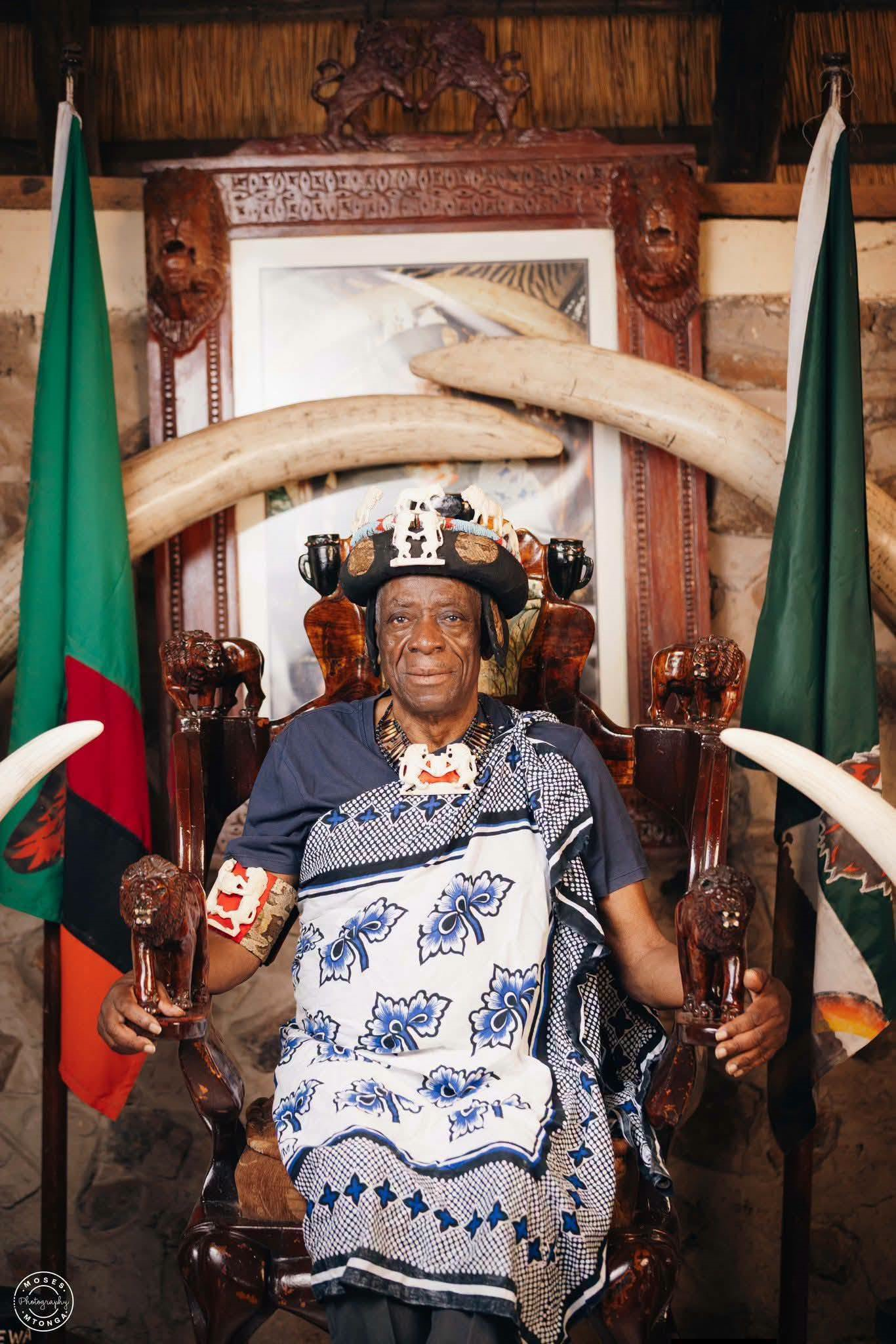
THE MUKUNI QUESTION: Could Zambia Get a Fifth Paramount Chief?

Breaking News Zambia
News23 ViewsLUSAKA — A legal battle over whether Chief Munokalya Mupotola IV Siloka III Mukuni XIX should be recognised as a Paramount Chief has opened a much bigger national debate: Could Zambia’s traditional leadership system soon have a fifth Paramount Chief? The question has gained fresh attention after the Constitutional Court dismissed applications by three […]
23 ViewsChief Mukuni
LUSAKA — A legal battle over whether Chief Munokalya Mupotola IV Siloka III Mukuni XIX should be recognised as a Paramount Chief has opened a much bigger national debate: Could Zambia’s traditional leadership system soon have a fifth Paramount Chief?
The question has gained fresh attention after the Constitutional Court dismissed applications by three of Zambia’s recognised Paramount Chiefs — the Chitimukulu, the Litunga and Kalonga Gawa Undi — to join a petition seeking the recognition of Chief Mukuni as a Paramount Chief.
The court’s decision, however, should not be interpreted as a ruling that Chief Mukuni is entitled to Paramountcy, nor as a determination that the concerns raised by the three traditional leaders are without merit.
The Court was dealing with their attempt to participate in the proceedings as interested parties.
The substantive petition seeking Chief Mukuni’s reclassification remains before the Constitutional Court.
What is the Mukuni case about?
Chief Mukuni with wife
The case was filed by the Bene Mukuni Royal Dynasty Committee, through its Director General Jonas Shakafuswa, against Attorney General Mulilo Kabesha.
The petition argues that the continued classification of Chief Mukuni as an ordinary chief is inconsistent with the historical and cultural status of the Bene Mukuni Royal Establishment.
The petition cites Articles 1, 165, 166, 167 and 266 of the Constitution in support of its case. It seeks recognition of Chief Mukuni as a Paramount Chief, together with the status, powers and privileges associated with that position.
At the heart of the case is therefore a question that goes beyond one individual:
Does the historical and customary status of the Bene Mukuni Royal Establishment justify its formal recognition as a Paramount Chiefdom?
Why are the other Paramount Chiefs concerned?
Chitimukulu with Litunga
Gawa Undi
Before the Constitutional Court dismissed their applications, the Chitimukulu, the Litunga and Kalonga Gawa Undi had each sought to participate in the proceedings.
Their argument was essentially that the case could have consequences beyond Chief Mukuni and the Bene Mukuni Royal Establishment.
The Chitimukulu, for example, argued that recognising another Paramount Chief could establish a precedent under which other chiefs might challenge established traditional authorities.
The three traditional leaders also argued that the creation or recognition of another Paramount Chief could have implications for Zambia’s existing traditional governance structures.
The Court, however, found that they had not established an identifiable legal interest sufficient to join the proceedings.
That means their concerns are now part of the public debate, but they are not parties to the substantive petition simply because they attempted to join it.
Zambia already has four recognised Paramount Chiefs
Zambia’s traditional leadership system currently recognises four Paramount Chiefs:
- The Chitimukulu of the Bemba people;
- The Litunga of the Lozi people;
- Kalonga Gawa Undi of the Chewa people; and
- Paramount Chief Mpezeni of the Ngoni people.
A National Assembly record has previously stated that Zambia had four Paramount Chiefs, while the Constitution Review Commission also identified the same four traditional institutions as Paramount Chiefdoms.
The question raised by the Mukuni petition is therefore whether the country should continue with that established number or whether another traditional establishment can legitimately attain Paramount status.
What does the law say about Paramount Chiefs?
The Litunga
The issue is complicated because Zambia’s Constitution gives strong protection to the institution of chieftaincy.
Article 165 of the Constitution provides that the institution of chieftaincy and traditional institutions are guaranteed and exist in accordance with the culture, customs and traditions of the people to whom they apply.
The Constitution also provides that Parliament shall not enact legislation that confers on a person or authority the right to recognise or withdraw recognition of a chief, or that derogates from the honour and dignity of chieftaincy.
At the same time, Zambia’s Chiefs Act provides a statutory framework for recognition of chiefly offices, including the offices of Paramount Chief, Senior Chief, Chief and Sub-Chief. The Act says recognition is subject to the President being satisfied that the person is entitled to hold the office under African customary law.
This creates an important constitutional and customary question in the Mukuni case:
Where customary law and historical tradition support a particular traditional status, what role does the State have in formally recognising that status?
That is one of the issues that makes the case potentially significant beyond Southern Province.
But what is the history of Paramountcy in Zambia?
The position of Paramount Chief is not simply a modern government-created title.
Traditional leadership in Zambia predates the modern State, and different communities developed their own systems of authority, succession and customary governance.
Even the Government has previously acknowledged that there was no uniform colonial policy defining precisely who should be a Paramount Chief, Senior Chief or ordinary Chief.
In a 2009 National Assembly debate, Government stated that Zambia then had four Paramount Chiefs and 42 Senior Chiefs, and acknowledged that the colonial administration had not left behind a specific policy setting uniform qualifications for the different levels of chiefly status.
This history is important because it means the debate over Paramountcy cannot simply be reduced to “Government creating another chief.”
It involves questions of customary law, historical authority, recognition and the evolution of traditional institutions.
Why Chief Mukuni?
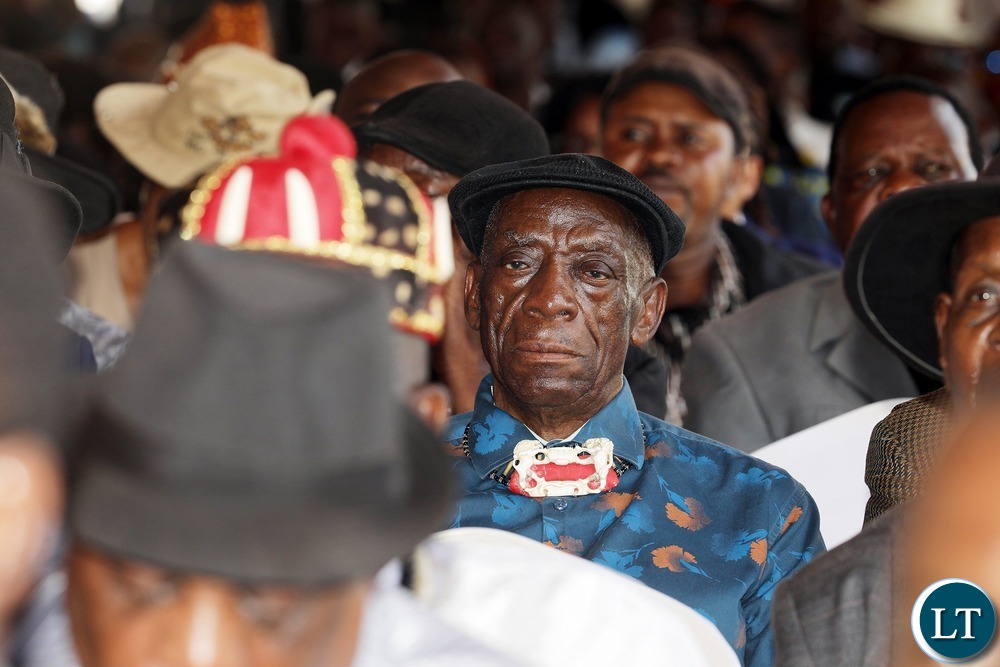
Chief Mukuni
The Bene Mukuni Royal Dynasty Committee argues that the Mukuni establishment has historically exercised a level of authority that, in its view, is consistent with Paramountcy.
The committee says the continued classification of Chief Mukuni as an ordinary chief does not reflect the historical and cultural standing of the Bene Mukuni Royal Establishment.
The petition therefore seeks more than a change in title.
It seeks recognition of the status, authority and privileges associated with Paramountcy.
That is why the case has attracted the attention of other traditional establishments.
What happens if Chief Mukuni wins?
The Constitutional Court has not yet made that determination.
But if the petition ultimately succeeds, it could raise several questions for Zambia.
Would Zambia have five recognised Paramount Chiefs?
Would Chief Mukuni exercise authority over other chiefs within a defined traditional jurisdiction?
Would the recognition create a precedent for other traditional establishments seeking Paramount status?
Could other chiefs argue that their own historical institutions also qualify for recognition?
Would Government need to make administrative or legal adjustments to accommodate the new status?
These questions are not hypothetical simply because they make interesting headlines.
They go directly to the concern raised by the three existing Paramount Chiefs that recognition of another Paramount Chief could have implications for traditional governance structures across the country.
Supreme court
And what if the petition fails?
That outcome would also carry significance.
It could reaffirm the existing framework under which the country’s four recognised Paramount Chiefdoms operate and establish important guidance on how historical and customary claims to Paramountcy should be treated.
It could also influence future attempts by other traditional establishments to seek elevated recognition.
In other words, the Mukuni case could become a reference point for future chieftaincy disputes in Zambia, regardless of which side ultimately succeeds.
Could this open the door for other Paramountcy claims?
Chief Moonze
That is perhaps the biggest question surrounding the case.
Southern Province has already seen discussion around Paramountcy involving Chief Monze, whose supporters have also argued for recognition of a higher traditional status. Reports in July 2026 indicated that supporters of both Chief Monze and Chief Mukuni were pressing for Paramount recognition.
If Chief Mukuni succeeds, other traditional establishments could potentially examine their own histories and customary structures and ask whether they too qualify for similar recognition.
That is precisely why the case has national significance.
The bigger question: How many Paramount Chiefs should Zambia have?
The Constitution protects traditional institutions, but Zambia’s system has historically developed through different customary arrangements.
The country has hundreds of traditional leaders, but only four have historically been recognised as Paramount Chiefs.
The Mukuni case therefore forces Zambia to confront a difficult question:
Is Paramountcy a closed historical category limited to the traditional establishments already recognised, or can another traditional institution establish a legitimate claim to the status through its own customs, traditions and history?
The Constitutional Court may ultimately provide important guidance on that question.
This is bigger than Chief Mukuni
Chief Mukuni
For the Bene Mukuni Royal Establishment, the case is about recognition of its history and traditional status.
For the existing Paramount Chiefs, the issue raises questions about the stability and hierarchy of Zambia’s traditional governance system.
For Government, it presents a difficult question about the relationship between customary authority, constitutional protection and formal recognition.
And for ordinary Zambians, the case provides an opportunity to ask a broader question about the role traditional leadership should play in modern Zambia.
The Court’s recent decision has therefore not ended the debate.
It may have made the substantive question even more important.
Can Chief Mukuni become Zambia’s fifth Paramount Chief?
For now, the answer remains with the Constitutional Court.
Zambian Eye will continue to follow the case.
Zambian Eye | Reporting Zambia. Explaining Zambia.



Community Feedback