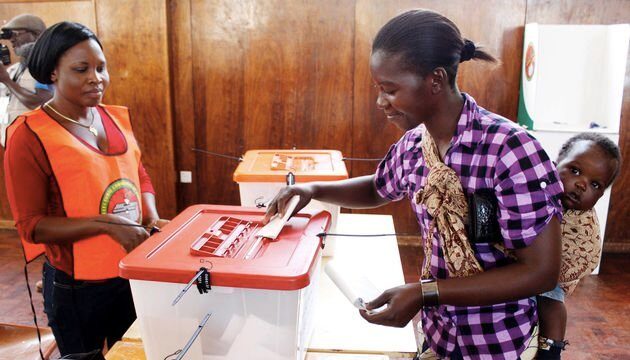
The die has been cast, choice is yours Zambians

Breaking News Zambia
NewsTHE campaigns are over. The speeches have been made, the promises have been laid before the people, accusations have been traded, manifestos have been interrogated and political parties have travelled the length and breadth of this country asking Zambians for their votes. Today, the talking stops and the people speak. Before anything else, we must […]
THE campaigns are over. The speeches have been made, the promises have been laid before the people, accusations have been traded, manifestos have been interrogated and political parties have travelled the length and breadth of this country asking Zambians for their votes. Today, the talking stops and the people speak.
Before anything else, we must commend Zambia’s political parties, their leaders, supporters, the Electoral Commission of Zambia, the police and, most importantly, ordinary citizens for the relative peace that has characterised this campaign. There have certainly been pockets of violence. We have reported some ugly incidents involving cadres, confrontations between rival supporters and instances where political intolerance threatened to disturb the campaign. Those incidents cannot be excused or normalised. Zambia must reach a point where political violence disappears completely from our elections.
But taken as a whole, this has been an exceptionally peaceful campaign. That is something worth celebrating. For weeks, politicians of different persuasions have campaigned across provinces, constituencies and communities. Rival parties have held rallies, mounted roadshows, addressed meetings and taken their messages to the electorate. Millions of Zambians have listened, debated, argued and disagreed without the country descending into widespread political chaos.
This is probably one of the most peaceful election campaigns Zambia has recorded in recent times. We are therefore headed in the right direction. Democracy does not require citizens to agree with one another. It requires them to disagree without becoming enemies. It requires a UPND supporter to accept that an opposition supporter has an equal right to campaign, and an opposition supporter to recognise the same right in a UPND supporter. Today, those political identities must become secondary to one more important identity: Zambian.
When citizens enter that polling booth, there will be no cadres, party presidents, praise singers, social-media commentators or newspaper editorial comments facing them. It will be the voter, the ballot paper and their conscience. And that is where democracy becomes powerful. All that could be said has now been said.
If somebody has failed to convince you by now, another rally will probably not change your mind. If a government believes it has performed, its record is before the people. If the opposition believes it can perform better, its promises are before the people. Today is no longer about who shouted the loudest at rallies or attracted the biggest crowd. It is about judgement.
Our appeal to Zambians is simple: detach yourselves from emotion. Do not vote because somebody insulted the politician you love. Do not vote because your friends belong to a particular party. Do not vote because your family has always voted in a certain direction. Do not vote because a politician comes from your province, speaks your language or belongs to your tribe.
In practical political terms, one of the central choices confronting voters will inevitably be between continuing with the UPND administration and embracing an opposition political alternative which includes figures, ideas and structures associated with the former Patriotic Front establishment. That comparison must be made without nostalgia on one side or blind loyalty on the other. Citizens must remember both governments and opposition parties in full.
If you are assessing the UPND, examine its entire record: its achievements, failures, promises kept, promises broken, economic decisions, governance record and treatment of democratic institutions. If you are assessing those who previously served under the PF and now seek another opportunity under different political arrangements, equally examine the full PF record: what worked, what failed, what Zambia experienced under that administration and whether those asking for another chance have adequately explained what they would do differently.
The ballot is not an instrument for revenge. Neither is it a certificate of gratitude. It is a contract for the next five years. When you mark that ballot, you are making a decision about the economy, jobs, taxes, education, healthcare, electricity, mining, agriculture, debt, civil liberties, corruption, policing and the kind of political culture Zambia should embrace.
Politicians have had their rallies. They have had their microphones, motorcades, billboards and campaign songs. They have told you why they deserve power and why their opponents do not. Now their voices must fall silent. The die has been cast. The choice is yours, Zambians.

Community Feedback