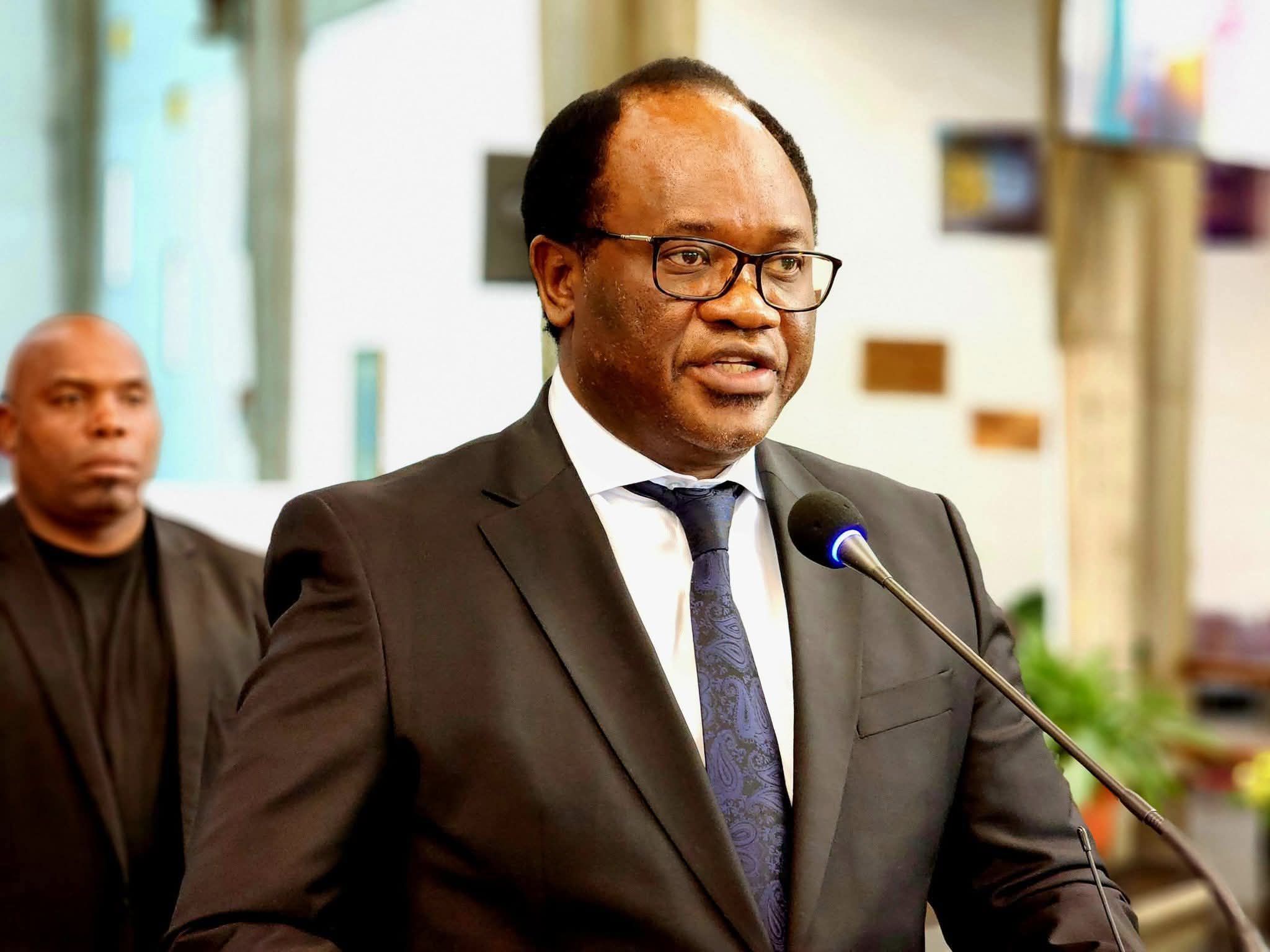
Mundubile takes 2026 election battle to court, says “let the evidence speak”

Breaking News Zambia
News29 Views LUSAKA — Zambia’s leading opposition presidential candidate Brian Mundubile has formally confirmed that he will challenge the outcome of the 2026 presidential election through the constitutional and judicial process, setting the stage for a legal battle over the conduct and credibility of the poll. In a statement issued in Lusaka on Wednesday, August […]
29 ViewsBrian Mundubile
LUSAKA — Zambia’s leading opposition presidential candidate Brian Mundubile has formally confirmed that he will challenge the outcome of the 2026 presidential election through the constitutional and judicial process, setting the stage for a legal battle over the conduct and credibility of the poll.
In a statement issued in Lusaka on Wednesday, August 19, Mundubile said his decision to petition the election was not motivated by bitterness or an unwillingness to accept the voters’ verdict, but by what he described as a responsibility to defend the integrity of Zambia’s democracy.
The Electoral Commission of Zambia (ECZ) declared President Hakainde Hichilema the winner on Tuesday with 2,965,326 votes, against Mundubile’s 1,856,217, giving Hichilema a second term in office.
But Mundubile says the declaration does not, by itself, settle questions about whether the election was conducted in accordance with the Constitution and electoral law.
“The credibility of an election rests on the integrity of the entire process,” Mundubile says in the statement.
Mundubile puts evidence at the centre of challenge
Mundubile says his campaign has documented what he describes as “serious irregularities, inconsistencies and circumstances” surrounding the conduct, counting, transmission and declaration of results.
Rather than relying solely on allegations, however, he says his team intends to present its evidence before the appropriate judicial forum and allow the courts to independently determine what happened.
“We will not substitute allegations for evidence,” he says, adding that the petition will rely on documents, witness testimony and other available material.
The opposition leader has outlined a series of questions that he wants the courts to examine, including:
- Whether all votes were lawfully cast, counted and accurately recorded;
- Whether polling-station results were properly reconciled with constituency, provincial and national totals;
- Whether established electoral procedures were consistently followed;
- Whether results were transmitted and aggregated according to the law;
- Whether polling agents received the rights and protections guaranteed to them;
- Whether there were instances of intimidation, obstruction, irregular counting or alteration of results; and
- Whether any irregularities materially affected the outcome of the presidential election.
That last question could become particularly important in any court proceedings, as the opposition will have to demonstrate not simply that irregularities occurred, but what effect, if any, they had on the final result.
Calls for preservation of electoral evidence
Mundubile has also appealed to the ECZ, political parties, civil society organisations, observers and citizens to preserve all relevant electoral records.
He specifically urged polling agents, returning officers, observers and citizens who witnessed alleged irregularities to preserve original documents, photographs, videos, result forms and other evidence and make them available through lawful channels.
The call comes as the election remains under scrutiny following a controversial interruption of the counting process shortly after polling.
The ECZ temporarily suspended counting and the announcement of results on August 14 following reports of violence against election officials and the theft of ballot papers, before subsequently resuming the process.
“Our dispute is with a process, not our fellow citizens”
In perhaps the most conciliatory part of the statement, Mundubile sought to draw a distinction between challenging the election process and challenging the people who voted.
“Our dispute is with a process, not with our fellow citizens,” he said, while calling on his supporters and all Zambians to remain calm and peaceful.
He warned against allowing political differences to turn into tribal hostility, regional tensions or violence.
“Zambia belongs equally to all of us,” he said.
Mundubile further argued that a genuinely transparent election should not fear judicial scrutiny, saying the courts would have the opportunity to confirm the election if it was properly conducted, or determine otherwise if material violations affected the outcome.
“This is bigger than Brian Mundubile”
The opposition candidate framed the legal challenge as extending beyond his own political ambitions.
He said the dispute was ultimately about whether a Zambian citizen’s vote has meaning, whether electoral institutions can be trusted and whether those exercising political power understand that their authority derives from the people.
“This is bigger than Brian Mundubile,” he said.
He concluded by pledging to pursue “every lawful avenue” to establish the truth about the election and defend the democratic rights of Zambians.
“Let the evidence speak. Let the law speak. Let the courts speak. And let the people of Zambia ultimately know the truth,” Mundubile said.
A new phase in Zambia’s post-election contest
Mundubile’s announcement moves the dispute from the political arena into the courts, where the opposition will now be expected to substantiate the irregularities it says it documented.
The development also comes against a tense post-election backdrop. International reporting has highlighted concerns surrounding arrests of opposition figures and the election-night security operation, while the UN human rights chief has expressed concern over the treatment of opposition figures.
For now, Hichilema remains the officially declared winner and President-elect, while Mundubile’s statement makes clear that the opposition intends to test the election result through Zambia’s constitutional and judicial institutions rather than through street action.
The next battle over Zambia’s 2026 election is therefore likely to be fought not at the tally centre, but in the courts.

Community Feedback