Lawyers body engage Chief Justice, Attorney General as churches preach political tolerance

Breaking News Zambia
News3 Views The Law Association of Zambia (LAS) says it is currently engaging the Chief Justice and the Attorney General concerning the closure of courts and its implications, as the country’s three Church Mother Bodies warn against political hostility and the erosion of democratic values in post-election Zambia. In a press statement dated 24th August […]
3 ViewsThe Law Association of Zambia (LAS) says it is currently engaging the Chief Justice and the Attorney General concerning the closure of courts and its implications, as the country’s three Church Mother Bodies warn against political hostility and the erosion of democratic values in post-election Zambia.
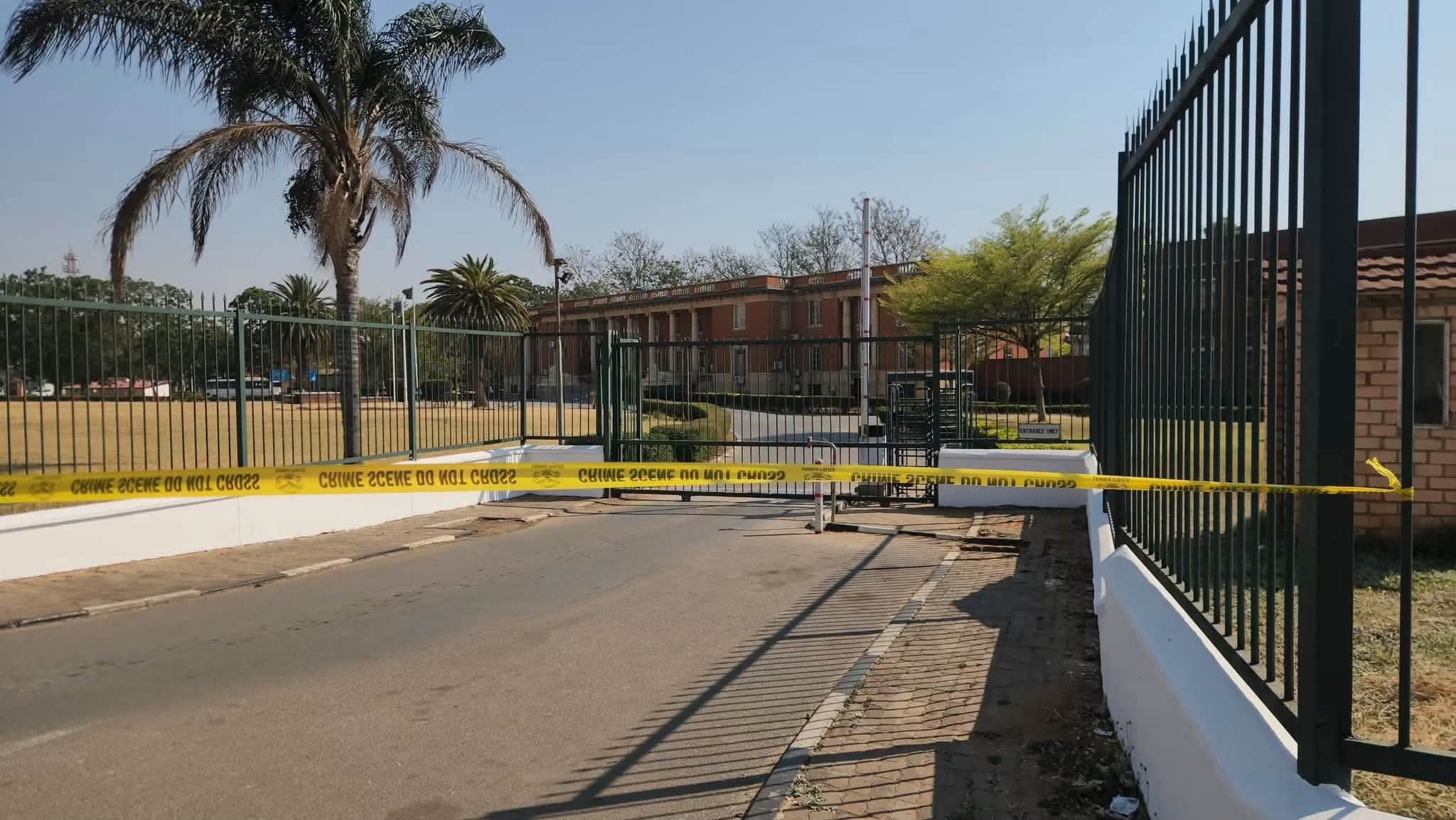
In a press statement dated 24th August 2026, LAZ expressed concern over the closure of Zambian Courts on 24th August 2026 and “the presence of heavily armed military personnel around court premises in Lusaka, including sealing off certain court premises with tape marked ‘Crime Scene.’”
LAZ said the closure occurred “in the absence, at the time of issuing this statement, of a formal public explanation” on the reasons for the closure, its geographical scope, its expected duration and the arrangements in place to ensure continued access to justice.
The association said it had come across “an unsigned memorandum dated 24th August 2026 addressed to Judiciary staff communicating the closure of the Courts,” but “no further official information has, to date, been made available to legal practitioners, litigants or the public regarding the circumstances giving rise to the closure, the legal or institutional basis for the deployment of military personnel at court premises, or the arrangements for the handling of urgent and time-sensitive matters.”
LAZ warned the closure has “immediate implications for access to justice, particularly for persons requiring urgent judicial intervention.”
These include “persons with pending criminal proceedings, bail applications, applications for habeas corpus, and other proceedings affecting personal liberty.”
Citing Article 13(3) of the Constitution of Zambia, LAZ said a person arrested or detained “be brought without undue delay before a court,” and that any disruption “must therefore be managed in a manner that ensures that persons do not suffer prejudice and that constitutional rights continue to receive effective judicial protection.”
The association also flagged the timing. “The timing of the closure is particularly significant in the present electoral context,” LAZ said, noting that Article 103(1) of the Constitution provides for a seven-day period within which a person may petition the Constitutional Court to nullify the election of a President-elect.
“The closure of the Courts during this constitutionally prescribed period creates a real risk that persons seeking to exercise this constitutional right may be prejudiced by uncertainty regarding access to Court registries, filing facilities and judicial officers,” the statement said.
LAZ called on the Judiciary to “urgently restore access to the Courts and resume the filing, receipt and hearing of matters as soon as it is safe and practicable to do so.” Pending full reopening, it urged the Judiciary to “immediately establish and publicly communicate alternative arrangements for the filing and receipt of urgent and time-sensitive matters,” and to give “particular priority to matters affecting personal liberty, including habeas corpus and bail applications, as well as constitutional, electoral and other proceedings subject to strict statutory or constitutional timelines.”
LAZ further called for assurance that “no person is prejudiced by the closure in respect of any applicable filing deadline,” and for “prompt” communication on the reasons for the closure, scope, duration and arrangements for access. It also demanded “appropriate clarification regarding the legal and institutional basis for the security measures being implemented at court premises.”
Citing Article 122, LAZ said the Constitution guarantees the autonomy of the Judiciary and that extraordinary security measures “must not have the effect, whether directly or indirectly, of impeding the exercise of judicial functions or denying persons reasonable access to justice.”
“Clear, timely and authoritative communication in circumstances of this nature is essential to safeguard constitutional rights, minimise prejudice to persons requiring access to public institutions and maintain public confidence in the administration of justice,” LAZ stated.
LAZ said it “will continue to monitor the situation closely and keep its members and the nation informed of material developments.” The statement was issued pursuant to section 4 of the Law Association of Zambia Act, Chapter 31 of the Laws of Zambia.
*CHURCHES: “DISAGREE WITHOUT HATRED”*
A day earlier, on 23rd August 2026, the Council of Churches in Zambia, the Evangelical Fellowship of Zambia and the Zambia Conference of Catholic Bishops issued a joint pastoral statement titled _“Loving Our Neighbour – Even In Cyberspace”_ calling on Zambians to embrace peace, respect and responsible use of social media as the country reflects on the 2026 General Elections.
“Elections should never divide us or undermine our shared responsibility to build a peaceful and prosperous Zambia,” the church leaders said.
The Church Mother Bodies expressed concern over the use of some social media platforms to spread propaganda, misinformation, disinformation, insults, ridicule, personal attacks and inflammatory messages. They said they were particularly concerned about content intended to divide Zambians along political, regional, ethnic, generational or other lines.
They highlighted “the deliberate involvement and use of children in political communication, including videos and messages where children are encouraged to insult, ridicule or demean political leaders and other adults.”
“Children should not be made instruments of political hostility,” the statement said. “Our children are the future of Zambia. We must not socialise them into hatred, insults and intolerance.”
Citing Mark 12:31 and Ephesians 4:29, the church leaders said the command to “Love your neighbour as yourself” applies “everywhere, including on Facebook, WhatsApp, TikTok, X and YouTube.”
The statement affirmed the importance of freedom of expression but said it “should never become a licence for hatred, humiliation, incitement, deliberate misinformation or the destruction of another person’s dignity.”
“We can disagree without being enemies. We can criticise policies without insulting people. We can challenge leaders without dehumanising them. We can defend our political parties without attacking those who support another party,” they stated.
Their message to the nation: “Question with respect. Criticise with truth. Disagree without hatred. Participate without violence.”
The church leaders appealed to bishops, pastors, priests, reverends, ministers, evangelists, chaplains and church leaders to preach on peace and reconciliation, encourage responsible social media use, discourage political insults, and protect children from political manipulation and online abuse.
“Let us refuse to allow social media to become a battlefield. Let us refuse to allow propaganda to replace truth. Let us refuse to allow insults to replace dialogue. Let us refuse to allow political differences to destroy our common humanity,” the statement said.
“ZAMBIA IS BIGGER THAN OUR POLITICAL DIFFERENCES. The elections will come and go. Political campaigns will end. Leaders and governments will change. But Zambia will remain.”
The statement was signed by Rev. Canon James Phiri for CCZ, Reverend Allan Kasungami for EFZ, and Father Francis Mukosa for ZCCB.


Community Feedback