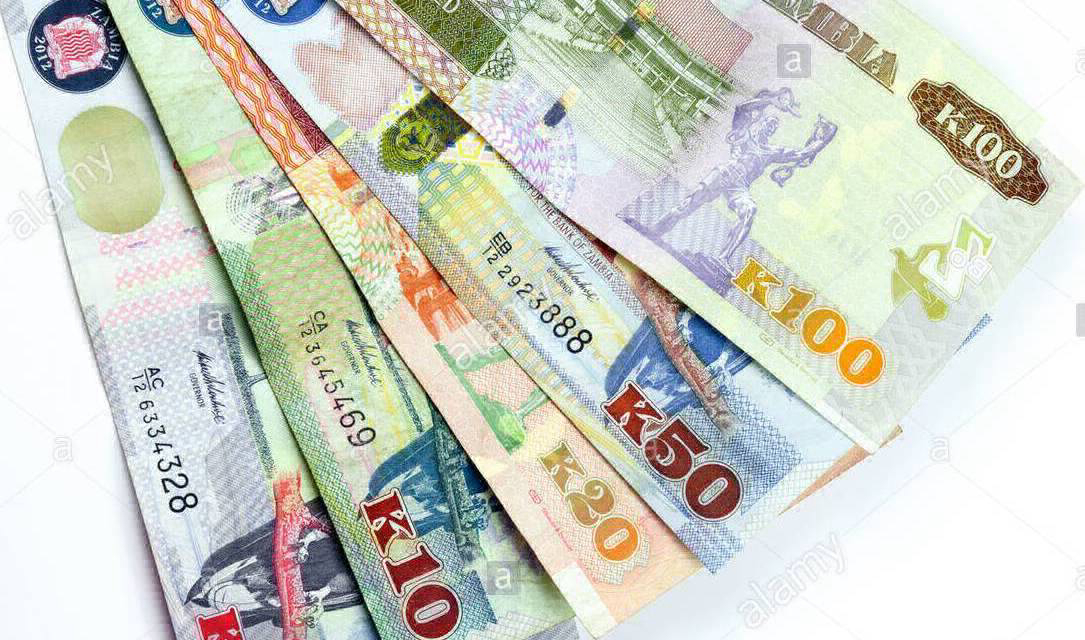
Kwacha holds steady but remains under pressure ahead of August 13 election

Breaking News Zambia
News57 Views The Zambian kwacha has stayed relatively stable in the run-up to Thursday’s general election, though traders say caution is keeping the currency under pressure. On Thursday commercial banks quoted the kwacha at 19.25 per US dollar, compared to 18.95 a week earlier. That represents a week-on-week weakening of about 1.6 percent. Market commentary […]
57 ViewsThe Zambian kwacha has stayed relatively stable in the run-up to Thursday’s general election, though traders say caution is keeping the currency under pressure.
On Thursday commercial banks quoted the kwacha at 19.25 per US dollar, compared to 18.95 a week earlier. That represents a week-on-week weakening of about 1.6 percent.
Market commentary released four days ago noted that the local unit is likely to remain under pressure this week as investors hold back ahead of the August 13 vote.
Demand at the last Bank of Zambia foreign exchange auction also continued to exceed supply, although the backlog narrowed from the previous auction.
According to the latest TGN Markets Daily Indicative Rates issued on Monday, August 10, the kwacha strengthened against most major currencies on the day.
The dollar was quoted at 18.84, up 0.58 percent. The British pound traded at 25.40, up 0.54 percent, while the euro was at 21.76, up 0.60 percent. The South African rand was at 1.17, up 0.16 percent, and the Chinese yuan was at 2.79, up 0.39 percent. The kwacha lost ground only to the Botswana pula, which moved to 1.39, down 2.65 percent.
Analysts point to three main factors behind the current trend.
First is election caution. With more than 8 million Zambians registered to vote, many investors and businesses are adopting a wait-and-see approach until the outcome is known. That has reduced dollar supply in the market and kept the kwacha vulnerable to swings.
Second is the broader macroeconomic picture. Government officials highlight progress on stabilization since 2021, including rebuilding forex reserves to about 6.5 billion dollars, advancing debt restructuring, and bringing inflation down to 6.5 percent in June, its lowest level in more than eight years.
Third are copper and fiscal dynamics. Copper still accounts for more than 70 percent of export earnings, and the market is watching whether mine expansions will translate into more foreign exchange. At the same time, Standard Chartered has flagged election-related spending and higher grain purchases as sources of fiscal pressure.
The bank forecasts a 2026 budget deficit of about 5.0 percent of GDP, well above the government target of 2.1 percent.
Some commentators are asking whether the kwacha’s earlier strength this year reflected genuine recovery or a familiar pre-election pattern seen in other emerging markets. They describe it as a question of a strategic rebound versus an election cycle effect.
Since 2021 the government’s approach has centered on IMF-backed reforms, fiscal discipline, and building reserves, all aimed at stabilizing the exchange rate. Whether that framework holds after the vote will be a key test for the currency.
Outlook: For now, the kwacha is trading softer and remains volatile, hovering around 19.25 to the dollar in commercial bank quotes. Markets expect it to stay under pressure until after August 13, when clarity emerges on policy direction. Investors are also monitoring copper output, electricity supply to the mines, and the government’s commitment to fiscal discipline in the post-election period.
Investment advisor Dingan Njobvu has advised individuals and businesses with future foreign-currency obligations to consider managing their exposure early.
He said that if one knows that they will need dollars next year for imports, school fees, travel, equipment, or vehicles, converting part of their kwacha now can reduce risk.
Using an example, he noted that 160,000 kwacha converts to about 8,425 dollars at a rate of 18.998. If the rate moved to 22 kwacha per dollar, the same 8,000 dollars for two vehicles would cost 176,000 kwacha instead of 151,984 kwacha today.
Holding the required dollars in advance, he said, helps lock in certainty rather than waiting for the rate at the time of payment.
The objective, Njobvu said, is not speculation but matching the currency of your savings to the currency of your future obligation.



Community Feedback