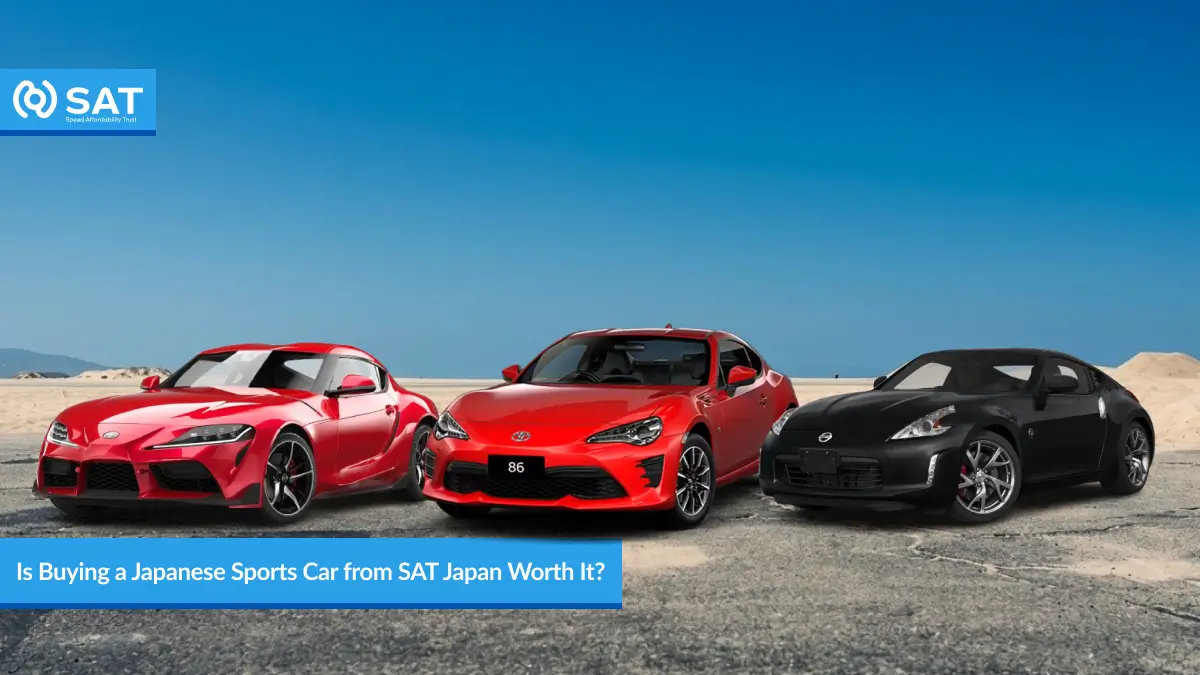
Is Buying a Japanese Sports Car from SAT Japan Worth It?

Breaking News Zambia
Sports299 ViewsAn Honest Review Thinking about importing a Japanese sports car to Zambia? Read this honest SAT Japan review before you buy from Japan. The dream usually starts the same way. One late-night search. A clean Nissan Skyline. Maybe a Subaru WRX STI. Maybe it is a Toyota Supra sitting in a Japanese auction yard, […]
299 ViewsAn Honest Review
Thinking about importing a Japanese sports car to Zambia? Read this honest SAT Japan review before you buy from Japan.
The dream usually starts the same way. One late-night search. A clean Nissan Skyline. Maybe a Subaru WRX STI. Maybe it is a Toyota Supra sitting in a Japanese auction yard, showing mileage so low it almost feels fake.
Then reality hits. Can you actually trust the exporter? Is SAT Japan legit? What happens after the money leaves your account? And, most importantly for Zambian buyers, does the final cost still make sense once shipping, taxes, and clearance fees are factored in?
Here’s the thing. Buying Japanese sports cars directly from Japan can absolutely be worth it. In many cases, you end up with a cleaner car, better specs, and more choices than what is available locally. But only if you buy smart. That’s the part most people miss.
A cheap-looking deal can become painfully expensive once the car lands in Zambia.
Before going deeper, it helps to understand what kind of buyer benefits the most from SAT Japan. For Zambian sports-car enthusiasts, the biggest value is access: more models, more trims, more mileage options, and more chances to find a cleaner Japanese import than what may be available locally. Here is a quick breakdown.
Buyer type SAT Japan value Why it helps First-time importer Useful with proper checks Gives access to more Japanese stock, but documents and landed cost still need review JDM enthusiast Strong choice Better access to rare trims, auction stock, and enthusiast models Budget buyer Helpful if the total cost is calculated Online prices can be attractive, but shipping and clearance must be included Local-market buyer Useful for comparison Helps compare local prices against Japanese inventory before decidingWhat Is SAT Japan?
SAT Japan is a Japanese used-car exporter that helps overseas buyers source vehicles from Japan through online listings and export support. The company lists both auction vehicles and dealer stock, covering everything from daily commuters to high-performance sports cars.
For Zambian buyers, the appeal is obvious.
Local sports-car options are limited. Finding a clean Mitsubishi Lancer Evolution, Nissan Silvia, Toyota Chaser, or Subaru WRX locally is already difficult. Finding one that has not been abused? Even harder.
SAT Japan gives buyers access to vehicles that never officially reached many markets in large numbers. Depending on the listing and documents provided, buyers can compare mileage, specs, condition details, and sometimes auction-related information before committing.
Another thing worth mentioning is that Japanese cars generally age well when properly maintained. Many Japanese used cars are attractive because Japan has strict vehicle inspection standards and a mature maintenance culture. That is one reason Japanese used cars for sale in Zambia remain popular, especially among sports-car buyers.
A clean Japanese-imported Subaru can feel tighter and better cared for than many hard-used local examples. The same goes for older Skylines and Supras. Not always. But often enough that buyers notice it immediately.
Overall, SAT Japan serves as a bridge between Japanese inventory and overseas buyers looking to import cars from Japan.
Is SAT Japan Legit?
Short answer? Yes. SAT Japan appears to be a legitimate Japanese car exporter with an active online presence, customer reviews, and international export operations.
But honestly, that should never be the end of the conversation. Even legitimate exporters require buyers to stay careful. Blind trust is how people lose money in the import business.
You might be wondering what actually matters before payment. It starts with documentation. Before sending any money, ask for:
- Auction sheet
- Chassis number
- Interior and exterior inspection photos
- Engine bay photos
- Undercarriage images, if possible
- Export certificate
- Invoice breakdown
- Shipping details
If the exporter avoids these requests or repeatedly delays them, that is a red flag. The auction sheet matters a lot for sports cars. More than people realize.
A flashy Nissan GT-R can look perfect in edited photos while hiding accident repairs, rust damage, or heavy modifications underneath. Japanese auction grading helps buyers understand the car’s actual condition before it ships overseas. That’s the part most first-time importers ignore.
Modified sports cars are especially risky. Some are built properly. Others are like financial bombs with cheap tuning parts and abused engines. A WRX STI running massive boost pressure might feel exciting for one week and catastrophic the next.
Another smart step? Compare the chassis number across paperwork and photos. Genuine exporters should provide consistent details across invoices, auction sheets, and shipping documents.
This is where experienced buyers separate themselves from emotional buyers. Excitement is dangerous when importing cars from Japan. Public SAT Japan reviews appear mostly positive, but not spotless. That is why buyers should still verify documents, payment details, and shipping steps carefully.
Why Zambian Buyers Import Cars from Japan
Japanese imports have been common on Zambian roads for years. Once you spend time around Lusaka, Kitwe, or Ndola, you start seeing it everywhere.
Toyota Mark X models. Subaru Legacys. Mazda Atenzas. Occasionally, even a Skyline or RX-8 slides through traffic, sounding slightly louder than it should. There are good reasons for that.
First, the variety is much wider. Local dealerships usually stock easier-selling vehicles. SUVs. Basic sedans. Commercial models. Sports cars are a smaller niche.
Importing changes the equation completely. Instead of waiting months for the “right” car to appear locally, buyers can search directly through Japanese inventory. That opens doors to cars Zambia rarely sees in large numbers:
- Nissan Skyline GT-R
- Toyota Supra
- Subaru WRX STI
- Mitsubishi Lancer Evolution
- Nissan Silvia
- Mazda RX-7
- Toyota Chaser
Clean examples of these models are becoming harder to find globally, especially untouched or lightly modified ones. Condition is another reason buyers choose to import Japanese cars. Many vehicles arriving from Japan still have lower mileage and cleaner interiors than equivalent locally used cars. Not perfect. Just often better maintained.
Right-hand drive compatibility also helps Zambian buyers. No awkward conversion process. No expensive steering modifications. The cars already suit the local road setup naturally. And honestly, Japanese sports cars still carry something modern performance cars often lack: personality.
An older Evo feels mechanical. Raw. A little angry. Modern turbo cars are faster on paper, sure. But many feel filtered and numb compared to old-school Japanese performance machines. That’s why demand for Japanese used cars for sale in Zambia continues to grow among younger enthusiasts. People are not only buying transportation anymore. They are buying emotion.
Buying a Japanese Sports Car from SAT Japan: Pros and Cons
Buying directly from Japan has real advantages. It also has real risks. Anyone pretending otherwise is selling fantasy.
Pros
- The biggest advantage is choice. Local markets simply cannot compete with Japanese inventory volume.
- One week, you may find three WRX STIs locally. Online in Japan? Often far more options. Different trims. Different colors. Different mileage ranges.
- Pricing can also work in your favor. Even after shipping, some buyers still land cleaner sports cars cheaper than equivalent local examples, especially older JDM models that can be heavily marked up locally because of rarity.
- Access to auction inventory is another major benefit. Japanese auctions often expose the real condition of the car better than casual local selling.
- Auction sheets usually mention scratches, repairs, dents, or repaint history. Not every exporter explains those details honestly. Good ones do.
SAT Japan also gives buyers access to in-stock vehicles and auction sourcing options, increasing flexibility. In many cases, the chance of finding a genuinely clean Japanese sports car is simply higher when sourcing directly from Japan, especially if you stay patient.
Cons
- Shipping delays happen. Sometimes because of port congestion, sometimes because of paperwork, and sometimes because of weather.
- Costs also climb fast after purchase.
- A sports car that looks cheap online can suddenly become expensive after shipping, clearing fees, import duty, registration, insurance, and transportation.
- Finding parts for an Evo or RX-7 is not as easy as servicing a Toyota Corolla.
Overall, importing sports cars rewards informed buyers. Emotional buyers usually suffer the most.
Zambia-Specific Costs and Import Checks
This is where many first-time buyers get humbled. The car price is only the beginning.
Shipping costs vary depending on vehicle size, port route, and container method. Then come clearing fees, import duty, registration, insurance, and inland transport. Suddenly, the budget stretches much further than expected.
A Nissan Silvia that seemed affordable online may end up costing far more once fully landed in Zambia. That’s why buyers should always request a full landed-cost estimate before payment.
Road conditions also matter more than people think. A lowered Toyota Chaser with aggressive suspension might look incredible in photos. Daily driving on rough roads? Different story entirely.
Sports cars with extremely low ride height often become annoying outside smoother urban areas. The real issue is this. Zambia rewards balanced setups. Cars like the Subaru WRX STI, Mitsubishi Evo, and Toyota Mark X usually handle mixed road conditions better than ultra-low sports coupes.
Spare part availability matters too. Buying rare Japanese sports cars sounds exciting until a sensor fails and the replacement takes six weeks to arrive. That is why experienced importers often recommend:
- Subaru WRX STI
- Nissan 350Z
- Toyota GT86
- Mitsubishi Evo
- Mazda Atenza Turbo
- Toyota Mark X
These cars are generally easier to support than rarer imports, depending on the local parts network. Overall, Zambian buyers should choose sports cars that balance excitement with realistic ownership costs.
Should You Buy from SAT Japan or a Local Dealer?
This depends on the kind of buyer you are. SAT Japan may offer a wider selection, cleaner examples, and sometimes stronger pricing. Especially for buyers chasing specific sports cars or trims. But importing requires patience and research.
Local dealers offer something importers cannot: the ability to inspect in person before purchase. You can touch the car. Drive it. Hear a cold start. Check suspension noises yourself. That reduces uncertainty immediately.
Direct importing suits buyers who:
- Understand cars
- Know how to verify documents
- Can wait for shipping
- Want rare sports car models
- Compare auction grades carefully
Local buying suits buyers who:
- Want immediate delivery
- Prefer lower stress
- Do not want shipping risk
Neither option is automatically better. What matters is whether the buyer understands the risks involved. A careful importer often gets better value. A careless importer usually learns expensive lessons.
Final Verdict: Is SAT Japan Worth It for Zambian Buyers?
Yes, SAT Japan can absolutely be worth it for Zambian buyers. Especially sports car enthusiasts searching for cleaner imports, a better variety, and models that are difficult to find locally. But this is not a shortcut purchase.
Buyers who rush for the cheapest deal usually regret it first. Cheap sports cars often become expensive sports cars after repairs, shipping, and unexpected issues. That’s the part most people miss.
The smarter approach is to compare total landed cost, check every document carefully, review auction sheets properly, and choose vehicles that actually make sense for Zambian roads and maintenance conditions.
A clean Subaru WRX from Japan may cost more upfront than a rough local example. Long-term ownership, though? It could easily become the cheapest car to own. And honestly, that is why Japanese sports cars still dominate enthusiast conversations decades later. They are not perfect. They are not always cheap. But when you find the right one, nothing else feels quite the same.
FAQs
Is SAT Japan legit?
Yes, SAT Japan appears to be a legitimate Japanese used-car exporter with international listings, customer reviews, and export services. Buyers should still verify auction sheets, chassis numbers, invoices, and shipping documents before payment.
Can I import cars from Japan to Zambia through SAT Japan?
Yes. Zambian buyers can import Japanese used cars through exporters like SAT Japan by selecting a vehicle, arranging payment and shipping, and completing local clearance procedures upon arrival.
Is it cheaper to buy cars from Japan or locally in Zambia?
Sometimes yes, especially for sports cars and cleaner imports. But buyers must factor in shipping, import duties, registration, insurance, and clearance charges before comparing prices accurately.
What documents should I check before importing a Japanese car?
Always request the auction sheet, chassis number, export certificate, inspection photos, invoice breakdown, and shipping details. Those documents help confirm the vehicle’s condition and authenticity before payment.
Are Japanese sports cars practical in Zambia?
Some are. Cars like the Subaru WRX STI, Nissan 350Z, and Toyota GT86 can work well because parts and mechanic knowledge are more available. Extremely low or heavily modified sports cars may struggle more on rough roads.









Community Feedback